The Wilmington Morning Star (August 13, 1944)
ROOSEVELT BACK IN STATES
Defense needs given stress
Roosevelt says United Nations must prepare barriers against Japanese
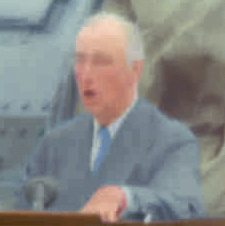
Bremerton, Washington (AP) – (Aug. 12)
President Roosevelt came home, from a 15-day inspection of the Pacific war zone tonight to declare the United Nations must prepare permanent defenses against any future aggressions by the Japanese.
“The word and the honor of Japan cannot be trusted,” he declared.
The President came into dock at this huge Navy yard about 4:00 p.m. PWT, ending a war tour that began when he left the Marine base at San Diego, California, on July 21 – a day after his fourth-term nomination by the Democrats.
During his absence he visited Pearl Harbor, where he conferred with the war chiefs of the Pacific, and inspected military bases in the Aleutians.
He brought a laugh when he said he played hooky near Juneau, Alaska, long enough to sneak in three hours of fishing. The result: One halibut and one flounder.
Permanent Pacific defenses must be obtained, Mr. Roosevelt said, to protect this hemisphere from Alaska to Chile. It is important, he added, that we have permanent bases nearer to Japan.
He said:
We have no desire to ask for any possessions of the United Nations, but the United Nations who are working so well with us in the winning of the war will, I am confident, be glad to join with us in protecting against aggression and in machinery to prevent aggression.
With them and with their help, I am sure that we can agree completely so that Central and South America will be as safe against attack from the South Pacific as North America is going to be from the North Pacific itself.
As for Japan, the President said:
It is an unfortunate fact that years of proof must pass before we can trust Japan and before we can classify Japan as a member of the society of nations which seek permanent peace and whose word we can take.
The President said that during his absence – he left Washington July 13 – he kept in close touch with developments in the capital and on all war fronts. But he didn’t offer a guess on the war’s end. Sailors, workers and guests who jammed the dockside of the Puget Sound Navy Yard waved as the President’s ship moved in. The Chief Executive, wearing a felt hat and dark suit, waved back and chatted with those on shipboard as the vessel came in. He puffed easily on a cigarette and conversed with his daughter, Anna Boettiger who went out to meet the President’s ship early this afternoon.
For the most part, his talk was devoted to a serious discussion of the Pacific War and future military and economic developments in the vast area.
Mr. Roosevelt said:
The self-interests of our Allies will be affected by fair and friendly collaboration with us. They too will gain in national security. They will gain economically. The destinies of the peoples of the whole Pacific will for many years be entwined with our own destiny. Already there are stirring among hundreds of millions of them a desire for the right to work out their own destinies, and they show no evidence of seeking to overrun the earth – with one exception.
That exception is and has been for many, many years that of Japan and the Japanese people – because whether or not the people of Japan itself know and approve of what their lords have done for nearly a century, the fact remains that they seem to be giving hearty approval to the Japanese policy of acquisition of their neighbors and their neighbors’ lands, and a military and economic control of as many nations as they can lay their hands on.
Mr. Roosevelt said it is “an unfortunate fact” that the world cannot trust Japan.
By removing the future menace of Japan, he said, “we are holding out the hope that other people in the Far East can be freed from the same threat.”
He said the peoples of the Philippines, Korea, Indochina, New Guinea and the Mandated Islands have no wish to be Japanese slaves, and he declared we are in “the splendid process” of throwing the Japanese out.
The President said the war in the Pacific is “well in hand” but observed:
I cannot tell you, if I knew, when the war will be over either in Europe or in the Far East or the war against Japan.
He said:
It will be over the sooner if the people of this country will maintain the making of the necessary supplies and ships and planes. By so doing we will hasten the day of peace. By so doing we will save our own pocketbooks and those of our children; by so doing, we will run a better chance of substantial unity among the unified nations in laying more securely the foundation of a lasting peace.
The President stood at a microphone at the base on a gun mount on the destroyer to deliver his address in the navy yard. A cloudy sky obscured the sun.
He appeared tanned from his long sea voyages of recent days.
Sailors and workers jammed the area before his ship to listen to his words. As he stood to speak, a cheer and applause went up from the audience. He waved a return greeting.
While the President sat aboard the vessel before time for his speech, the Puget Sound Navy Yard band played swing tunes from a temporary bandstand thrown up on the dockside.
In his speech, Mr. Roosevelt went into detailed description of the military installations he visited in the Pacific.
He told of his military conferences in Honolulu with “my old friend Gen. Douglas MacArthur,” and said he had participated in “interesting and useful conferences accompanied by Adm. Nimitz and my own chief of staff, Adm. Leahy, and Gen. Richardson, the commanding general of Army forces in the Hawaiian area, and Adm. Halsey, commander of the Third Fleet.”
The three days of conferences, he said, “developed complete accord both in the understanding of the problem that confronts us and in the opinion as to the best method for its solution.”
The Chief Executive interrupted his prepared text to comment on what he termed “a modern marvel” – the fact that newspapers did not break security to discuss his trip although they were in on the secret from the time he left Washington.
The President said the Hawaiian Islands have been converted from a mere outpost to a major base for frontline operations in the Pacific. He brought a cheer from his audience when he declared “the islands will make possible future operations in China – make possible the recapture and independence of the Philippines, and make possible the carrying of war into the home islands of Japan itself, and its capital city of Tokyo.”
Mr. Roosevelt said upon his return to Washington he intends to set up a study of Alaska and the Aleutian Islands as “a place to which many veterans of this war, especially those, who do not have strong foots in their own homes, can go to become pioneers.”
Returning to the future of the Pacific, the Chief Executive said:
Line for sea and air navigation following the great circle course from Puget to Siberia and northern China passes very close to the Alaskan coast and thence westward along the line of the Aleutian Islands. From the point of view of national defense, therefore, it is essential that our control of this route shall be undisputed.
He said:
Everybody in Siberia and China knows that we have no ambition to acquire land on the continent of Asia. We as a people are utterly opposed to aggression or sneak attacks – but we as a people are insistent that other nations must not under any circumstances through the foreseeable future commit such attacks against the United States.
Therefore, it is essential that we be fully prepared to prevent them for all time to come. The word and the honor of Japan cannot be trusted.