The Pittsburgh Press (January 27, 1942)
Rambling Reporter
By Ernie Pyle
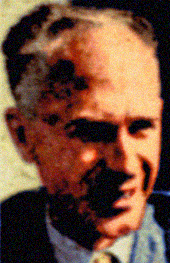
SEATTLE – If you are an old resident of Seattle, you will have been seeing the by-line of “J. Willis Sayre” in the newspapers for over 40 years.
In fact, you will have been seeing it so long that you probably will have forgotten what J. Willis Sayre is really famous for.
Mr. Sayre, in his day, was the fastest man alive. He traveled clear around the world on a vacation whim, circumnavigating the globe by regularly established means of transportation in 54 days. The year was 1903. He broke the previous record by six days.
Even the boys on The Post-Intelligencer, where Mr. Sayre is now drama editor, had forgotten about it until Howard Hughes made his spectacular world flight a few years ago. They got to looking up around-the-world records in the World Almanac and here, lo and behold, was their own J. Willis Sayre, sitting back in his cubbyhole office typing out movie reviews.
So I dropped in to see Mr. Sayre, and he told me about his trip.
He was then on The Seattle Times, and just past 21. He doesn’t know what put it into his head, but he decided he’d go around the world on his vacation. He had $500 saved up. He carried the entire sum in $20 gold pieces.
He hopped a freighter on June 26, 1903, for Yokohama. It took him three weeks to cross the Pacific. He got in a little sightseeing in Tokyo, and went across Japan by train to Nagasaki. Then he took a boat to Dalny, Manchuria. He hadn’t been seasick crossing the Pacific, but he got plenty sick on this short trip.
Crosses Asia and Europe
From Dalny he took the Trans-Siberian Railway clear to Moscow. It was the first week the Trans-Siberian was in operation. The trip took three sold weeks. He says it was a wonderful train, with luxurious cars and fine food.
On the train he ran onto a Jewish merchant who had lived 18 years in Nagasaki. This man spoke eight languages, including Russian and Japanese, so Mr. Sayre clung to his coattails. When they got to Moscow this fellow was a little sore, for he said he’d been nothing but an interpreter and a lackey for Mr. Sayre all the way across.
From Moscow he took a train for Warsaw. Or rather he thought he did. When they were 18 miles out he discovered he was on the wrong train – headed for St. Petersburg.
So he got off, hired a horse and cart by sign language, and was driven 10 miles across country to the right station. It cost him 50 cents. Finally he got on the right train.
He stayed all night in Berlin, took another train to Flushing, Holland, caught a cross-channel steamer to England, a train to Liverpool, and hopped the Campagna to New York. He tarried only a few hours in New York, then headed west by train.
He turns down special train
He wasn’t aware that his home paper was making any fuss about his trip. After all, it was just his own personal trip, paid for by himself. But when he got to St. Paul, he discovered a special train – engine and two cars – waiting for him. The paper had arranged it for his final dash to Seattle.
But Mr. Sayre refused to get on the train. He had made all the trip that far on regular service – the kind where anybody could walk up and buy a ticket, and he wasn’t going to spoil it on the last lap. He came home on a regular train.
There was quite a to-do in Seattle when he got back. He made some speeches, and sold an article to The Saturday Evening Post about his trip. And that was the last of it.
Other people have claimed to have gone around faster by regular lines of transportation since then, but Mr. Sayre doesn’t believe it. And as for all those time-smashing flights around the world in the ‘30s, Mr. Sayre says they didn’t go around the world at all – they just went around part of it, up where the world is little.
Mr. Sayre was born in Washington, D.C. His father was a captain in the Union Army. When he was just a kid Mr. Sayre joined the Army and served a year in the Philippines, in ‘98.
He has had one other big trip. In 1928 he took his family and went all over Europe.
He has worked on all the Seattle papers. He has been bugs about the theater since he was a child. He says also that he’s a collector at heart. At his home he has 16,000 theatrical photographs – the biggest collection in the West, he believes. He had to build a special room for them.
He has also made a collection of all the theatrical programs in Seattle, extending clear back to 1863. He has given this to the Seattle library. He used to have a big coin collection, but it got too expensive, so he sold it.
He isn’t thinking about any more world trips soon.