One should evaluate, but when one is twisting what is said to imply meanings to fit his worldview, he runs a serious risk of becoming a “quoter with overevaluation” or, worse, “quoter with misinterpretation” or “quoter with fabrication.” As an example, I pointed out the blatant manipulation of Stimson’s quotes on black servicemen by TG in my posts months ago. That’s a combination of misinterpretation, sensationalism and even omission (in that they ignore what Stimson himself had to say on the matter).
I see this a lot, “well, he said that, but he didn’t really mean it.” I’d ask: what makes one the authority to state that (unless he can read minds of people he had never even met associates of who are long dead)?
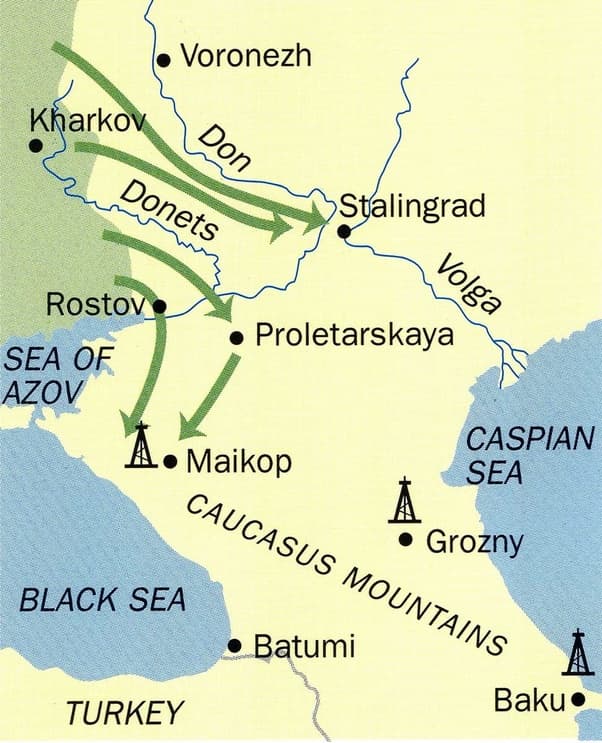
Yes, because Hitler was seeing how the battle was going and was desperate to beat the Russians and fully take the Volga and the Caucasus before the harsh winter. When the battle didn’t end by wintertime, he was forced to bog down, there was so much territory to defend and his supply lines were already thin. So, he downplayed the true nature of the battle to the public.
Look at the oil production of the region at the time and the geography of the area to see why it’s strategically important. It wasn’t just the name.