U.S.-Jap fleets battle after Hawaii attack
Heavy toll admitted in raids on Honolulu and bases in islands
By Francis McCarthy, United Press staff writer
HONOLULU (UP) – United States and Japanese fleets were believed fighting in the mid-Pacific today after a Japanese aerial bombing attack on the Hawaiian Islands opened war between the two great Pacific powers.
The American fleet steamed out of the Pearl Harbor Naval Base shortly after Japanese planes, attacking without a declaration of war or any warning whatever, had bombed the great Pearl Harbor base, the city of Honolulu, and scattered Army and Navy bases on Oahu Island.
Naval gun flashes were seen from the coast, and the roar of the guns was heard soon after the fleet had steamed out to seek the Japanese aircraft carriers from which, it was believed, the planes had taken off and their escorting warships.
In Washington, the White House admitted 1,500 dead and 1,500 wounded, a battleship and destroyer sunk and many planes destroyed in Hawaii.
Many Japanese planes were reported shot down but not before they had wrought severe damage on objectives centered on Oahu Island.
It was estimated that there were between 50 and 150 planes in the attacking fleet, including four-motored bombers, dive bombers and torpedo carriers.
Blast at U.S. flier
They arrived over the islands at 7:55 a.m. (1:25 p.m. EST) yesterday, and machine-gunned an American civilian pilot who was taking a pre-breakfast flight as they made for their objectives.
Pearl Harbor was the principal target. Anti-aircraft guns there and at other military points went into action soon after the first bombs dropped. Residents of Honolulu, awakened by the roar of explosions, thought the Army and Navy were practicing until they saw smoke rising from the fires at Pearl Harbor and Hickam Field. Other fires broke out in nearby Ford Island.
Parachutists, apparently suicide detachments intended to commit acts of sabotage, were reported landed near harbor points, five miles from the center of Honolulu.
Army, Navy and Air Force couriers and radio broadcasts summoned all members of the fighting forces and all policemen and firemen to their posts.
Gov. Joseph B. Poindexter proclaimed a state of emergency and, in his first decree, ordered the public to remain calm and stay off the streets.
One bomb struck within 25 feet of the Honolulu Advertiser Building. Bombs were reported at various parts of the city. One bomb dropped on the world-famous Waikiki Beach, wounding one man seriously. Another struck near the Governor’s home.
Jap plane down in flames
One Japanese plane crashed in flames near the courthouse at Wahiawa, a few miles from the Army’s Schofield Barracks.
It was indicated that Army observers first identified the planes as Japanese by the Rising Sun insignia on the tips of their wings.
Reports soon arrived here of damage at Wheeler Field, Honolulu Municipal Airport and the new Air Force repair base at Kaneohe, as well as at Pearl Harbor and Hickam Field.
Residents watch attacks
As suddenly and as startlingly as the raid had come, it failed to terrorize civilians. Residents ran outdoors, many in night attire, and were soon grouped on hilltops watching the attacking planes and the bursts of bombs and of anti-aircraft shells.
Observers saw few planes over the city, but those near Pearl Harbor, 20 miles away, reported that about 50 Japanese planes were attacking in that vicinity. These observers could see ships off the coast, but could not identify them.
By noon, despite orders to civilians to keep out of the streets, men, women and children, many in pajamas, were on the sidewalks all over the city.
Policemen and special officers manned all road intersections.
Hidden behind hills
It was believed that the attacking planes came from plane carriers off Barber’s Point, to the northeast of Pearl Harbor.
The planes skimmed over the hills and were upon the naval base before they were detected. At least one plane was seen to launch a torpedo at warships in the harbor.
Air depot on alert
SACRAMENTO – The Army Air Force last night placed the Sacramento Air Depot at McClellan Field on a 24-hour wartime basis.
Men ordered back
FORT LEWIS, Washington – The Ninth Army Corps ordered all officers and men back to Fort Lewis immediately last night.
Harbor is closed
SAN PEDRO, California – All entrances to the San Pedro-Long Beach harbor area have been closed, the Coast Guard announced late yesterday. Coast Guard officers said that the entrances would remain closed pending further word from Washington.
Bomber base put on alert by Navy
SAN RAFAEL, California (UP) – Hamilton Field, big bomber and pursuit plane base, was placed on an “alert” today. Guards were doubled. All leaves were canceled. Visitors were barred.
Troops moved on West Coast
Harbors, arsenals and shipyards guarded
SAN FRANCISCO (UP) – All military and civilian defense organizations on the West Coast were organized today on a wartime basis.
The possibility that the West Coast, with its vital harbors, arsenals, shipbuilding yards and airplane manufacturing centers, might be the next target of the Japanese bombers was reflected in the speed with which defense plans were put into operations.
Troops shifted
Anti-aircraft units, here from Camp Haan in what had been planned as practice maneuvers, were shipped from various points in the San Francisco Bay Area to Vallejo and Benicia to guard the Mare Island Navy Yard and the Benicia Arsenal.
Navy censors moved into the offices of all radio and cable communications companies, checking all messages before transmissions to Honolulu or the Orient. Similar censorship was in effect at the other end of the circuits.
Rear Adm. J. W. Greenslade, commandant of the 12th Naval District, announced that all war plans of the district had been put into effect.
Army plans in effect
Lt. Gen. John L. DeWitt, commander of the Fourth Army (which includes Alaska), announced that the Army war plan for the area was also in operation.
Mayor Angelo J. Rossi of San Francisco proclaimed a state of emergency for the San Francisco area and authorized the Civilian Defense Council to “take all proper steps to protect the lives and property of San Francisco citizens.”
The war crisis served to bring an abrupt halt to plans for a nationwide strike of welders. The United Welders, Cutters and Helpers canceled plans for a strike, announcing that it was the union’s answer “to the trouble in the Pacific.”
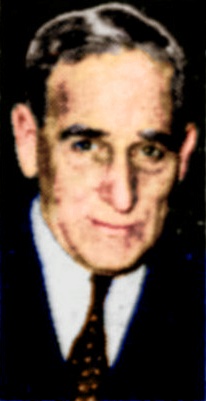
Rear Adm. Stirling: Japs can’t win
Pacific expert predicts naval revenge
By Rear Adm. Yates Stirling Jr., USN (ret.)
The former U.S. naval commander at Pearl Harbor, Hawaii, who is familiar with the strategy in the Pacific, reconstructs the pattern of events involved in Japan’s attack.
The war in the Pacific has begun and first reports of the fighting show undeniable reverses for the United States in a conflict for which Japan has been preparing for a considerable period in which it carefully planned its strategy.
Japanese bombers attacked Hawaii yesterday in a surprise attack which plunged the United States into a Pacific war of unguessable magnitude. Reports of attacks on other bastions of the United States, Britain and the Netherlands followed news of the attack on the American naval base at Pearl Harbor.
Japan has risked everything on an “all-out” war. To this observer, Japan’s action appears suicidal.
Japs cannot win
It may be a long, hard war, but the Japanese cannot win. The United States may suffer reverses at first, but the Navy will obtain a terrible revenge for the men and ships it loses. Our Pacific positions have been carefully planned and ably manned, and details for cooperation with Britain, the Netherlands East Indies, Australia and China have been agreed upon.
The Japanese probably followed what has long been understood to be their great master plan – simultaneous attacks on British, Dutch, American and probably Russian bases in the Pacific. They must clear their flanks if they are to be successful. That means an effort to occupy Vladivostok, Russia’s Siberian base which presumably might be placed at American disposal, Soviet Kamchatka to the North and possibly the American base on the Aleutian Islands off Alaska.
Alaska may be hit
An effort to attack the Alaskan mainland is possible. The Japanese commanders probably do not envisage occupation of our islands, but hope to do all the damage they can to hamper our war effort by crippling as many of our ships as possible and damaging shore establishments at the outset.
Cities on the west coast of the United States may be subjected to a series of hit-and-run raids by planes from aircraft carriers, but they are unlikely to achieve much. It is certain that air patrols have already been established along the Pacific Coast to meet any Japanese effort.
Nazis may help
The enemy may be receiving German advice and assistance. We must be prepared for news that German planes, submarines and surface ships are in action against us in the Pacific in as great numbers as can be spared from Adolf Hitler’s other war efforts.
The attack on Hawaii probably came first because of the presence there of the United States fleet. If the Pearl Harbor base could be put out of commission, it would hamper the fleet and delay its departure for avenging attacks on the Orient.
News of major engagements can be expected momentarily. The United States Navy will not be satisfied until the entire Japanese raiding force has been sunk.
Frances Farmer turns down three plays, Hollywood no longer ‘pain in the neck’
Actress, who once flayed filmland, is now loudly singing its praises
HOLLYWOOD – Frances Farmer, who once said in no uncertain words that Hollywood was a pain in the neck to her, has changed her mind.
She has turned down three plays that she could have done on Broadway his winter to say in the movie town.
She has bought a home, furthermore, in Santa Monica, and her mother, Lillian Farmer, has arrived from Seattle to live with her.
“Can’t a girl change her mind?” asked Miss Farmer who has been given radiant blond curls by 20th Century-Fox for her role of an 18th-century beauty in “Son of Fury,” Darryl F. Zanuck’s costly epic.
“I was young and inexperienced when I condemned Hollywood so blithely. I know better now. Hollywood is a paradise for young actors and actresses. There are heartaches here, but there are opportunities, too, that you can’t find any place.
“No business takes the trouble and goes to the expense of helping newcomers as do the studios. The stage never surrendered the beginner with all the experts that Hollywood calls forth when a studio thinks some unknown shows promise.
“The studios make poor pictures, it’s true, but they’re few in number compared to the many fine ones that they create. It’s surprising the gamble that many producers take in trying to make really great films.
“I hope never to go back to Broadway, for good. I’d like to do another play there some time and above all, I want to get with a summer stock company in New England, perhaps next summer. But Hollywood’s my home and I’m not going to stray away from here for very long.”
Miss Farmer, whose role in “Golden Boy” established her on the New York stage, was sought by the Theater Guild to play a similar character, but she turned the offer down to play opposite Tyrone Power in “Son of Fury.”
“It’s the best movie role I’ve ever had,” she said, “and I want to establish myself in Hollywood before I go back to New York for another play.”
Millett: Judge tough on husbands
Angered wife offered as office aide
By Ruth Millett
Every man who has both a wife and a secretary should be interested in the divorce decision recently handed down by a Chicago judge. Interested – and alarmed.
For when the husband told the judge he couldn’t afford to pay his estranged wife $15 a week temporary alimony, the judge told him to fire his $30-a-week secretary and give the job to his wife, at $15 a week.
Think how tough it is going to be on husbands if judges over the country decide that this Chicago judge had a bright idea – and start handing down similar decisions.
If he advertised for the world’s worst secretary, a man probably couldn’t find a much poorer one than he would be taking on an estranged wife, forced to work out her alimony.
In the first place the average wife – like the one in the Chicago case – hasn’t had any secretarial experience. And no matter how expertly a woman handles the job of homemaking the experience doesn’t teach her anything about the business world.

And as bad as that handicap is, the fact is that a man needs to have his secretary think – or pretend to think – that he is a great guy. No estranged wife, who has undoubtedly already told her husband just what kind of a heel she thinks he is, would be able to qualify along that line.
Then, too, a secretary is naturally a meek creature, saying “Yes, Sir” to all the boss’ ideas, whether she thinks much of them or not – and being willing to take the blame for mistakes she knows are his. A wife, who for years has answered back, just couldn’t fall into that “Yes, Sir” pattern.
And a woman who has been used to the I-can-put-it-off-if-I-want-to atmosphere of the home might treat letters dictated at 5 o’clock in a too casual manner. A wife can always leave the dishes – but a good secretary always gets the letters out before locking her desk for the night.
So, think about it a while, men, before you tell a judge you can’t afford to pay your wife alimony. Maybe you’d rather hand it over willingly than have your wife work it out.
War talk, not baseball, fills Chicago as major leaguers gather for meetings
Frisch, Benswanger unable to foresee effect on sport
By Lester Biederman, Press baseball writer
CHICAGO – Baseball major league magnates, gathered here for the annual midwinter pow-wow which opens tomorrow, are talking war – not baseball.
The war with Japan shoved baseball off the stage. Early arrivals were talking only of the more serious situation, certainly very little about making trades.
The two gentlemen Pittsburgh baseball fans are most interested in – Frankie Frisch and Bill Benswanger – were much too shocked by the latest war developments to devote any enthusiasm to baseball.
“Frankly, we don’t know what to do,” Benswanger said. “Up to this point, our chief worry was the army draft. Now it’s war. I’m afraid this meeting may be a washout as far as trades are concerned. Everybody’s going to be afraid to deal. That’s only natural, too. Nobody wants to talk baseball with this war situation as serious as it is. We don’t even know if we’ll open the season.”
Trade with Phils fades
Both Frisch and Benswanger came here from the minor league meetings in Jacksonville, Florida, looking for action but not very hopeful, though they’re ready. Of course, they picked up Pitcher Henry Gornicki unexpectedly from the Cards, purely after a hasty meeting called by Card officials. Other trades may develop in this manner.
Frisch admitted he talked to the Phils concerning Pitcher Ike Pearson but the season was stalemated.
“The Phils placed a higher valuation on Pearson than they did on Lee Handley,” Frisch declared, “and I placed a higher valuation on Handley than the Phils did on Parson. So there you are.”
Handley has close call
Incidentally, word from Handley is that his recent auto accident outside of Peoria was a miracle in that he wasn’t more badly hurt. He had borrowed a friend’s convertible coupe and was driving home at night when he struck a culvert. The car turned over twice and Handley was thrown through the canvas top of the car. He landed about 50 feet away and laid there fully two hours unconscious, when a passing truck driver picked him up and took him to a hospital.
The doctors had to sew up a wound on his forehead and he suffered body bruises. The medicos were amazed that no bones were broken. Had Handley been driving his own sedan, probably he would have fractured his skull when he hit the top of the car.
Frisch said as soon as word reached Jacksonville of Handley’s auto mishap, other managers immediately took his name off the trading list. The Bucs appear anxious to deal him off and may have something to announce before the week is up.
Vaughan set
Arky Vaughan’s status as a Pirate appears more secure than ever, with Frankie Gustine and Bill Cox hovering near the Army via draft and the latest Japanese development. Gustine said here today his local draft board sent him to a hospital for an examination and the report there was the same as from the local board’s physician, “a hernia.” He expects to be deferred. Word from Cox is that he, too, expects deferment because of dependents.
In the meantime, Frisch says he must wait for the final status on Gustine and Cox, but probably Arky will be back in a Pittsburgh uniform for the 11th year next April.
Another potential draftee is Rookie Catcher Vin Smith. He’s single and wasn’t expecting to be called until next October, but with the present crisis is apt to go before very long.
As one baseball man remarked today, “The married men are the big shots in baseball now, and even they aren’t too secure.”
Jacobs’ boxing shows to benefit service
By Jack Cuddy, United Press writer
NEW YORK (UP) – Mike Jacobs placed his boxing promotions on a wartime basis today and announced that he would stage a series of bouts for the benefits of service relief organizations.
His announcement coincided with the arrival of Buddy Baer from California to begin training for his second attempt to wrest the heavyweight crown from Joe Louis at Madison Square Garden, January 9. This bout had already been arranged as a benefit for the Navy Relief Fund, which will get all profits and Louis’ purse. Jacobs revealed that Welterweight Champion Freddie Cochrane would participate in two bouts to benefit the Navy Relief, which he said, “needs money badly now.” Cochrane, who is in the Navy, meets Young Kid McCoy of Detroit in a non-title 10-rounder at the Garden, January 2, and he will defend against the outstanding challenger on February 20.
Jacobs will negotiate for furloughs for other prominent fighters – men like Marty Servo, Fred Apostoli and Al Nettlow.
Whether or not Joe Louis goes into the Army, Jacobs plans for him to make at least four title defenses through 1942 if he continues to hold the crown. Service reliefs will benefit from all.
Jacobs said he would gladly donate percentages of other bouts, already arranged, to service organizations, but it is uncertain if they would accept because the Navy Relief, for example, will not lend its name to a show in which promoters take a profit.
Such bouts, definitely or tentatively arranged, are:
-
Friday: Young Kid McCoy vs. Fritzie Zivic, welterweights, 10 rounds.
-
December 19: Lew Jenkins vs. Sammy Angott, 15 rounds to decide disputed lightweight championship.
-
Late January: Melio Bettina vs. Lem Franklin, heavyweight contenders, 15 rounds.
-
Early February: Lou Nova vs. Gus Lesnevich, heavyweight bout, 15 rounds.
-
February 13: Tony Zale vs. Billy Conn, light-heavyweight, non-title, 12 rounds.
-
Late February: Max Baer vs. Bob Pastor, heavyweights, 10 rounds.
-
Early March: Angott-Jenkins winner in lightweight title bout.
Stock market drops on war declaration
Prices break 1 to 3 points sugar issues hit new highs
Opinions of brokers on stock market
HORNBLOWER & WEEKS: Developments over the weekend probably came as less of a surprise to the Army and Navy than to the business world, but the markets have been adjusting themselves to the rapidly changing trend of affairs and must have gone far toward taking into account even our participation in hostilities.
E.F. HUTTON & CO.: We would look for a lower market at first as a result of the Japanese declaration of war but would look for no serious decline in the long run. If the market goes appreciably lower today, there may be buying opportunities.
SHEARSON, HAMMILL & CO.: We expect an initial moderate decline in the market but look for a resumption of last week’s rally in the near future after the shock of the Japanese declaration of war has been absorbed.
J.S. BACHE & CO.: Some initial nervousness will result from the Japanese declaration of war. We would do no selling of stocks but would be ready to make selected purchases if the initial reaction is toward lower levels.
NEW YORK (UP) – The stock market turned weak in the early afternoon trading today following President Roosevelt’s message asking for declaration of war against Japan.
Earlier in the day the list has rallied from initial declines of 1 to more than 3 points.
The afternoon reaction carried:
- American Can down to 70½, off 5⅜;
- Westinghouse Electric 74, ex-dividend, off 3;
- Bethlehem 57, off 2;
- Chrysler 51, off 2;
- U.S. Rubber 22¾, off 3⅛;
- Goodyear 15⅜, off 2;
- A new low – American Telephone 143, off 3;
- American Tobacco B 48½, off 2⅛;
- American Airlines 52½, of 3⅜;
- Standard Oil (New Jersey) 44½, off 2⅛;
- Union Carbide 71½, off 2½.
Sugar shares were strong spots with gains ranging to more than 2 points and several at new highs for the year on outlook for higher sugar prices on war demand.
Patino Mines made a new high at 11⅛, up 1⅝. A few other issues were steady to firm, but the main list registered losses.
Commodities were strong in most instances on outlook for war markets.
Trading in Jap bonds suspended
NEW YORK (UP) – The New York Stock Exchange today suspended all dealings in Japanese bonds pending an “investigation of their status.”
The action was taken in the initiative of exchange officials themselves, but immediate contact was made with Washington in an effort to determine the status of Japanese obligations.
All categories of Japanese bonds, government, industrial, utility, etc., are listed on the Stock Exchange.
Banks halt quotations on Far Eastern rates
NEW YORK (UP) – New York City banks today halted quotations on Hong Kong and Shanghai dollars while other foreign currencies held steady in terms of the U.S. dollar.
The move in suspending quotations on the two Far Eastern rates was said to have been taken because no business could be done with the two cities.
Trading in Japanese, as well as other Axis and Axis-occupied countries, monetary units ceased some time ago when the Treasury Department “froze” all assets of those nations in this country.
The Cuban peso rose 1/16 cent to 99 15/16 cents and the Argentine “free” peso was up 10 points at 23/80 cents, but all other leading rates held steady. The “free” pound sterling was quoted at $4.04 and the Canadian dollar at 88½ cents, unchanged.
U.S. enters World War II with record public debt
WASHINGTON (UP) – The United States enters World War II with a record public debt of $55,212,550,304.21, after having spent $6,737,166,940.71 for defense in the last five months and five days. The nation also possesses a world-record gold reserve of $22,770,829,868.59.
The Treasury’s daily statement for the current fiscal year through December 5:
| This fiscal year | Last fiscal year | |
|---|---|---|
| Expenses | $9,466,373,665.69 | $4,199,214,884.14 |
| Defense spending | $6,737,166,940.71 | $1,391,706,909.47 |
| Receipts | $3,144,052,598.76 | $2,320,137,633.27 |
| Net deficit | $6,267,513,416.93 | $1,860,440,400.87 |
| Cash balance | $2,158,461,976.30 | $1,727,206,385.07 |
| Working balance | $1,401,068,988.90 | $988,210,639.64 |
| Public debt | $55,212,550,304.21 | $44,282,612,154.67 |
| Gold reserve | $22,770,829,868.59 | $21,831,306,198.18 |