U.S. State Department (December 29, 1941)
Roosevelt-Loudon meeting, 12 noon
Hull-Litvinov meeting, 12:30 p.m.
Stimson-Hopkins-Marshall meeting, 2:30 p.m.
Meeting of United States production leaders with the British Minister of Supply, 2:30 p.m.
Reading Eagle (December 29, 1941)
American harbors protected by newly perfected devices
WASHINGTON (UP) – Secret new harbor defenses, perfected in recent years by the U.S. Navy, make it virtually impossible for an enemy submarine to penetrate an American harbor undetected, naval sources said today.
By employing new methods of submarine detection, protective nets and minefields, it was believed a repetition of Scapa Flow, where a German submarine destroyed the aircraft carrier HMS Royal Oak as she lay at anchor in the big British naval base, would be extremely difficult.
Since World War I, methods have constantly been improved for detection of submarines, and as early as 1928, the British were said to have perfected a device for detecting submersibles even when they lay still on the bottom of the sea, their engines stopped.
There have been no details published regarding the attack by a submarine or submarines in Scapa Flow, but it was generally believed a submarine may have sneaked in with a British ship, taking advantage of the captain’s knowledge of minefields and a temporary “safety zone,” created in the electric minefields for the ship’s clearance.
One of the simplest methods of preventing such a recurrence was made public in an announcement by the Navy Hydrographic Office that ships entering the Strait of Juan de Fuca, between Victoria Island, British Columbia, Canada, and the State of Washington must, on signal, stop their engines.
The signal would be given by flashes of light from a shore point or from nearby naval vessels, and could not be seen by a submarine commander. When the ship’s engines stopped, he would be unable to stop his engines immediately and the presence of the submarine would be noted at once.
Even with the submarine’s engines not running, other detection devices could spot the underwater craft in little time and either mines or depth charges could be used to destroy it. It would be next to impossible for the submarine to escape once it had entered a mined passageway.
The Pittsburgh Press (December 29, 1941)
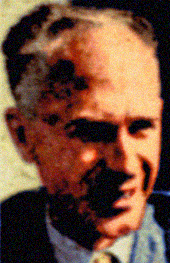
Rambling Reporter
By Ernie Pyle
SAN FRANCISCO – My friends here in San Francisco, being mostly babes in the war woods, are eager to learn all the little niceties of proper conduct in case the air raids come.
And since I was exposed last winter to a few sashays of German bombers, people out here keep plying me with war-conduct questions, which gives me the opportunity that all men look forward to – that of posing as the fount of all knowledge.
Why, during this past week I’ve been asked war questions by the thousand. No matter what the question, I answer it. My replies are quick and confident, even to problems I never heard of before. This is done on the assumption that the Japs won’t come till after I get out of town, and then the local people will be too busy to remember what I told them.
But the kids on The San Francisco News have seriously written out a batch of questions for me, and I think I’ll spend a couple of days answering them in public. For even if Indianapolis and Denver never hear the crunch of a bomb, still people there might like to know. So here we go:
Q. Do skyscrapers or small structures seem to withstand bombings better?
A. I’d say skyscrapers, although of course London has no real skyscrapers, the building limit there being, if I remember, about 10 stories.
Q. Do you think the newer-type, so-called earthquake-proof buildings out here are safest of all?
A. Yes. In London it was the old brick buildings, with dry crumbly mortar, that went down so fast. The new steel and concrete buildings could take bombs up to 1000 pounds without great damage.
Q. What might a big bomb dropped in one of the local canyons of skyscrapers do to the surrounding buildings?
A. Blow out all windows for several blocks, probably cave in the fronts of some of the smaller buildings, and twist and shatter all furnishings within the nearby buildings. But I can’t conceive of even the biggest bomb completely knocking down one of San Francisco’s high office buildings.
Q. What good does sandbagging buildings do, and from London’s experience does it seem advisable here?
A. It mainly prevents shattering of glass, and in the case of old buildings might prevent the building’s collapse by absorbing the shock first. But London I believe has found its sandbagging relatively unimportant, and I don’t see much sense to it in San Francisco.
Q. Should I send my two children to their grandparents in Arizona for the duration?
A. No. I paid a lot of attention to children in England, and what I gathered was this: bombings don’t bother them much (unless they get hit, of course). Children are easily adaptable and can take their bombings pretty calmly, just as children ride on airplanes without fear when some older people can’t. It seems to me that the disruption of home life has done the English kids more harm than any direct nervousness from raids. I think that on the whole both parents and children prefer to take their bombings together.
Q. One point puzzling war novitiates is how opposing planes in night fights determine whether that fighter pouring in from the left is friend or foe?
A. The expert will now go hide his bald head, for he doesn’t know.
Q. If an incendiary bomb falls on the roof will you know it right away?
A. Yes, baby, you’ll know it instantly, for the damn thing will probably come right through and land on the sofa beside you. I’ve seen them go through a sheet of steel laid over a skylight.
Q. What if it’s a tile roof?
A. It might come through anyway, but if it’s a steeply slanting roof it will probably glance off into the street.
Q. Are plyboard frames for windows O.K. for blackout use, so long as the blackout is complete? Or will they shatter with concussion and add to the damage?
A. They’re O.K., at least they’re used quite a bit in England. They’ll shatter if the bomb is close, but so will anything else. You’d think heavy drapes would absorb the fine particles of shattered glass, but if the hit is close the drapes blow out and the glass chews them up.
Q. Can red be spotted from the air – auto stop lights, for instance?
A. Yes. In London the lenses of all traffic lights are painted black, with just a tiny cross left in the center for the red or green light to show through. Then over the light is a black steel hood. You can see these lights for blocks if you’re on the street, but from a fifth-story window, looking down, you can’t see a light of any kind.
Q. San Francisco has forbidden smoking on the streets during blackout. Is that necessary?
A. I don’t want to get into a quarrel with the Army. But everybody smokes on the street in England. You daren’t, however, LIGHT a cigarette on the street.
Q. Could you pick off an enemy pilot with a rifle that has a range of 5,000 feet?
A. Yes, if you were Annie Oakley and had your pockets full of horseshoes.
Q. My Pop wants to hide in the hydrangeas and take pot shots at Jap planes. I say he’s nuts.
A. Aw, let him go ahead and enjoy himself. He might bring down a seagull for dinner, you never can tell.
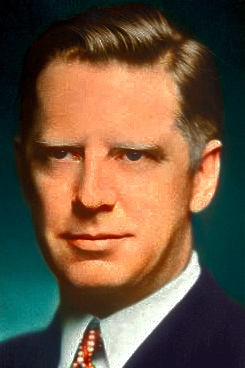
Fair Enough
By Westbrook Pegler
NEW YORK – No people in this war has been degraded and humiliated as deeply as the Italians under Mussolini, whom Winston Churchill delights to taunt in a contemptuous, impersonal way as though he were already in a cage on public view as in practical effect he is.
The Italian Empire is demolished, the Italian people realize that they are the slaves of Adolf Hitler and their arms have not won as much as a skirmish, although a whole generation was trained to brag, threaten and kill. Before this war began, Mussolini often boasted that he now had 10 million bayonets in a population of 40 million, and this, of course, was silly bombast, but there is no doubt that he had more than half convinced the Italians that they were great killers who needed only a war to prove themselves.
It is not correct to say that they were entirely the victims of the Duce, for as a nation, they certainly were spoiling for a fight, preferably with barefoot savages eaten by disease and armed only with discarded weapons off the junk piles of the continental powers.
In a pre-season war in Spain the indomitable servants of the Duce’s will were licked and chased by an enemy whom he had despised as a contemptible rabble. In France his soldiers must have sickened as they stabbed a fallen neighbor in the back, and in the attack on Greece the irresistible hosts wheeled at the first impact, fled and would have been rounded up if the Nazis had not come to their rescue.
Greece had a total population smaller than Mussolini’s army if his own boast were true, but from the moment he kicked off he never got possession of the ball and his feet were planted in the end zone when Hitler intervened.
First blow comes in Africa
It was in Africa, however, that the Italians were totally disgraced. They had called the British cowards and, to get their minds off Guadalajara and other humiliations, had talked loudly of the British disaster in France.
Mussolini had boasted of his air force, of the suicidal desperadoes who would annihilate the British fleet with tornadoes and bombs and of the mechanized desert army, long trained and marvelously armed for this sort of war, yet the cowardly foe reacted in a most embarrassing way.
Small forces, ill armed and inexperienced by comparison with those whom the Duce had trained from childhood for this hour, smashed the Fascist legions while Hitler pounded the British at home and only the intervention of nimble Germans saved some shred of Italian pride.
Meanwhile, the Germans were filtering into Italy and taking over as they had done in other conquered countries, but with the now prideless acquiescence of the boss-man whose vanity had got the Italian people into this pathetic mess.
Proves dictatorship inefficiency
The Fascist government became even more submissive than the Vichy government of France which at least could hold out for certain bargaining points, whereas Mussolini could do no business with the foe except on terms of surrender.
Food and fuel ran short, those who complained were called defeatists and the martial spirit was so thoroughly subdued by an unvaried career of ignominious whippings at the hands of inferior forces than even in Serbia the Duce’s invincibles were cowed by guerrillas.
The British fleet and flyers sank the Duce’s navy or chased it off the sea, which he had proudly called his very own and now, again, a relatively small British force, armed with stuff spared from a scant total supply is chasing the proud indomitable and their German bosses with them.
Never has a nation talked so big and fought so badly, and it is no longer a jest to suggest that a military invasion of Italy would be in fact a rescue force or that it would be so regarded by the Italian people. If they has any doubts before they must be convinced now that they were taken to war on the wrong side.
Within themselves they know, as their enemies will concede, that they are better fighters when their heart is in a fight than they have shown themselves to be in this one. Given a chance to fight the sneering Nazis who rule them as captives and given a chance to wage out their humiliation they must fight better in a veritable war for liberation than they have fought for their own enslavement.
Mussolini has given the peoples of the free countries great encouragement in proving, after two decades of Fascism, that dictatorship is not necessarily efficient and that civilian people will not fight well merely for the joy of killing.

Clapper: Baruch right
By Raymond Clapper
WASHINGTON – Both inside and outside of the administration demand is heard for recasting some one man may have controlling power.
When SPAB was set up, Bernard M. Baruch called it a faltering step forward. This offended some of his friends in the administration, but he refused to back down on it. That was last September. Four months later the slow progress and confusion indicate Mr. Baruch was right.
There isn’t anybody running the show. Mr. Roosevelt is too busy with many other urgent matters. William S. Knudsen is head of OPM. Under him in charge of priorities is Donald Nelson. But Mr. Nelson also is executive director of SPAB, which theoretically is a policy-making board over OPM and Mr. Knudsen. Thus Mr. Nelson is both over and under Mr. Knudsen. This is typical of the confused maze.
For a time it was hoped that someone would be able to grab the ball and run with it regardless of the confusion of authority and direction. Leon Henderson has done that time and again, with prices and restriction of civilian production. It isn’t laid down that way in the blueprints, but that’s the way to get things done in Washington, particularly in this administration. If somebody doesn’t step in and grab the ball, it doesn’t get carried.
Greater effort needed
We haven’t really started in war production. This coming year must see doubling and trebling of it. During 1941 we have put about one-fifth of our total resources into war production, according to the estimates of Stacy May, chief of statistics for OPM.
We can’t win a world-wide war with a 20 percent effort. This year we have spent 16 billion dollars on war production. Stacy May estimates that if we were doing proportionately what Germany and Britain are doing, we would have spent 45 billion dollars, almost three times as much as we did.
We shall have to do that eventually. The sooner we do it the sooner the war will end. Britain can’t increase her production much more. China can contribute little. Russia has done heroically, but she has lost heavily in material and in production facilities.
The weapons needed to win must come from here. We will never regain the Pacific until we have enough weapons to take control of the air and of the water.
Henderson raced ahead
The CIO estimates that two and a half million men are going to be thrown out of work because of shortages of materials and dislocations. That means not only lost manpower but lost facilities unless war orders are placed quickly in those shutdown plants.
Leon Henderson has been aggressive in anticipating the materials that would be needed for war production. He has raced far ahead of OPM in curtailing civilian production. The job of OPM now is to catch up with the facilities and the materials which Mr. Henderson has taken out of daily civilian use and made available for war work.
But this task is largely in the hands of William S. Knudsen, who all along has been hesitant to force conversion of civilian plants. He didn’t want to change over the auto industry, and was largely responsible a year ago for rejecting the Reuther plan to that end.
Now shortages of materials have forced drastic reduction in auto production. Auto plant facilities will have to be used. Months ago some here were urging a census of machine tools in small shops and in captive machine-tool plants of large industries.
Whatever complaints we used to hear about Harry Hopkins, when he was told to put the unemployed to work he put them to work. OPM needs some of the same spirit of the impractical New Dealers. They may have been theorists but somehow they managed to get things done.

Maj. Williams: Pacific tactics
By Maj. Al Williams
“Japan must be bombed to defeat.”
A very interesting air tactics fact is disclosed in a current news release from the Malay Peninsula British Command explaining that, due to the dense foliage of the Malayan jungles, prowling airmen find it difficult to locate and attack ground troops with bombs or machine gunnery. Neither British nor the Jap ground troops have had much to fear in the way of the dreaded air attack against troops on the march. In that terrain of mountain ridges, swamps and jungles, ground forces will have to stick to the few decent highways and the railroads.
Jap air attacks will be launched against these portions of the highways and railroads unprotected by jungle ceiling. This means air drives against the arteries of transportation. In turn, the British, knowing this, can plan to concentrate their heavy anti-air defenses at these points.
It is well to remember – without continuing the dangerous error of under-estimating the fighting capacity of the Japs – that early successes of the Japs against the British or American troops in the Far East are due to the fact that the Japs are able to throw in one new team after another, while our original first has to see it through the whole game. As has been so often pointed out, lines of communication are and always will be vital factors in warfare. And in this consideration, it is the “length and freedom” of those lines which are important.
I do not think it will be long before American strategists will have evolved tactics quite similar to those our forefathers used against the North American Indians in our frontier days. Our frontier warfare against the Indians was essentially a hit-and-run affair. Every time the pioneer frontiersmen adopted “Injun” tactics, they improved upon them and won out decisively. On the other hand, every time American armed forces attempted to use rule-book strategy and tactics against the Indians, there was trouble.
Successful management of the war in the Pacific calls for daringly modernized tactics – using our air and naval weapons – in much the same fashion as the American pioneers beat the Indians at their own game.
The Japs are not going to mass their naval forces to do battle with our main Pacific Fleet. So it looks as if the sooner we dig up a 1942 Daniel Boone the sooner this fracas will start swinging in our direction.
Washington Daily News (December 29, 1941)
Buchalter: Moscow mission
By Helen Buchalter
Joseph E. Davies is probably the only man who has ever told Joseph Stalin to his face: “I am a capitalist – and proud of it.” The blunt remark endeared the American Ambassador to the Soviet leader and climaxed a period of American-Soviet amiability which was soon to be set back by the stupidity of Munich.
The meeting of the two Joes – recorded in Mr. Davies’ revelatory book, MISSION TO MOSCOW (Simon & Schuster), published today – created a sensation in the Soviet capital. Stalin practically never sees foreign emissaries, either officially or socially.
But when Mr. Davies was making his farewell call on Premier Molotov in June 1938, he “was almost struck dumb with surprise to see the far-end door of the room open and Stalin come in alone.”
They chatted informally for two and a half hours. Mr. Davies, to show how capitalism distributed its wealth to the masses, too, told Stalin how much income tax he paid and how much of Mrs. Davies’ $20,000,000 fortune the U.S. Government would take in inheritance taxes.
This obviously surprised Mr. Stalin, for he looked at Molotov with a smile and Molotov nodded.”

In a diplomatic corps which delighted in baiting the Reds on their home territory, this middle-western corporation lawyer was almost unique in winning the confidence and even the affection of Soviet leaders. Stalin himself grew curious from reports of his ministers about the fabulous multimillionaire who frankly said he did not go for communism but respected the honesty, the sincerity and the high ideals of the men who were remaking Russia.
From this book – a collection of confidential dispatches, diary entries and private correspondence – you gather quickly that Mr. Davies was an extremely shrewd and industrious observer. He felt he was a business man, not a diplomat, and he went about his duties with an open-minded efficiency that made him one of the best prophets in the American diplomatic service. Most accurate of his predictions was that Hitler could not lick Russia.
To this high score he owes the evidence of his own eyes and ears. Though he imported his capitalist tastes along with a 2,000-pound supply of frozen cream to the land of the workers’ republic, lie was no mere banqueteering ambassador.
Thus it was Mr. Davies who urged an alliance between the democracies and Russia as a bulwark against Nazi ambition before the war; who saw our neutrality legislation as an invitation to aggression; who w nurd that stubbing Moscow at Munich would lead to an expedient Berlin-Moscow truce.
In April 1938, he wrote to his son-in-law, Millard Tydings: “This isolation of Russia lx probably more serious to the democracies of Europe than it is to the Soviet Union. … As things are going in this cockeyed world, I am not sure but what the democracies of the world might not be damn glad someday to have the friendship and the power and the devotion to peace which this government could supply.”