The Pittsburgh Press (December 29, 1942)
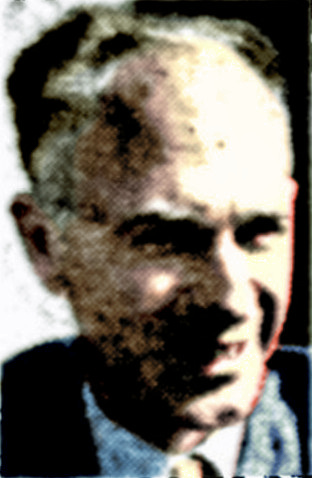
Roving Reporter
By Ernie Pyle
Oran, Algeria – (by wireless)
Yesterday, I survived a tour of 150 miles in a jeep.
After 150 miles in a jeep, it takes you 24 hours to stop vibrating. At the hospitals, they tell me they’ve had soldiers down in bed after riding all day in a jeep. So, I feel pretty tough and proud of myself.
We made a grand tour of American camps. I went along with a couple of security officers whose job it is to set up and supervise security detachments in each camp. By security is meant keeping silent about military secrets, and watching for snakes in the grass such as Axis sympathizers and agents.
The security officers have a terrible job because they say Americans simply aren’t security-minded – we won’t keep our mouths shut, and we insist on trusting everybody. They say the French practice better security in peacetime than we do in wartime.
We stopped at the first airport and I ran into some of my fighter-pilot friends that I wrote about from Northern Ireland.
One of them had an arm in a cast. I immediately visualized a good thriller column, but it turned out he had merely fallen off the wing of his plane and broken his arm, the unromantic cur.
Then we stopped at an anti-aircraft gun set in a hole in the ground, and talked to Sgt. John Muir of Chicago. He said that if those Spitfires flying about 2,000 feet overhead were enemy planes, they would be dead ducks.
Helmet serves as foot bath
Afterwards we hit a big tent hospital, just being set up. There I ran onto Lt. Dick Alter and Nurse Katie Bastadiho, both of New York, who came down on the same boat with us. They’re all crazy about living out under canvas. Katie says she has been washing her feet in her steel helmet and it turns out her feet are bigger than her head.
We made quick stops at a supply depot full of railroad rails and at an engineering company that is building some roads. Finally, we would sit up at Sidi Bel Abbès, home of the famous Foreign Legion. Somehow or other, we got acquainted with a Maj. Fuzeau of the Foreign Legion and sat with him for an hour at a sidewalk café though the major spoke no English and we no French, at least hardly any.
We spent the first 15 minutes asking the major such primary questions as how old he was, whether he was married, how long he had been in the Legion, and what his native city was. That exhausted our vocabulary, so we spent the next 45 minutes complimenting each other for our hospitality, extending hands across the sea, touching our hearts, and recalling wonderful Franco-American incidents of the last war.
The reason I knew we were doing this is that the major kept saying, “quatorze-dix-huit,” which I happen to know means “fourteen-eighteen,” and those of course were the war years. We just assumed from his gestures that he was telling us brother-love incidents.
Frenchmen learn our tanks
On the way back, we put in at a place where American tank crews are teaching Frenchmen to run our tanks. They are camped way out on a sloping hillside, on ground covered with sagebrush exactly like hillsides in the American West. The tank boys work from daylight to dark when they’re on the move. They work all night, too, for the ground crews haven’t arrived and they have to do their own repairing.
They are really roughing it. It’s cold out there at night, and they sit around bonfires before going to bed in their little tents.
They were the first troops into Oran, but they’re never been back to the city since. For some reason, they aren’t allowed to go there on leave. Even their officers think it’s ironic that they captured the city and now can’t go into it.
It was long after dark when I left the tank boys. Fortunately, there is no blackout here and you can drive with headlights on. Even so, we almost spilled ourselves a couple of times shying around Arabs who looked up suddenly with immense bundles of sticks on their backs.
We lurched back to Oran at 50 miles an hour, deeply windburned and feeling exactly like men who had seen practically all there was to see. Yet we hadn’t seen the tiniest fraction of what we have actually got around here.