The Pittsburgh Press (February 23, 1942)
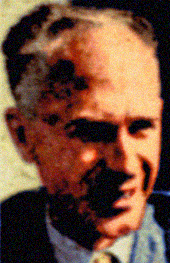
Rambling Reporter
By Ernie Pyle
SAN FRANCISCO – Tom Mooney has ceased to be a headliner. Even the average San Franciscan probably doesn’t know what has become of him.
So I thought I’d look up this man who spent 23 years in prison for the 1916 Preparedness Day bombing. He was pardoned three years ago.
Of his three years of freedom, all but six months has been within hospital walls. I found him in St. Luke’s Hospital here. He has a small private room, nicely furnished.
When I went in, he was reading “Ambassador Dodd’s Diary.” He smiled and said, “Hello there, Ernie,” and took my hand in both of his.
Tom has been here for two solid years. He has not set foot on the floor for 16 months. The doctor sees him every day. He has a special nurse in the daytime. He’s a very sick man.
Yet he does not look ill, except for one thing – a startling yellowness. He’s as yellow as a pumpkin. Even his eyeballs are yellow. The stomach ulcers which almost killed him are not his trouble now. His liver is the culprit this time. It is jaundice. The doctors watch his temperature like a hawk. Now and then it gets a start on them, and Tom has to go under an oxygen tent. It may be that he will never leave St. Luke’s.
But Tom Mooney is no beaten man. I haven’t a tenth of his zest for life. He is eager and intense and talkative, even though he no longer has a “cause,” His interest now is the war.
Reads newspapers, periodicals
He reads newspapers and a dozen or more left-wing and labor periodicals. He has a radio at his bedside, and hears all the war news.
Tom Mooney is a smart man. His long illness has not enfeebled his mentality. He puts events together as though he were a factory, and out of it comes a product – his opinion. He has one on any subject you can mention.
Mooney says the Japs will have the South Pacific wiped up in a few months. After that, they will not try for Pearl Harbor or Panama or California. A few nuisance raids, maybe, but nothing more. Here is what he says will happen:
“After the Indies and Australia, the Japs will move into India. That’s their big objective. Hitler will try to move across Africa to Suez, and then on eastward. The Japanese and Germans will meet in India, and that side of the world will be girdled.
“And then, if Hitler is still hanging on against Russia, Japan will open an eastern front against Russia, to help out Hitler. That is the plan, undoubtedly.
“Russia is the key point. Why, if we would give her the stuff, Russia would have the Germans licked this summer. They’ve got the greatest fighting spirit of anybody in the war.”
Tom is very proud of Russia. He feels that all his beliefs and arguments have at last been justified. Russia has proved what Tom always said of her.
“Who will win in the end?” I asked.
Tom was lying back with his eyes nearly closed. He looked like a prophet of old when he spoke, slowly and softly. “The Allies will win,” he said.
Tom still has visions against the capitalists. For instance, he says there is a national conspiracy among American newspapers now to bury news of Russian successes, because they don’t want the people to get the idea Russia is too wonderful.
Mooney eats vegetables, fruit
Outside of his yellowness, Mooney looks good. He seems no older than when I saw him last, in jail, four years ago. He has lost weight, but is not cadaverous by any means.
He can eat nothing but vegetables and fruit. Most of his vegetables are raw. He alternately reads and rests throughout the bay. He never sits up.
He doesn’t get lonesome. A good many people want to see him, but he sorts them out and sees only a few. He has a phone at his bedside, and the hospital lets certain people talk to him.
But on the whole, his old friends have dropped away. The most faithful of all is his former secretary – Sarah Eliasser. She has another job now, but she comes once a week and takes Tom’s letters, and sometimes reads to him.
His once vast correspondence has dwindled now to letters asking for money to pay his hospital bills. It takes about $50 a week to support him. It comes from a few friends, and from countless little organizations you never heard of.
George Davis, the young lawyer who finally freed Mooney, goes to see him about once a month. Davis says that not once in the three years of freedom has Tom mentioned “the case” – meaning the long legal fight for his release.
My real curiosity was about Tom Mooney’s spirit. Now, with his importance gone, I expected to find him a disillusioned, resentful, complaining man. But I didn’t find him thus at all. His once colossal egotism is dead but his spirit burns on. He exists on his vivid interest in the whole world.
In fact, I found Tom Mooney today more interesting and more likable (and he is a likable fellow) than when he was a world figure in prison. He is greater than we credited him with being.