The Pittsburgh Press (September 4, 1942)
Roving Reporter
By Ernie Pyle
DUBLIN – I have had a long chinfest with one of the Brooklyn boys who made good. It’s Mr. Eamon de Valera – usually called “Dev” – that I’m speaking of. He was born in Brooklyn, you know.
Mr. De Valera is the man who runs Ireland. He has been in the thick of Ireland’s tragic and bloody history since World War days. He has led an odd life for a schoolteacher. He has been sentenced to death, sentenced to life, and confined in jail for years at a time. But finally he saw Ireland get her independence, and for the last 10 years he has been nourishing and guiding that independence.
It is not difficult to see Mr. De Valera as it would be for a foreign newspaperman to see President Roosevelt these busy days. But unless it’s by special dispensation – which I had no reason to seek - you are not permitted to quote him.
An appointment was made, and I was taken to Mr. De Valera’s office by Frank Gallagher, head of the government news agency, who is an old friend and fellow-revolutionist of Mr. De Valera. (In fact Mr. De Valera said that if I were looking for the American’s idea of a typical Irishman, there stood Mr. Gallagher.)
As soon as we were introduced, Mr. Gallagher left, and I was alone with Mr. De Valera about half an hour. He did not give the impression, as many big men do, that he was squirming for you to shut up and get out.
He did not appear busy. There was not a paper on his desk. His whole office is very plain. It is fairly small, and has an Old-World strictness about it.
Mr. De Valera’s desk is half covered by an arrangement of automatic call boxes, into which he talks as though he were talking on the phone. He mentioned a book he thought I would enjoy reading – “The Republic of Ireland,” by Dorothy Macardle – and he reached in his desk, tore a corner off a blank sheet of paper, and wrote it down for me. He smiled at his parsimoniousness, and said we had to save paper nowadays.
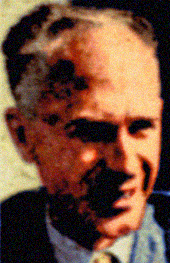
Mr. De Valera is an immensely tall man, and I had to look way up to see him. They say he has been publicly photographed only once when he was smiling, and in his pictures he always looks so dour I was almost afraid to meet him.
But he smiled broadly as we shook hands, and I did not feel ill at ease with him. I told him I’d seen so few Irishmen laugh that if he didn’t tell me a joke or two I was going to feel very sad. He smiled and said he couldn’t think of any jokes, and then seriously went into the sonber side of the Irishman’s character. The Irishman, he feels, is really more somber than the American.
Mr. De Valera did most of the talking. He has a way of talking, in quite simple language yet on such broad scope and so unpausingly that afterward you have trouble remembering specifically anything he said.
He talked of American enthusiasms and British determination and Irish impulsiveness. Being myself a non-philosopher and a dope at international analysis, I finally got Mr. De Valera off onto his private life. He has to be a goldfish all the time, and set the perfect example. But he seems not to mind that.
When I felt I had been there long enough, Mr. De Valera phoned Mr. Gallagher to come and get me. As we walked down the hall Mr. Gallagher asked me how I liked him. I said I liked him fine, which was true.

I went that afternoon to a session of the Dail, which corresponds to our House of Representatives. Irish “congressmen” are called “deputies.” There are about 135 of them, but only 21 were in their seats that day. All the rest, I was told, were at home harvesting crops or attending to business.
The Dail chamber is much like our house at home, except smaller and darker. Members have to pause and bow to the chair both when entering and leaving. The deputies all looked to be about the same type and class of people as our own congressmen.
All afternoon they were giving the Minister of Supply hell. He was there in person, and would pipe up now and then and say “That isn’t so,” and give some figures to prove his point. The rest of the time he sat and took his lacing with a sort of resigned and sardonic smile. On the whole, they say he does a good job.
I had dinner with an Irish friend that evening, and asked him exactly how the word Dail was pronounced. The best I could get it, it sounded like “Doyle.”
“No, no,” he said, “not like Doyle, it’s like Doyle.”
“I’ve got it now,” I said. “It’s like Doyle.” Anything for a laugh.
It’s almost impossible for an American to pronounce some Gaelic words. On a second and final attempt my friend decided we should pronounce Dail just about like “dawl.”
I’ve about given up on Eire. I’ve tried everything from “Eire,” “Air,” and nobody knows what I’m talking about. If you say “Errah” you’ll be getting pretty close. But mostly I just shun it, and rely on the good old pronounceable name of “Ireland.” You can’t go wrong there.