
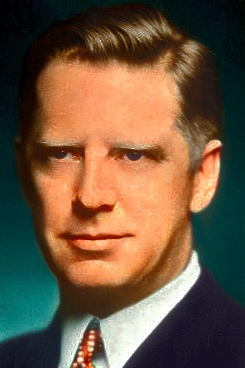
Pegler: Fellow traveler Frankfurter
By Westbrook Pegler
New York –
During the last two or three years, it has been bruited about Washington that Felix Frankfurter has lost much of his old power in the New Deal.
If this be true, the fact remains that many of his old pupils from Harvard, men indoctrinated by Frankfurter during their impressionable years, are still planted in government positions in which they can impart to their judgments and interpretations the Frankfurter twist, which, in the minds of some, seem to give the law a meaning contrary to the intent of Congress.
It is a fact worth noting, too, that the Communists have a way of “going underground” as they put it, when they feel that they have made themselves too conspicuous. The entire Communist Party of the United States did this a few months ago when it disbanded and assumed the harmless guise of an educational society.
A year before, the International Communist Party or revolutionary movement, always directed from Moscow, went underground by means of a complicated and deliberately confused document which appeared to announce its dissolution but actually announced no such thing. However, the world reading the document, carelessly, believed it had dissolved itself.
Mr. Frankfurter’s apparent retirement from politics and informal but effective government administration may be a similar stratagem.
Accused by Theodore Roosevelt
In his reply to the late ex-President Theodore Roosevelt’s letter accusing him of writing a misleading report to President Wilson in the Bisbee deportation case, Mr. Frankfurter denied that the men deported from Bisbee, Arizona, in 1917, were planning insurrection. He went into a discussion of organized opposition to social justice in the copper mines which seems to have been beside the point on which Mr. Roosevelt had challenged him.
Mr. Roosevelt’s point was that there was imminent danger to an unarmed community, and this contention was supported by much testimony of reputable men and finally proved in a trial in the state court, of one of the deputized citizens.
In this test case, tried in 1920, Harry E. Wootton, a Bisbee hardware dealer, was acquitted in 16 minutes by a jury from which employees of the railroads, copper companies and other big interests were barred.
The charge was kidnapping. The defense was imminent danger to the community.
Judge Samuel L. Pattee told the jury they could acquit Wootton if they believed there was a “real, threatened and actual danger of immediate destruction of life and property.”
Mr. Frankfurter ignored, or gave no weight to, powerful evidence that many strangers had sifted into Bisbee, that men and women had been threatened, and that the International Workers of the World, the predecessors of today’s Communists, were violently obstructing this nation’s war effort in many western areas.
Tried to promote revolution
The IWW had seized upon this country’s intense preoccupation with the war against Germany as an opportunity to make a revolution here at home. There were many Germans, Austrians and other continentals among them and, in the Bisbee trouble, there were many Mexicans. The sheriff insisted that these Mexicans included former Villistas who, of course, were violently anti-American.
TR wrote to Mr. Frankfurter:
The apologists for anarchy are never concerned for justice. They are solely concerned in seeing one king of criminal escape justice precisely as certain big businessmen and corporation lawyers have in the past been concerned in seeing another kind of criminal escape justice.”
He did not call Mr. Frankfurter an apologist for anarchy in so many words but he did say, flatly, “You are engaged in excusing men precisely like the Bolshevik who are murderers and encouragers of murder.”
A recent issue of the Catholic Worker, a radical, but, of course, not Communistic paper, the organ of the Catholic worker movement, discusses Mr. Frankfurter’s friendship for Harold Laski, the English Communist whose writings attack religion and who, also, is well received in Washington, and is more influential there than any other Englishman except Churchill.
Arthur Sheehan, the editor, who spent a long time in Boston, writes that in 1937 he went to a forum at Ford Hall, Boston, to hear Mr. Laski. He reports that Mr. Frankfurter introduced Mr. Laski to the audience with the remark that the day he looked forward to in the year with the most joy was the day when Mr. Laski came to stay with him in his home in Massachusetts.