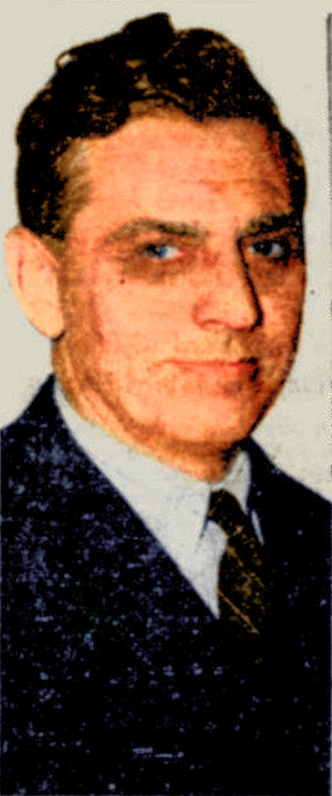
Clapper: Plane down
By Raymond Clapper
This is one of a series of dispatches found among Mr. Clapper’s effects after his death in the battle of the Marshalls, and delivered to us by wireless from the Pacific.
Aboard an aircraft carrier in the Marshall Islands –
As was said to me by Cdr. R. E. Dixon, who was a pilot on the old Lexington and is now on Adm. Sherman’s staff aboard this carrier, every flier naturally thinks about his chances of coming back, and all of them would rather be shot down over German than over Japanese territory.
Cdr. Dixon, incidentally, is the pilot who, after sinking a Japanese carrier, sent the message back to the Lexington: “Scratch one flattop!”
He won the Navy Cross. He said that if he had known his remark would be printed in the newspapers, he would have tried to think up something better.
Anyway, he knows what the fliers in this part of the war think.
In their briefings before the invasion of the Marshalls, pilots were instructed about forced landings and warned of poisonous fruit and fish. They were told the natives were fond of dog and cat meat, and that if they were forced down and reached a native village they might expect to dine on cat.
Rescues at sea
Great care is taken to rescue downed pilots, a fact that has an enormous effect on morale, as the lieutenant who is executive officer of our torpedo-bombing squadron says. He is reading Eve Curie’s book, Journey Among Warriors, and he thinks she took chances as a war correspondent that would scare him.
From the flight deck of our carrier, I have seen two of our planes crash in the water within sight of the ship. In each case a plane circled overhead while one of the escorting destroyers rushed up to save the men. Each time the men were hauled aboard a destroyer within 15 minutes.
One of our destroyers unexpectedly fell into the star role of our task force because of a rescue mission during the attack on Kwajalein. The lieutenant commander commanding out torpedo-plane squadron was in the midst of a dive on Kwajalein when word came over his radio that one of his planes was making a forced landing. He came out of his dive and called his flight officer to circle over the three men, who were in a rubber boat, while he obtained a destroyer. He radioed the carrier, and under orders of Adm. Sherman a destroyer was taken out of the escort and sent 90 miles away to rescue the crew.
Two-in-one errand
Fighter cover was given the destroyer, and the pilot guided it to the rubber boat. The men were taken aboard after three or four hours in the water.
That is the kind of work destroyers must do – running errands. But this hard-working little destroyer had the break that night which every big ship in our task force was hoping to get.
On the way back to our task force, the destroyer overtook a small Jap convoy of four ships – a tanker, a medium-sized cargo ship and two smaller ones. He sank all four. Next morning, he messaged Adm. Sherman, aboard the carrier, that he had sunk four ships. And he added, “enjoyed picnic.”
Adm. Sherman sent back congratulations to the destroyer’s skipper, LtCdr. D. T. Eller, and added:
When I sent you on a rescue, I didn’t know I was also going to give you monkey meat for a picnic.
Adm. Sherman is bitter over some of the Japanese incidents of brutality to his pilots. He says one Jap fighter pilot, out of ammunition, deliberately ran his propeller into one of our parachuting fliers.