Clapper: Munda
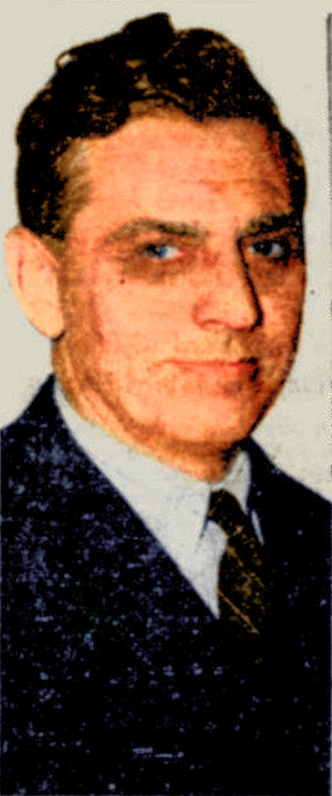
By Raymond Clapper
Raymond Clapper, before setting out with a naval striking force which took him to his death, wirelessed a few columns in advance. Last Jan. 1, upon leaving the country for the Pacific, he had written that “some people in Washington feel there is no sufficient awareness at home of how much our men are doing and in what a living hell they must sometimes do it.” His mission was to help increase that awareness. Hence we feel that he would want us to print, posthumously, these columns written some days ago.
Munda, Solomon Islands – (by wireless)
I had read a good deal about the Munda campaign, but not until I went over the ground where we suffered more than 25% casualties did the story come to life in all its grimness.
Adm. Nimitz was understating it when he said this was the worst terrain he had ever seen. It is surely the worst he ever will see. One Marine colonel said the jungle was so dense he never saw the sun for days at a time.
We got in here early last August. Three days later, the Seabees moved in with bulldozers and dynamite to remove coconut groves and saw off the top of a hill, and in 56 hours we were using an airstrip. The Japs’ strip here, as everywhere else, was too small. It was 3,700 feet long. We built one 8,000 feet long and three times as wide as the Japs’.
Now, after five months, Munda has a huge coral-surfaced airfield and hard-surfaced roads, and the hills are covered with installations and supplies, making a strong forward base out of this place.
Japs primitive but effective
The Japs had hastily occupied Munda for their meager fighter strip at the climax of the nearby battle of Guadalcanal, when they were about to lose Henderson Field to us. The Japs are primitive but effective. I went through one of their dugouts, running into tunnels 30 feet back into the coral rock. It was blasted and chopped out by hand, and had coconut logs as supporting timbers. In fact, it was so large and strong we used it temporarily for our air-control plotting room.
We had to dynamite the Japs out of there. This and other dugouts stood up under direct bomb hits.
The Japs were clever in that they built their airstrip under coconut trees, which camouflaged it until they were finished. Then they cut down the trees and suddenly the airstrip appeared, ready for use. They planted sprouting coconuts on pillboxes for camouflage.
The Japs had only narrow roads or trails. All their work was done by hand; they had no heavy road-building machinery such as we bring in everywhere out here. We went into jungle this way – patrols first, bulldozers next, followed by jeeps and artillery.
To go seven miles took one month. The Japs were vicious snipers. We ordered our men into foxholes at 3 of an afternoon with orders to stay there and shoot anything that moved. Then we laid down an artillery barrage that dropped only a hundred yards from these men. Yet the Japs crawled through it and dropped grenades into our foxholes, or struck with knives in the dark.
Many invalided home
No American troops ever went through anything more severe. Many of them have been invalided home, but many are still here. The 43rd Division, a New England National Guard outfit, went through a living hell out here. One regiment, the 172nd Infantry, is the descendant of the Green Mountain Boys. Many of these men are still here, and just a couple of nights before I arrived, one of their units was shot up in an air raid, losing one killed and 23 injured.
Another division that has found this to be a long hard war is the 37th, mostly Ohio men. After Munda, they went in at Bougainville.
We are using some of the Jap landing barges captured in battle. Also, for a while we used some Ford and Chevrolet trucks which the Japs had left, and we found an Indian motorcycle of the three-wheeled type which the Japs had converted into a light ammunition carrier. We found oxygen bottles marked “Made in USA,” and two coastal batteries of 47 Armstrong-Vickers guns which are believed to have been captured at Hong Kong.
But it is all quiet around here now except for air raids and the fight against jungle scourges. Lt. John R. Dexheimer of Louisville, Kentucky, said the greatest danger was from coconut trees, with shrapnel-weakened trunks, falling down on tents.