Would extend draft system
Registration of women urged by Mrs. Roosevelt
First Lady says they will be used in many ways if war lasts
…
The Pittsburgh Press (February 16, 1942)

Rambling Reporter
By Ernie Pyle
SAN FRANCISCO – Well, what do you know about this! Here we are in San Francisco again. If I’m not careful I’ll get to calling San Francisco home instead of Albuquerque or Indiana or Washington, D.C. Maybe I just better ask for bids.
In addition to torrents of rain and the keys to the city, I was welcomed here by a large batch of mail. On the whole the mail was nice and the writers wished me much health, happiness and wealth. I go for that wealth stuff.
However, there were a few letters which made me feel bad. It seems some people are being wracked by an indignant concern over the apparent disintegration of this noted author’s moral fiber. So perhaps a futile explanation is due them.
You know that cooking column I wrote from Albuquerque a few months ago. The one in which we took up a collection from the guests to buy flowers for the delivery boy who broke his leg (although there wasn’t any delivery boy and he didn’t break his leg). And I said that instead of buying flowers I took the money and bought whisky with it.
Well, that seems to have upset several people. That I could be such a rat as to buy whisky with that money! One woman even consigned me not too gently to Purgatory.
What astounds me is that people apparently have taken to believing everything they see in this column. Why, I’ve been writing fantasies like that for seven years, and nobody ever got so serious about it before. Older readers know quite well that occasionally I get my tongue caught in my cheek and can’t get it out.
Humor backfires in wartime
So I’ll draw those disgruntled readers a picture of that nasty whisky-buying episode. No such incident ever happened. I made it all up. I thought everybody would know that when they read it.
No collection was ever taken to buy flowers for the delivery boy who didn’t exist. And I did not buy whisky with the money that wasn’t collected. All the world knows that I don’t buy whisky. What I actually bought was a trainload of burros, all named Pete.
Now, everybody happy?
It does seem to me, as a man with his finger on the nation’s pulse as they say, that there has been an altering of public reception to humor-attempts since the war started.
Take me. I’m a humorist, as everybody knows. I’ve been laughing hysterically at my own stuff for years. I have no proof that anybody else ever did. but at least my occasional efforts at wit never brought the firing squad to my door.
Yet since Pearl Harbor it seems to me that some folks have deliberately set out to misunderstand what they read. I’ve actually had the recent experience of being raised by one reader to the status of a traitor because of a line I thought was harmlessly funny. Light-heartedness is ticklish business these days.
The New Yorker magazine recently had a little essay on this subject. They are worried, too. They likened wit to the hand grenades of the last war, where you pulled the fuse, counted four, and let fly at the enemy.
Gloom will live for a day
A dozen little things could happen to cause you to blow yourself to smithereens, instead of your audience, the Germans. That’s what is happening now to humorists and cartoonists. The New Yorker says:
It is too tough a job for the average humorist to determine which of his writings are likely to bolster the national morale and which are likely to give comfort to the enemy (and, I might add, discomfort to himself).
The old-fashioned idea that laughter is always a healthy catharsis is too firmly imbedded in him, and his estimate of the public’s ability to disentangle irony is, generally speaking, much too optimistic.”
So, as far as I am concerned, a gay touch isn’t worth the struggle any longer. Down with humor for the duration, I say. Long live gloom, if that’s the way it has to be. Hereafter when something funny pops into my head. I’ll just lock the door and laugh traitorously to myself.
Maybe I’ll change my mind tomorrow, though.
I have a friend here who went to enlist in the Air Corps. He passed the physical and mental tests easily, but they wouldn’t take him – because he bit his nails! Guess they figured it indicated he was too nervous.
However, they did say that if he’d come back in a week with unbitten nails, they’d take him. So my friend summoned up all his will power, went for a week without biting a nail, returned to the recruiting office, and was accepted.
Gleefully he rushed back to the office where the worked, and started telling the boys that he had been taken. The boys gathered around and congratulated him, and then one of them said: “But what’s the matter with your fingernails?”
Everybody looked, including my friend. And discovered that he had bitten all his nails clear down to the quick on his way back from the recruiting office!
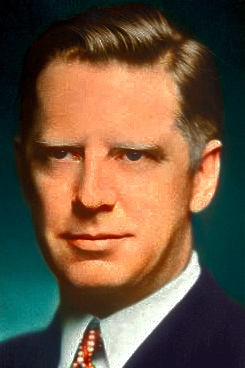
Fair Enough
By Westbrook Pegler
CHICAGO – The rivalries of the Chicago Tribune on one hand and the Daily News and Marshall Field’s new morning paper, the Sun, on the other, are an interesting public disturbance, in the heart of the Middle West.
Chicago papers seem unable to stick to the newspaper business. They always try to control the mayor, the state’s attorney, or county prosecutor and the governor and even the senators and some representatives. They promote amateur prize fights and all sorts of public spectacles and their political and other extracurricular activities inevitably create obligations which newspapers are freer without.
The Tribune, under R. R. McCormick, has been fiercely anti-New Deal ever since the NRA, and was just as angrily isolationist down to Pearl Harbor. It is still anti-New Deal, but has accepted the war with grace and vigor, but without shirking its duty to criticize incompetence, venality, mistakes or misrepresentations by officials of the government.
McCormick is obdurate and patriotic
This is a very difficult situation to be in, but McCormick is not embarrassed or deferred. He is a strong, obdurate man, who takes very little counsel of anyone and, although he has actually been accused of treason by his opponents, it is ridiculous to think that a man so independent and self-sufficient could be tempted to sabotage the American war in a hope that out of defeat he might arise like a Quisling, a Darlan or a Petain.
He is a very patriotic man and he held the view that this country should arm mightily and not scatter its weapons as fast as they were made along the battle lines of Britain and Russia. The sincerely patriotic isolationist formula, before Pearl Harbor rejected the contention that if Britain had fallen for the lack of this help, the Axis would have won last year and then would have attacked a still inadequately armed and complacent United States.
Frank Knox, who operates the Daily News, an evening paper, is a Chicagoan by adoption and his paper, too, was vigorously anti-New Deal until Pearl Harbor or not long before. But on the subject of war, he shared President Roosevelt’s view of inevitability and so left his paper, where his investment is, to join up as Secretary of the Navy. So naturally during the America First campaign, the party got very rough and McCormick was called an appeaser and Knox and his co-believers were called warmongers.
Sun loses its interventionism issue
Marshall Field had bad luck. He is a kiver-to-kiver New Dealer, but a new personality and without much force. When he started his Sun he had a beautiful issue, for he was invading the Tribune’s monopoly of the morning field as a supporter of the President’s war policy, or, as the Tribune called it, interventionism. Then the Japanese blasted his issue out of existence, for McCormick immediately bowed to the fact of war and there was no question of isolationism vs. interventionism any more.
The Sun is still new and should improve, but to date it is real. Silliman Evans, a Texas politician and reporter who opportunized himself into some very good spots under the New Deal, was given the task of whipping up a full-size, first-class paper with character out of ingredients. He followed the standard American pattern, which calls for a certain number of comics, columns and so forth, but newspapers develop character, good or bad, by growth, as people do, and here was the Sun attempting to be adult the day it was born.
As a straight New Deal paper the Sun probably will get some political favors from the administration, and it obviously is trying to needle McCormick into recognizing it as a rival or critic. But McCormick just ignores it and keeps blasting away at frivolities, mistakes and some of the policies of the government and the Sun keeps yelling “Hey, I called you a louse. Why don’t you call me something?”
This fuss is altogether too noisy and nasty and the people might some day tell themselves that, after all, newspapers are for news and have no right to make or break governments or whip them unnecessarily into lathers and dissension just because they are competing for business. But it has always been that way in Chicago. It is the darndest town.
Clapper: Clashing prides
By Raymond Clapper
WASHINGTON – The Government can’t deal properly with creation of an adequate supply of industrial labor tor war work until it can appease those whose personal pride and prestige are involved.
That mainly is what is holding up this most necessary move.
Nobody in the whole show doubts for an instant that the Government must steer our labor supply if war production is to have enough hands to do the work.
Sidney Hillman, labor director of the War Production Board, says that to provide the manpower for the President’s production program this year, we must add 10 million workers to the five million already in war production. Probably another five million will have to be added next year. To do that while at the same time supplying men for the Army and Navy will put the heaviest kind of a strain on our manpower. It can’t be done if left to haphazard supply and demand.
Union rules stymie die-making
Because of new mass-production methods in plane building, an almost unbearable burden will be placed on die-making. But when you try to get die-makers, you bump into the union rules which forbid the using of additional apprentice helpers unless the Government guarantees that they will not be allowed to continue at that trade after the war. That’s one illustration of many.
Hundreds of thousands of men and women must be trained and placed in special kinds of war work. Workers must be trained up to do work of a higher grade than before.
The dislocations and shifting of workers from one locality to another will be tremendous. President Roosevelt says that the Ford Willow Run bomber plant will require 75,000 to 100,000 workers. Imagine the shifting of labor supply that one plant alone will involve. Free supply and demand breaks down under such dislocations.
Labor supply and Army and Navy drafting and recruiting are all tangled up into one complicated problem of manpower, as the British found when they took men out of industry for the army and had to return some of them to their former jobs later when production fell down. They placed labor supply and military manpower under one management in Bevin’s Labor Ministry. They call it the Ministry of Labor and National Service.
Here several agencies have a finger in the pie in addition to the Army. Navy and the Selective Service system. There are the War Production Boards labor division, the U.S. Employment Service, vocational education, the Department of Labor’s activities, and CCC.
All agree that some centralized administration is necessary. But everybody wants to run it. Paul McNutt, head of the Social Security Agency, feels he has prior claim because the unemployment service, which would be the core of the labor supply machinery, is in his agency. He has developed a basic plan which, whoever gets it, will probably be adopted.
President to attempt another agreement
But Sidney Hillman balks. His friends say that his former co-head of OPM, William S. Knudsen, was recognized by being made a lieutenant general in charge of Army procurement. They think labors representative on the old OPM should have recognition. Labor representatives generally feel that manpower is their dish and that labor should be recognized by placing one of its own in charge as the British did in giving that job to Bevin.
This inside battle has been going on for weeks, with the Army, Navy and Selective Service objecting to having their manpower supply included in the industrial labor supply scheme.
This week President Roosevelt is expected to try further to get an agreement with his new “War Labor Council” composed of AFL and CIO representatives who meet with him from time to time.
As soon as everybody can be pacified the President can go ahead with this most urgent step.
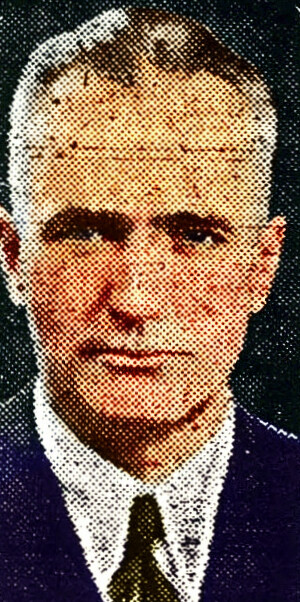
Maj. Williams: Give us planes!
By Maj. Al Williams
“Japan must be bombed to defeat.”
What are we waiting for? We know in our hearts, and in common sense, that it’s real American airpower for us or defeat.
On last December 7 the Jap war broke upon us at Pearl Harbor. The Malayan sweep of the Jap forces, land and sea, began on December 8, paced and spear-headed by Jap air forces. Simultaneously, the Japs swarmed over the sides of a hundred or more transports lined up against the beaches of the Philippines, under the protection of said transports assured by Jap warships and insured by Jap air fleets overhead.
This massing of Jap transports and warships off the Luzon beaches was just the type of juicy target that seapower has been doting upon for centuries. But nothing of consequence was done about it. Whether we had enough left of our Pacific Fleet to attempt the destruction of that sea-borne invasion force is beside the point because the Japs saw to it that they dominated the air over that particular sea combat zone.
One month later, the President asked for 185,000 planes during 1942-43, and the country roared its approval. One month after that – two months in all – Gen. Marshall asked for two million men to man these 185,000 planes. And the country roared again.
But the planes and manpower appropriations have merely been asked for and approved, and this was enough to beguile some people into believing that America “tops the world” in airpower.
The ancient Chinese used to fight wars by trying to frighten their enemy with firecrackers and by waving banners and making noise. There is too much of this today.
You can’t win wars with appropriations. It takes first-class tanks, guns, thousands of first-class aircraft, and the right kind of sea fleets – sailing, marching, and flying. In all the hubbub there was not one word about the reorganization of the national defense system to accommodate an air force totaling two-thirds of the land army of this country and several times the seamen of our Navy.
Who is going to handle this huge force of 185,000 planes manned by two million men? The Army? The Navy? Neither reported on the firing line with the right kind of equipment or training when the war broke.
The basic law of American efficiency and business is to refuse greater responsibilities to men or organizations that have failed to discharge in a competent fashion those originally assigned.
What are we waiting for? Years ago airmen said plainly and concisely that we had no adequate or modern plan for the air defense of the United States and its territories. Look at the record!
It’s the preservation of the status quo or victory by airpower for the American people. What are we waiting for?