Enemy broadcast…
Allied defense lines cut by Jap forces on Bataan
MacArthur’s men threatened with encirclement; Nipponese dispatch from Manila says
Dispatches from enemy countries are based on broadcasts over controlled radio stations. They frequently contain false statements for propaganda purposes. Bear this fact in mind.
TOKYO – Dispatches from Manila reported today that the left flank of the Japanese attacking forces had pierced the Allied defense line between Abuke and Matuv Mountain on the Bataan Peninsula of Luzon Island in the Philippines.
This advance, the dispatch said, imperiled remaining U.S.-Philippine forces with encirclement. By occupying an “important enemy position” south of the naval base of Olongapo, the Japanese expected to cut off the Americans’ retreat from Bataan Peninsula.
Battlefront reports from Malaya said that Japanese forces advancing down the eastern coast of Malaya made contact last night with Japanese troops proceeding southward on the western coast from Kuala Lumpur.
Advance in Johore
The eastern forces annihilated the British 9th Division at Kuantan and cleaned up the remnants of defending troops in the jungles of the central Malayan Peninsula before making contact with Japanese troops from the west, the dispatch said.
Japanese troops have now advanced to a point near Batu Anam, in Johor State, completing encirclement operations against 20,000 mechanized troops of the 8th British Division, the Malayan dispatch asserted.
British aircraft have virtually been swept from the skies, the report declared, and British defenders on Singapore Island were reportedly setting up mock airfields to deceive Japanese attackers.
Near southern tip
Dispatches from Malaya said Japanese forces were near the southern tip of the peninsula.
Radio Berlin, quoting the Domei News Agency, said a Japanese column reached the vicinity of Gongpent, a strategically important point in the central main road across Johor. The broadcast said the Japanese were now southeast of Malacca and had cut off the retreat of Australian forces on the Malayan west coast.
It reported that the most important water supply for Singapore had been cut with the seizure of a waterworks 28 miles north of Johor Bahru and that the “battle of destruction” against the surrounded main forces in the British was “taking a rapid favorable course.”
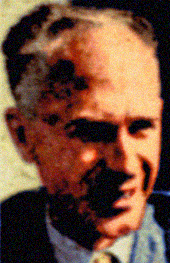
Rambling Reporter
By Ernie Pyle
PORT ORFORD, Ore. – This, folks, is the scene of the Great Secession movement of the Twentieth Century.
If the march of other events hadn’t come along, this kernel out here might have given somebody the chance to become another Lincoln. For the Union was about to rend itself asunder.
It would have taken a mighty man to preserve our great fraternity of states. Almost any mighty man on the street corner would have done. I probably could have saved it myself.
It all started last September in a remark somebody made that Curry County ought to secede from Oregon, because the state had been so neglectful of the county in mineral and harbor development, in roadbuilding, in committee-appointing and so on.
The mayor of Port Orford overheard this remark. The mayor was a dynamic far-visioned genius named Gilbert E. Gable. He arrived in these parts from the East eight years ago, and he had been making things hum ever since.
He sincerely believed that Southwest Oregon was destined to become an empire, and he did everything he could to help destiny along. He built a whole community of new homes. He built a huge lumber mill. He was afire over his beloved Southwest Oregon. And he had a sense of the dramatic, too.
So he hopped onto this secession remark, and started the ball rolling. He knew as well as I do that a county couldn’t secede but it was a good attention-getter. And then the people swung in behind him and took it up seriously – at least sort of.
California counties join up
The first idea was to secede from Oregon and join California. The county court even appointed an official commission to study it. Furthermore, Gov. Olsen of California went so far as to receive an Oregon delegation which went to Sacramento.
But then the two northern counties of California got to thinking, and decided California hadn’t been so good to them either.
So they proposed that they secede from California, and the two southwest counties secede from Oregon, and the four of them throw in together and form a forty-ninth state – to be called Jefferson. Of course they all knew that Texas is the only state with power to divide itself into new states, but that was all right.
The thing got a lot of publicity. It went over the wires to thousands of papers. It tickled the country’s funnybone. Magazines sent writers and photographers. Secession boiled hotter and hotter.
And then, out of a clear sky, Gilbert Gable died during the first week of December. That struck secession a terrific blow. And five days later came Pearl Harbor. That ended the whole thing. It’s now just a chuckle in people’s memories.
But it did, in a way, serve its purpose. For the state began issuing statements protesting its deep interest in Curry County, and big mining corporations sent in their engineers to study the metals here, and a lot of people heard of Curry County who otherwise never would have.
Curry County has its charms
Southwest Oregon does have a lot to recommend it. At least I’ve never been any place where the citizens, without any desire to sell you a package, just continually keep harping about their wonderful country as they do here.
One of the worst is a newcomer named Frank Hilton, who owns the weekly Port Orford Post. He practically cries when he gets to talking about the charms of Port Orford.
Hilton started his career on a weekly up in bitter cold Wyoming. Since then he has spent two or three decades on big-city dailies, but he always wanted to get back to a weekly. Now he has one and he says he hasn’t had so much fun in years.
As you walk into his office you see a sign on the back wall: “The World’s Smallest Newspaper Office, and In America’s Most Western City.” The office is about 12 by 12, but that’s too much room, so there’s a partition and the other half is the chamber of commerce.
Whenever Hilton goes fishing, he just leaves a can on the counter for subscribers or advertisers to drop their money into. One afternoon when he came back there was $7 in it.
Hilton says half the people in Port Orford are college graduates, although I suspect he’s letting valor get the best of him there. He says this is real pioneer country – he calls it the biggest, most savage country in America.
Why, Curry County is as big as Delaware, and has only 4300 people in it; the storms sometimes blow in off the ocean at 100 miles an hour and people can’t walk across the street: and everybody is friendly and kind and rough and ready.
They say Port Orford is the only natural deep-water harbor in 1000 miles of coastline. And even I will admit the view from the rim that rises sharply above the harbor is among the most beautiful I’ve ever seen.
But I can’t keep warm on beauty, nor dry in deep-water harbors, so I guess I’ll still have to vote for New Mexico. So sorry please.
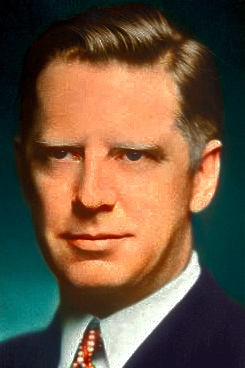
Fair Enough
By Westbrook Pegler
NEW YORK – In time of war and in the face of the enemy, the city of New York is contending with a situation which, in the military services, would be very seriously likened to mass desertion in face of the enemy. Within the past month, 142 policemen of the force which has been honored as the best in the United States, and one of the best in the world have applied for retirement on half pay. Of these applicants, 40 have served less than 21 years and 21 less than 22 years an among this group there are five bachelors and no dependents.
Of course, the entire list includes many cops of very long service, one with a clean record of 40 years. But there are many active, robust men well under 50 years, among those who would now bow out in the face of air-raid emergencies and there is no legal means of holding them if they insist on exercising pension and retirement rights which were lobbied through a generous and politically responsive legislature by the agents of their pressure group.
Elimination of vacations rumored
The department is 863 men short already and unable to obtain replacements because the young recruit who is fit to become a policeman is just the sort the Army needs most. On the other hand, fit young men in their early 40s who get out on half-pay amounting to at least $1500 a year would not be drafted for some time and by the time they are reached may have acquired just enough age, to put them out of reach of the draft. The figures are mixed. Some 20-year men are well up in years, having entered the department late, while some 23-year men are still under 50.
In not one single case, however, is there a claim of physical infirmity. These are all sound men fit to continue to serve as policemen, but word has spread through the service that certain war emergency schedules would call for extra tours of duty and might eliminate vacations, but this has not yet been done in the brother service.
There are two pension-retirement plans in the police department. One requires 25 years’ service and a five percent contribution out of the cop’s pay to the pension fund. The other permits retirement in 20 years but calls for a six percent contribution. Under the old law, a minimum of 25 years was required and the applicant had to be 55 years old.
The firemen gave the cops the idea, for they had long enjoyed the right to retire as old men in the prime of life after 20 years’ service on pensions to which they contributed not a dime. Theirs was just a racket and a farcical imposition on the public’s affection for the men who ride the red wagons and climb the ladders.
Patrick Harnedy himself a cop and president of the Patrolmen’s Benevolent Association, the harness cops’ union so to speak, has tried to arrest the stampede with a telegram posted in all stations reminding the men that “in common with all other citizens” cops should be glad to respond without thought of hours or personal sacrifice in a serious situation.
Retirements’ moral effect is bad
Cops, like everyone else, obviously would have to work overtime and forego vacations in case of invasion or bombing from the air and Hardeny’s telegram has the sound of a plea to some of the men not to desert. Of course, the pension law could be changed, but not retroactively, so the men’s rights there could not be impaired.
Indeed, a cop declaring his desire to retire now and continuing to serve as a special favor to the community might still be able to claim his benefits even though convicted of misconduct after the date of his declaration. That would raise a serious problem of discipline, but the situation is a mess, anyway, thanks to a silly law which permits a man to quit on pension in the prime of life.
Under military conditions, the cops would be held in service for duration and some retired men would be recalled.
There has been a good deal of malingering since the law was amended to provide full pay for men on sick report after three days. Formerly they got only half pay and, although there are surgeons to examine the ailing, there has, nevertheless, been a distinct increase in the number of interesting invalids. There are usually about 500 men away/
The moral effect of this mass retirement is bad because the New York cop has come to enjoy the respect of the people who actually look to him as a protector but now see men quitting by the score when air raids threaten.

Clapper: Eyes on Lewis
By Raymond Clapper
WASHINGTON – Peace between the AFL and the CIO has been widely desired. But the offer by John L. Lewis to bring it about is arousing much suspicion.
Most of the interested parties are trying to figure out what Mr. Lewis is trying to get out of it. His sudden interest in labor peace puzzles them. He is the boldest, smartest, and most resourceful leader in the labor movement. As such he is watched with wary eyes by other leaders, who frankly regard him now as a Greek bearing gifts.
If the two labor groups work out a peace, they will try to make a deal that will fence Mr. Lewis on the outside. Some of them view with alarm the possibility of a united labor movement of 10 million men under the control of such a tough, power-hungry man as John L. Lewis.
The most piercing cry of pan comes from the head of the CIO, Philip Murray. He might naturally have expected to be on the inside of such a move by the father of the CIO. But he wasn’t tipped off in advance at all. When he heard about it, Mr. Murray reacted as if pierced to the quick. Any peace move, he said, will necessarily have to come through the office of the president of the CIO – meaning through himself. Mr. Murray made a crack about another Pearl Harbor – which was, I suppose, Mr. Murray’s way of saving that Mr. Lewis had tried to stab him in the back.
Merger would require give and take
William Green, president of the AFL, stands ready to discuss peace terms. But he too has had his suspicions aroused by tales to the effect that Mr. Lewis has been negotiating with other AFL leaders to trundle him out into well-paid retirement.
Sidney Hillman, co-director of OPM and one of the most fervent disciples of labor peace, is suspiciously silent. His friends are on the alert, for they see in this a move by Mr. Lewis to cut the throat of Mr. Hillman. Former associates, they are bitter enemies now.
I’m not trying to str up trouble and this is no part of a capitalistic plot to add discord to the labor movement, because I haven’t talked about this to anybody except laborspeople. It’s all from the labor ranks and has been made public property for the whole press by them.
The labor war between the AFL and the CIO has had destructive effects. Much of the jurisdictional-strike trouble has come out of it, although not all.
A merger between the two would require a good deal of give and take. In some 25 industries, both the AFL and the CIO have unions and compete for power. The aircraft industry has been organized in part by the CIO Auto Workers and in part by the AFL machinists, who in some West Coast airplane factories have industrial-union contracts on a plant-wide basis. Such rivalry would have to be adjusted.
Is Lewis dreaming of the future?
Then there are questions of personalities. The AFL will object to some of the Communist fellow-travelers in CIO union leadership. The CIO no doubt will object to some of the AFL people, not only racketeers but men like William Hutchison of the carpenters’ union, who has come to the pot of physical encounter with John Lewis. But with good will on both sides, all such problems could be adjusted.
The more basic question arises over the amount of power that would be placed in the hands of a man like John Lewis if he got control of some 10 million union members through consolidation of the AFL and the CIO. These figures will grow. Mr. Roosevelt’s war production program will draw at least another 10 million men into war factories.
If only half of them become union members, there is in sight a union membership of 15 million men and women. It would be the most powerful organized group in the country. Control of it would be nice work for somebody. The economic power of such a man would be even greater than his political power. After the war, labor probably will renew its drive for power in the management of industry. Is that what Mr. Lewis is dreaming of? Some people here wonder.
Desirable as unification is, the future of the labor movement is a subject that as yet is studded with more questions than answers.

Maj. Williams: ‘Eagle eyes!’
By Maj. Al Williams
I met an old friend the other day. Charlie Wald, aviation inspector for the U.S. Navy and one of the best and most faithful supervisors of aircraft construction in the country. I met Charlie way back in 1922, when I had been assigned to fly the Navy racing planes of that period. I knew nothing about high speed planes. I knew little indeed about the structural details of any kind of aircraft. At Garden City, Long Island, planes were being built for the Navy, and it was there I got my first indoctrination, from this same Charlie Wald, in aircraft inspection and construction.
I never knew a man who had more patience or was more ready to employ it day in and day out than Wald. Each and every specification covering structure and materials was part of Wald’s religion. He was completely and fearlessly faithful. He condemned materials right and left. This, of course, brought down the wrath of those who were running the plant. Time and again, big shots complained to the Navy Department in Washington about Wald. They couldn’t get away with a thing. And let me tell you, when the Navy lets a contract, the Navy stands by that contract and expects the contractor to stand by it. And, best of all, the Navy stands squarely behind its representatives who are protecting Navy interests in the field.
It’s hard to do justice in describing the type of high, unswerving loyalty demanded of a low salaried construction inspector who dares to stand against the high and mighty in the business world. No one ever hears of them. He wins no headlines or acclaim. But it doesn’t take an airman long to realize that it is the inspector who is ensuring the integrity and soundness of the craft he is going to fly.
We need checking
Aircraft manufacturers have done a magnificent job in providing what there is now in the way of airpower machinery production facilities and what will soon be the eighth wonder of the world. But we need checking to keep us up to scratch. The man or organization letting a contract needs a representative on the job. And that’s the function of the government aircraft inspector. And the government aircraft inspector belongs to that little-understood and unsung band of faithful, seasoned men responsible for the glories won by the man in the cockpit. Far in the background you will find the aircraft inspector – even farther removed from public attention than the aviation mechanic – who checked out each and every detail of structure and the materials that went into each item of the plane and engine.
These men are worth their weight in any precious metal today. They have seen what we call aviation history being made.
The brand-new, slide-rule expert knows all the complicated formulae. The paint is still fresh on his classroom knowledge. But he only becomes valuable when he has tried to apply that knowledge often enough and has been snubbed by his inexperience to learn that the world won’t pay him a cent for what he knows, but rather for what he does with what he knows.
Charlie Wald saved my life many years ago. I can see him now in my memory, and he little knew that my memory was working in that vein while eating lunch with him yesterday. I was long on animal courage and short on patience and judgment. There was a dangerous, but reportedly fast, aircraft waiting to be flown. It had acted up with other pilots, I flew it once and nearly broke my neck, without cracking a piece of wood or scratching the fabric – more good luch than good judgment. Then I wanted to fly it again, and Charlie Wald took me by the arm and walking me to a point where the sunlight shone on the fuselage to the plane, pointed out a slight wrinkle in the side of the ship – an idex to trouble. Talk about eagle eyes of airmen – or pilots.
The real eagle eyes of aviation belong and are in the heads of our aircraft inspectors. And what other faculty they may have or use, I don’t know, but some of them can almost smell or sense a defect in a plane that looks fit as a fiddle to unpracticed eyes.
Air markings are out!
Here are a few items that attract attention in aviation at the moment:
During the past few years, the CAA encouraged the painting of city and town names on prominent roofs and full storage tanks to aid the wandering air itinerant. Well, that’s all out now, and for the obvious reason that during wartime there are likely to be unfriendly eyes aloft, and we can’t afford to display aerial sign posts.
An airman’s time aloft is conveniently reckoned in hours and minutes, but actually his flight time is measured in gallons of fuel in his tanks. Lost in the air is a spaceless, timeless experience. The key to the solution is identification of the area below. And of all signs, a town name is undeniably the best. Hence they had to be removed.

The Germans and British agree that in a full-out air war campaign, it is necessary to replace up to 80 percent of the planes in action every 30 days. And, after all, the Germans and the British are in a position to know what they are talking about.
This gives you some idea of the production involved in aerial warfare. It’s worth remembering, because it leads to some intimation of the salvage repair, and maintenance problems encountered in order to keep thousands of planes in flying and fighting condition.