
Rambling Reporter
By Ernie Pyle
SCOTIA, Cal. – Since I have become a dog man, I am easy prey to any and all dog stories. This one is about a dog named Blondie.
Blondie belongs to Stan Murphy, president of the Pacific Lumber Co., who has had the rare privilege of bedding and boarding me recently.
As I told you, Murphy is a hunting fiend. It was natural that sooner or later he should have an outstanding dog. Blondie was that dog. Blondie became famous.
He (yes, Blondie is a man-dog) has often been referred to by Tod Powell, who writes “The Woodsman” column in The San Francisco Chronicle, as the greatest hunting dog in California.
Blondie is a setter. Pure white, except for one black ring around his tail. He loved to “work,” as hunters say. He was the workingest setter ever known in this state. He never tired. He would go all day long, and never slacken.
He was the finest retriever any of Murphy’s hunting friends ever knew. He was as good in ice and water as on land. When other hunters’ dogs gave up on finding a downed quail, they would call for Blondie, and he would bring it in. He was always wild to go, and never ready to come home.
One day Stan Murphy and Blondie went for a little hunt by themselves, not far from Murphy’s mountain lodge here in the redwood-forested hills.
Murphy climbed a high hill and stopped to look around. Down below him Blondie was frozen in a set, if that’s the right hunter’s word. Murphy’s cue of course was to go back down and beat out the bird, to repay Blondie for his diligence.
Blondie finds a porcupine
“But I was just too damned lazy to lose the altitude I had gained,” Murphy says. So he gave the order for Blondie to go in after the bird himself. Murphy figured it was just one bird anyway, and he wouldn’t bother with it.
Finally, after many shouted orders, Blondie did go into the brush. Murphy waited. No bird came out. Strange, he thought, for Blondie never made a mistake. He waited longer.
At last he saw the dog come bounding out of the brush, headed uphill. He had something in his mouth. Murphy thought it was a bird, and since it looked all bloody, he was getting ready to give Blondie a scolding for “mouthing” it.
And then to his horror he saw that it wasn’t a bird at all – but that Blondie’s head was a solid mass of porcupine quills.
Murphy says it is the only time he ever heard of a porcupine in this part of the country. Blondie had simply rushed in and dived onto the porcupine, and the result was nearly fatal.
They rushed Blondie to the nearest animal hospital, at Eureka, 40 miles away. The vets put him under anaesthetic and kept him there longer than they had ever kept an animal before. They stacked up the quills in bunches of 25, and when they were through that night they had taken more than 600 quills out of Blondie’s mouth, face and ears.
For three weeks he was a terrifically sick dog, but he came through it. Murphy gave him a long rest, with no hunting at all, and in a few weeks he was in perfect shape.
Then Murphy went to Mexico on his annual hunting trip. It’s always a big party, with a bunch of San Francisco sportsmen making the trip. They take their own dogs, and for years Blondie has been the acknowledged peer of the pack, man or dog.
It’s quitting time, he decides
They drove several miles from the camp to the place where they were to start walking. Gear was unpacked and the hunters made ready. The dogs were turned loose, and the hunters started off. Stan Murphy walked up the hill a little piece.
Usually Blondie was so eager for the hunt that Murphy would have to keep ordering him to “heel” as they started out. But suddenly he realized that Blondie wasn’t ahead of him He stopped and looked back. And where was his great hunting dog?
Sitting in the front seat of the car, looking out the window!
Blondie has never gone hunting again. He simply made his decision and stuck to it. Still in his prime, still the greatest hunter in California, he just quit.
Murphy is not sure what lay back of it, in the dog’s mind. It seems logical to think that the experience with the porcupine caused it. But Murphy doesn’t think so. He feels that somewhere into the dog’s consciousness there just came a voice which said, “You’ve worked too hard and you’ve worked too long. You don’t have to do it any longer. To hell with it.”
He thinks Blondie simply retired one day, all of a sudden, just because he wanted to.
That happened four years ago. Blondie is 12 now, and age is in him. He sleeps about 22 hours a day. He lies in the great redwood lodge here in front of the fireplace, and he twitches and jerks in his dreams. When he gets up it is with a struggle, but he is still gentle and lovable and sweet. He has children and grandchildren, and some of them are great hunting dogs too, but none can approach Blondie before he quit.
Hunters tell me they never heard of such a thing happening before. Murphy starts his story with, “Did you ever hear of the day Blondie quit?” Instead of being disappointed, he seems to admire his great Blondie for the firmness of his decision. And so do I. What Blondie did is what I’ve wanted to do for 20 years. Maybe this will give me courage.
Fair Enough
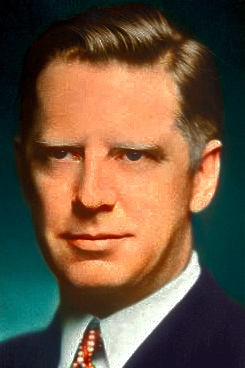
By Westbrook Pegler
WASHINGTON – My friends at the Treasury, where they keep the deficit and the veritable IOUs from the other war, including some in denominations of 20 millions autographed in Mussolini’s bold Italian hand, have been asking me to ease the information to about seven million of my fellow-citizens who never have paid an income tax or filed a return that this is the year their woes begin.
On March 15, all these new members of the lodge of sorrow must drop their contributions on the drum, accompanied by their sworn statements that all representations and figures contained therein are, to their best knowledge and belief, true, correct and complete, so help them God, or God help them.
One false move and the hounds of Elmer Irey, of the intelligence unit, will be on them like a chicken on a June-bug and the grim, gray walls of Alcatraz will close them away from their dear ones, even as Al Capone.
Don’t mess with Woolworth trade
Well, perhaps that is putting a too somber face on the matter, because, ordinarily they don’t mess with the Woolworth trade to the extent of criminal prosecutions and, moreover, my friends at the Treasury are a joyous lot of idealists who believe the new class of income tax payers will delight to make out returns and conceive it a patriotic pleasure to shower down on the due-day. But this is nevertheless a no-fooling income tax and it goes for all single-handed earners with no dependents who collect as much as $750 a year, which is a weekly average of about $14.50, and all married persons with no dependents earning as much as $1500 a year.
Those who don’t report and/or pay will be checked up and annoyed and threatened and probably some few flagrant offenders will be prosecuted just as examples and held up to the public scorn as slackers in time of war. Wage-earners who are steadily employed will have no convenient escape, but some casuals who go hop-scotching from job to job and place to place and from one occupation to another may escape the catch-polls.
Up to now, the income-tax amendment has been a piece of class legislation, but those days are gone forever. The income tax is now one of our most democratic institutions and its importance as a producer of revenue will rise as wages rise in the fields of skilled or humble toil and the incomes dwindle of those who in the past were the fat cats and the favorite clients, or victims, of the Treasury.
This will call for systematic saving through the fiscal year in anticipation of March 15 and I cannot forbear to suggest that many citizens who have been paying as much as a tenth of their gross earnings to union racketeers for the privilege of living now will realize that old Sam, their loving uncle, is much less greedy.
A piccolo player, single and without dependents, earning $800 a year, will pay Sam only $3, toward a war to make the world safe for piccolo players, whereas he has been paying the racket three percent of his gross, or $24, toward a fake unemployment benefit alone and as much again for the right not to be conked on the skull with a sawed-off pool cue for less majesty wo some greasy thief.
Due-day is only two months off
The piccolo player is going to reckon that if old Sam will give him a Government and fight a war for him for bucks three, then Sam ought to shoulder in and take the parasite off his neck. He is going to realize that all along Sam has regarded him as po’-folks and is taxing him now only in desperate necessity to buy what it takes to fight a war and remember that during all these years when Sam was giving him a pass, the gorilla in the union office was carrying bloody red hunks out of his poor scrawny flesh and lushing it up in the noisy dumps at night and feeding hand-picked oats to his racing stock at the horse-yards here and von.
The carpenter, building the barracks for the troops, is going to realize that the boards he spoils and the nails that he flings around so wastefully are not just “the Gov’ment’s” but his lumber and nails and he isn’t going to feel so different either about commissions of $5000 or $50,000 paid to grafters posing as lawyers who act as lobbyists in Washington to get orders for contractors who add that loot to their bids.
That graft will come out of the carpenter’s hide and he will be just as alert to cases in which Communists or fellow-travelers are salted away in bureau jobs in Washington at $4000 or $6000 a year in the guise of “research secretaries” and “information specialists.”
If he pets as much as $80 a week and is single with no dependents, he will be paying about $350 to old Sam and, if married, without dependents other than his devoted, if sometimes captious War Department, he will have to sweeten the pot to the extent of $249. He is going to want that money spent for Jap-killing and never mind the deserving ideologists.
It is almost too late for the new hands to start saving for their first experience. Due-day is only two months off and you have to get it up on time, but after March 15 the saving can start from scratch, so much a week or month, for Sam and home and country.

Clapper: Changes needed
By Raymond Clapper
WASHINGTON – Much is yet to be done beyond the constructive action taken by President Roosevelt in the last few days. He can’t do it all himself, but several situations need the help of his prodding and driving.
For instance, civilian defense needs a shakeup hike the one Mr. Roosevelt gave to war production when he put Donald Nelson in charge.
At last the President seems to have overcome his chronic reluctance to delegate large authority. He seems finally to have become convinced that this show is big enough to need several ringmasters. He shows more disposition now to center a specific responsibility in one man and to back him to the limit.
That is what Mr. Roosevelt finally has done with war production. He is trying to do the same thing in price control by appealing to Congress to go along with him and to abandon the division of authority and the sabotage of price levels which the farm bloc has attempted. In setting up the new War Labor Board, Mr. Roosevelt gave it more power, including that of arbitration. All of this is moving toward more drive, more concentration of authority, and away from the buck-passing paradise of the last 18 months.
Could end Civilian Defense fiasco
While he is going good and while he has public enthusiasm behind these constructive measures, Mr. Roosevelt has a good opportunity to end the fantastic situation in the Office of Civilian Defense. There is no reason why it should be tortured any longer under the part-time theatricals of Mayor LaGuardia and Mrs. Roosevelt. It is sufficient to note the contrast between the confused and chaotic OCD and the quick, smooth organization of auto tire rationing.
When it became necessary to ration tires, Leon Henderson called in Frank Bane, executive director of the Council of State Governments. From there on it was easy. Mr. Bane, through his contact with state governments, and with the aid of expediters he knew from previous work, passed the word down the line and in less than a week tire rationing boards had been set up in almost every community to work under regulations issued at Washington.
The secret was in turning the job over to a skilled person who knew how to reach into the grassroots and get the local people who would do the work. You haven’t heard much about it, because it is the bungled jobs that attract attention. Fortunately, OCD didn’t get its hands on tire rationing, although it no doubt wanted to.
Criticism is bitter inside OCD
Those who try to do business with the Office of Civilian Defense report that they find utter and complete confusion – as one official caller put it, the worst in 8000 years of history.
Mayor LaGuardia had mayors set up local councils and then asked the governors to set up local councils, so that in some places two sets are functioning. Buying of equipment is reported to follow the most antiquated Army methods. Criticism is as bitter inside OCD as it is outside. In fact, one hears no good word about OCD except from Mayor LaGuardia and Mrs. Roosevelt.
Some advocate that it be grouped with the Federal Security Agency under a kind of home security division which would link health and employment services more closely with it, to deal not only with air-raid protection but with public health and employment dislocations. Aside from these interests, civilian defense work is largely an extension of ordinary municipal functions – preparations for quick repair of water mains, repaving of damaged streets, and restoration of all kinds of local services, which must be done by local authorities independently of Washington.
Maj. Williams: Pacific theater
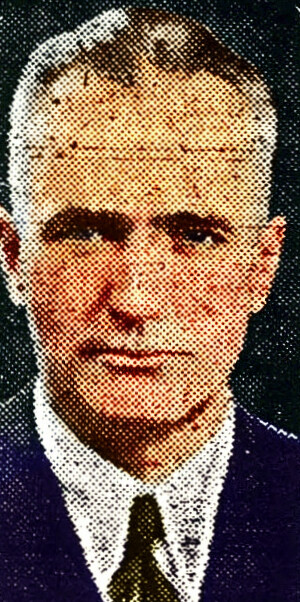
By Maj. Al Williams
“Japan must be bombed to defeat.”
This war has certainly made the general staffs of the world air-minded, to say the least. Prior to the outbreak, the housing of aircraft in hangars was a commonly accepted practice. A few heavy bombs or a scattering of dive bombing soon demonstrated the old adage, “Don’t put all your eggs in one basket.” A couple of bombs wiped out everything in the hangar involved.
Now the practice is to stake out the planes with plenty of distance in between. Furthermore, there’s a nice little trick in staking out planes so that they are not easily distinguishable by prying eyes aloft by placing them in portions of the field where the earth or faded grass color blends with the camouflage of the planes. A change in seasons dictates this selection of the stake-out areas. It’s always been an essential war job not only to possess war machinery, but to hide it. And in no other war has the biding been so difficult.
Daydreaming cost us the Pearl Harbor disaster and the tough end of the current Philippine mess. It’s time to quit sentimentality and nonsense and do some clean-cut, cold, Yankee thinking.
I’m still asking why our Russian allies haven’t leased or have refused to lease their air bases in Kamchatka from which our long-range bombers could get at Japan’s heart cities. Realists never delude themselves when studying war strategy, war motives, or purposes. History most clearly demonstrates the cold calculating basis from which each stage of every war has been planned. The big balancing factor in this entire war is the aircraft production facilities and the output of those facilities here in the U.S.
Australia’s warning
Evidence that other people besides the writer of this column are aware of the cold, deadly selfishness in war strategy is found in Australia’s warning to England that the war in the Pacific is not a side show, and that she, Australia, will not tolerate any such conception of the Pacific struggle. Said the Prime Minister of Australia on this point, “we refuse to accept the dictum that the Pacific struggle is a subordinate segment of the general conflict.”
The English and the Reds must have all the American aircraft and aircraft engines they can get to match and overmatch the Nazi air strength. On the other hand, our own struggle in the Pacific is a major fighting war business with us, as well as for the Australians. To the U.S. and Australia, Jap dominance or victory in the Pacific is a life-and-death matter. For instance, figure from the worst that could possibly happen (and that’s a typical Yankee method of plotting out possibilities). We have already lost our most advanced naval base at Cavite. That bases our fleet on Pearl Harbor, 4767 nautical miles (about 5400 statute miles) to the east of the Philippines, with the network of Jap-fortified islands squarely across the sea lines.
Now consider the troubles of the British in Malaya. It long has been my suspicion that the true lowdown on Japan’s strategy in China has been muffed and fumbled. I have talked with men who have studied the Sino-Japanese War on the spot. They all agree that the Japs seldom, if ever, had more than a hundred thousand men on the Chinese front at any one time. They likewise agreed that the hundred thousand was changed time and again. In short, the Japs used the Chinese War in much the same fashion as European nations used the Spanish Civil War as a proving and training ground for equipment and men. Meanwhile, all during this Sino-Japanese War, the Japs have been slowly acquiring additional sea coast bases down the coast of Asia – ever reaching nearer and nearer to Malaya, Singapore and the fabulously rich East Indies.
Communication is vital
Time and again we have insisted that the length of communications lines is still a vital factor in warfare. With bases closely tied together from Japan all the way down the coast of Asia, the Japs are in a position to keep a steady flow of men and planes and munitions flowing toward the Malaya combat zone. This is a vital factor when one stops to consider that, according to the British and Nazis (and they know what they are talking about by this time), about 80 percent replacements of aircraft must be supplied to a full-out air war operations per month. Against this, British plane replacements must come more than 7500 miles from the U.S. And airpower in the Pacific is just as vital a factor as it has been proven to be in the European struggle.
Therefore, it is a question as to which war – the European or the Pacific – the bulk of our American aircraft production shall be sent. The fact that Australia’s Prime Minister selected this time to demand full consideration for the Pacific war indicates he feared the bulk of our planes would not go to the Pacific.