Rambling Reporter
By Ernie Pyle
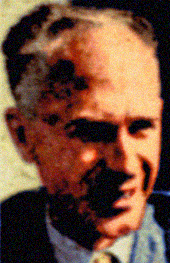
SCOTIA, Cal. – Stan Murphy is one of San Francisco’s bigger business men.
He is president of the Pacific Lumber Co. here at Scotia, the largest redwood timber operator in the world. He is not the “office” type of big executive – his heart is in the woods, and his personality shows it. He is easy to be with.
His time is divided into three sections. He spends about a third of it here in the forested hills, another third at his office in San Francisco, and the last third traveling – on frequent business trips East, and on hunting trips.
When up here he lives in his magnificent mountain lodge 14 miles from Scotia. I have just been a guest there, and I’m probably spoiled for ordinary living forever.
Stan Murphy is what you would call a good fellow. His company is run in the benevolent manner; his employees get bonuses and many perquisites. He thinks hard and worries about his business, but his movements are slow and calm and he never seems harassed.
He has a deep voice and swears with easy naturalness and has been known to take a drink. He would rather tramp all day through the brush in a pouring rain behind a bird dog than anything else he can think of. He has friends by the hundred.
Both of his boys are in the service – one in the Navy, one in the Army. The soldier boy is now on some unknown ship headed for some unknown destination. Mr. Murphy is all alone.
“But I wouldn’t have them anywhere else in times like these,” he says. Murphy himself was a naval officer in World War I. He still has the running lights off his old ship.
Lodge is a good place to be
Murphy’s lodge is called “Larabee.” It is in a spot of beautiful isolation. Thirty years ago Murphy worked up here in the redwoods, and lived in an old cabin within yelling distance of where his lodge now stands.
All around are redwood-shrouded hills, and the lodge itself hangs on the bank of a twisting mountain river. To reach it, you have to drive across a long low bridge, just wide enough for one car, and with no guard rails. Gives you the willies. It is not unusual for Murphy to be marooned at his lodge for days at a time when the water gets over the bridge.
There was danger of rising water while I was there, and a servant was sent down at 3 in the morning to see how the water looked. Unfortunately it looked all right. I’d never be lucky enough to get marooned in a place like that.
The lodge itself is two-story, built in stockade fashion, of huge logs. The first floor is just one immense room, with huge windows and a giant stone fireplace.
No city comfort is missing. There are bathrooms galore and great deep chairs and fine rugs and soft lights and guest rooms complete to the last eiderdown puff.
The lodge is entirely of redwood, and so is most everything in it. The tables and chairs, even some of the lampshades, are of redwood. The lodge sits in a grove of redwood trees.
The lodge is the sleepingest place you ever saw. You can hear the river sighing past, and a little creek flows smack under the house. When the rain pounds on the roof it is like being rocked in a cradle. A case of insomnia wouldn’t have a chance up here.
Which one is better off?
Murphy is usually alone when he is here, but occasionally he brings up large parties from San Francisco and they all go hunting and wind it up with a big barbecue.
Two servants stay here constantly, and when Murphy comes up from San Francisco his chauffeur comes too, even when Murphy comes by train. Incidentally, he has an arrangement with the railroad whereby all trains stop on call at his ranch gate.
Murphy is a quail-hunting fiend. He has 15 dogs on the place. They are all hunting dogs except Missie, the little dachshund, and even she goes into the woods with them frequently, and waddles around in her brave curiosity until she gets lost.
Murphy raises his own quail to turn loose in the woods. He has an elaborate layout for this – an electric incubator and various warm rooms for the little quail and a battery of wire enclosures used as “holding pens.” Last year he liberated 500 quail in the woods.
Stan Murphy lives in luxury, but there is no “put on” about it. Even an humble person feels comfortable with him. As happens to most people of importance, he has gradually come to live in a world where he is waited upon. Servants wake him of a morning, answer his phone, feed his dogs, run his errands, lay the daily papers at his table.
My cousin, who drives one of Mr. Murphy’s bulldozers, has none of these things. He gets his own breakfast before daylight, and doesn’t have a telephone. His wife washes on the back porch, and hangs the clothes in the kitchen to dry.
Yet I would hesitate to say that one is better or worse off than the other. Mr. Murphy carries the responsibility of 1700 people and great factories and vast investments on his shoulders. My cousin is responsible for only three people, and his daily job.
My cousin works for Mr. Murphy, whom he has never met, but also Mr. Murphy works hard for my cousin, whom he wouldn’t know if he saw.
As for me, I envy them both. For, when I wake up of a morning, I usually don’t even know where I am.
Fair Enough
By Westbrook Pegler
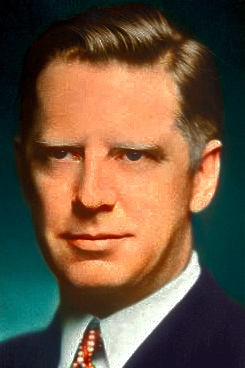
WASHINGTON – Mrs. Eleanor Roosevelt is one of the most formidable topics in the United States at this writing, hardly less forbidding than that great journalistic taboo, religion, but, nevertheless, she has come out for condemnation and punishment without trial in the case of a picket line at a New York theater and that I believe, calls for a challenge and for this busy lady’s retirement from the public eye and ear, although it is not to be hoped that she would cease to exert herself politically and personally in the departments of the Government.
Of course, any ordinary individual may refuse to cross a picket line, “fair or unfair,” but Mrs. Roosevelt partakes of the highest office in the nation and, when one who personifies the Presidency as an office publicly repudiates fairness and the right of citizens to be heard in disputes affecting their livelihood and property, everyone has a stake in the case.
This is no mere interpretation of Mrs. Roosevelt’s attitude.
It is her expressed position.
Even in Moscow accused got chance
She wrote in her column, “I don’t cross picket lines,” and she said at the theater that she couldn’t cross a picket Iine, “fair or unfair,” which just means that the owner of the property, the producer with his investment of work and money, the playwright, and all the workers in the show from the box office to the doorman in the alley, deserved no hearing on the merits of the case, even if they had been victims of a racket, however vicious, if the pickets bore credentials or merely acted under orders from some professional unioneer who might have corrupt motives.
Even in Moscow. the defendants in the liquidation trials were given a chance to face their accusers and state their defense, except those who had fled the country, but Mrs. Roosevelt is not that generous.
If Mrs. Roosevelt is ignorant of the great moral fallibility of the professional unioneer, ignorant of the corruption and persecution which commonly mark the operations of unions, then she has a public duty to inform herself and even before that she has a further duty never to make blanket commitments, involving the Presidency, to condemn without trial persons who are victims of injustice.
She has no right to be ignorant now of the commonness of corruption, criminality and persecution in the union movement. There is a substantial heap of undisputed disclosures and court convictions proving this and the union involved in the instant case is known to everyone who knows anything at all about a subject on which Mrs. Roosevelt presumed to take sides, as a dictatorship whose constitution may be revoked at will and entirely by its President who then may rule by his own decree or whim.
That is written in the constitution of the musicians’ union and Judge Ferdinand Pecora, certainly no labor-baiter, was so astonished to discover this clause in a trial which came before him that he exclaimed incredulously: “Do you call that a constitution?”
It was bad enough in time of peace
I am coming to the belief that Mrs. Roosevelt knows almost nothing about unionism and that she has closed her mind to the truth. In the present case, her written discussion certainly suggested a vague and confused idea of the dispute, but that would make no difference to anyone who was firmly determined to pre-judge and pre-condemn the union’s opponents, regardless of the rights and wrongs of the issue.
For nine years Mrs. Roosevelt has been crossing, recrossing and cross-hatching the United States in endless, restless travels, covering hundreds of thousands of miles. She has written and spoken millions of words and collected a vast income and the net public result in accomplishment today is no reform or substantial achievement but an aggravation of certain extremely dangerous group relationships within the population and the salting of Government agencies with personal friends, not all of whom are free of the taint of a political philosophy and association which wars implacably and uncompromisingly against everything that Americanism is.
It was bad enough in time of peace and mere internal economic and social distress that Communists and fellow-travelers should infest the Government by invitation of honored and trusted personages, but to welcome them now in droves to departments having to do with public security is to invite the ghastliest treachery in certain conceivable circumstances in the future course of this war.
Mrs. Roosevelt’s complete retirement would not impair the efficiency of the war effort and would contribute appreciably to peace and unity at home.
Clapper: Censors’ code
By Raymond Clapper
WASHINGTON – The code issued by the Office of Censorship for newspapers and periodicals happens also to be a good code for the individual citizen. Not much good is done if the military information which is kept out of print circulates around the country by word of mouth. Spies have ears as well as eyes.
Censorship rules forbid information concerning ships, troops, defenses, war production, military damage, the movements of the President, of military or diplomatic missions and of high officials traveling under orders, and the moving of art treasures, except when such information is officially announced by the Government.
Every citizen would find it useful to read over the full text of the rules so as to place himself on guard against careless disclosure. Many citizens will come across military information in their work or observation. It will be helpful if they know exactly what the censorship rules are.
You can hire a hall and make a speech
Nowhere in the code will you find any suggestion that would limit freedom of discussions – as contrasted with disclosure of specific military information. If you think Mayor LaGuardia or Mrs. Roosevelt or both should retire from the Office of Civilian Defense, you can say it in your paper or hire a hall and make a speech. You can complain about defense production, and give free advice, useless or otherwise. The censor will be too busy with more important business to bother you.
The Office of Censorship says the code of secrecy will not mean an editorial or news blackout. “It is the hope and expectation of the Office of Censorship,” says an official statement, “that the columns of American publications will remain the freest in the world, and will tell the story of our national successes and shortcomings accurately and in much detail.”
That applies not only to newspapers but to private citizens as they talk in their homes or in gatherings.
Byron Price, director of censorship, has spent his life in newspaper work, as has his assistant director, John H. Sorrells. They understand the need of public information and discussion and may be counted upon to administer the censorship in harmony with the best interests of our free institutions.
They give this explanation: The outcome of the war is a matter of vital personal concern to the future of every American citizen. The security of our armed forces and even of our homes and our liberties will be weakened in greater or less degree by every disclosure of information which will help the enemy. If everyone will keep those two facts constantly in mind and will apply common sense, he can be his own censor. He needs only to ask himself: “Is this information I would like to have if I were the enemy?”
Knox warns against unrest reports
Does criticism of our Government help the enemy? Probably very little if any. In fact, Secretary of the Navy Knox has warned us to be skeptical of dispatches reporting unrest in Germany. He says most of these dispatches originate in territory under German domination. His inference is that this is information Germany would like us to believe, hoping it might lull us into thinking the war can be won without hard work on our part.
So perhaps criticism at home won’t help the enemy at all. At any rate, whatever comfort the enemy might derive from criticism here at home must be more than offset by the effect of it on our own effort. Undoubtedly strong criticism of war production helped persuade President Roosevelt to make the excellent move of giving Donald Nelson real authority over war production. Undoubtedly enough criticism will compel Mr. Roosevelt to overhaul the Office of Civilian Defense, which is the next weak spot that he ought to tackle.
In other words, the censorship leaves all of us back-seat drivers plenty of material for conversation.
Maj. Williams: Strategic Hawaii
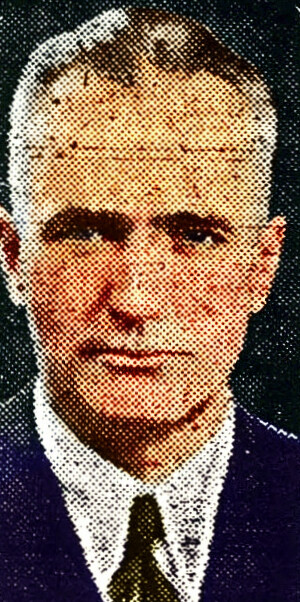
By Maj. Al Williams
“Japan must be bombed to defeat.”
We’re in the war and we’ve got to win it. And the only way to win it is to start taking the ball and the plays (initiative) away from the Japs.
The day the Japs struck at Pearl Harbor marked the end of the Pollyanna era of big words. Now we’ve got to start licking this Axis gang with deeds daringly conceived and daringly executed.
We can’t really get started until we have a cleanly-cut definition of the situation in our minds. First off, we’ve got to get to the zones of combat. All hands should be pretty well convinced that we can’t lick Japan in the most efficient fashion by holding to the low road across the Pacific – across the belly of that wide ocean – about 7500 miles, with the use of warships and traditional strategy and tactics plus running the gauntlet of Jap-controlled and fortified islands. There’s a still lower road across that ocean, via Australasia, working from bases in that sector. But that means lines of communication (supply lines) between 7500 to 9000 miles long. And the length of communication lines is just as vital a factor in this war as it has been in every other war and always will be in any war of the future.
Our westernmost major and adequate base is Hawaii and Pearl Harbor. That outpost must be held at all costs. By all costs I don’t mean that our defense personnel must be exhorted to fight to the last man. They did that at Wake and Guam and are doing it in the Philippines. They’ll do it, too, at Hawaii and Pearl Harbor without any exhortation whatsoever.
“Hold Hawaii at all costs” actually means waiving every other consideration, every commitment to Europe, and shipping every last plane, engine, gun, and round of ammunition to Hawaii and Pearl Harbor – NOW.
Japs want Hawaii
The Japanese estimate of the strategic value of Hawaii and Pearl Harbor is best demonstrated by their desperate daring in striking this point first. They knew they were running a terrific military risk in this venture. But, likewise, they knew that if they could cripple this major American outpost in the Pacific, they would then be free to jump the Philippines and Manila.
The Japanese are also well aware of the fact that their future war fortunes in the Pacific are almost entirely dependent upon whether we or they hold Hawaii and Pearl Harbor.
Soundly accepting the enemy at his demonstrated vision level and willingness to risk his all, isn’t it the most logical presumption that he will strike again at Hawaii and Pearl Harbor before we repair and strengthen those key points to impregnability? In the defense of Pearl Harbor, we face the same task the Germans faced in preventing the British from landing in Norway. The British tried it first with the traditional means of warships escorting troopships and some air forces. The Germans relying upon their shore-based airpower, smashed that Norwegian invasion. In possession of Hawaii and Pearl Harbor we can rely upon shore-based airpower – if we send the airpower there.
Those are the premises which lead to the conclusion that every available American bomber and fighter we can produce or are producing must be sent to Pearl Harbor and Hawaii as fast as we can ship or fly them there. The Japs must crack Hawaii and Pearl Harbor or lose the Pacific war.
Many planes are now standing on American East Coast airdromes. Load them off for Hawaii and Pearl Harbor! If Hawaii and Pearl Harbor fall, our Pacific coastline is wide open, and we will be forced to base and sustain attacks on and against our West Coast cities. And, mind you, to get at Pearl Harbor or Hawaii the Japs will have to rely upon carrier-based aircraft and warships, both of which are perfect picking for shore-based airpower.
Mr. Knox’s explanation
Mr. Knox told his press conference, in an attempt to explain why 24-hour patrols were not maintained, that a complete air patrol of the Hawaiian and Pearl Harbor sea areas would require the unbelievable total of 300 long-range planes. What of it?
What if it takes a thousand planes? We have built far more than that and we undoubtedly are building more than that. Pearl Harbor and Hawail are our life keys In the Pacific. The Japs know this, and the Japs are going to jump these two American key posts at the very first opportunity.
This is war, and we’ve got to think in the ruthless terms of war. Why don’t we take a page out of England’s book? Why wait and haggle or bargain with Mr. Litvinoff for air bases in Kamchatka? The British smashed the French fleet at Oran because they were afraid to bargain or wait. Why not jump the Kamchatka bases with bombers and paratroops without a word to anyone and start bombing Japan’s key cities? The Reds could make a good play of being mad at us for such a move to keep clear of open warfare with Japan. But that would be mere child’s play in the diplomatic tearooms.
Why not jump Kamchatka first and argue about it after we have bombed the hell out of Japan? From the United States to Alaska via the Aleutians and Kamchatka to Japan. That’s the high road, the shortest and most effective road – the air road to Japan.
1,800 more put on blacklist by government
Rich Swedish industrialist among those name by State Department
WASHINGTON (UP) – The United States today increased to almost 5,000 the number of Axis and non-Axis firms blacklisted from trading or dealing financially with Americans.
The State Department’s latest blacklist includes 1,800 companies and individuals operating in Sweden, Turkey, Switzerland, Spain and Portugal.
Axel Wenner-Gren, wealthy Swedish industrialist who is a friend of the Duke of Windsor, was on the list. Wenner-Gren recently arrived in Mexico from Peru and transferred his yacht, Southern Cross, to Mexican registry.
The United States applied the first economic sanctions against Axis firms or firms doing business with the Axis on July 17, 1941. It applied only to firms in South America. That list has been added to, and some names originally on it have been removed.
The latest list follows closely one compiled by Great Britain and is considered a result of the conferences among British and American officials here.
It carries the names of 506 firms or individuals doing business in Portugal, 166 in Portuguese possessions, 569 in Spain, 52 in Spanish possessions, 82 in Sweden, 196 in Turkey and more than 400 in Switzerland.
The firms or individuals may be restored to the good grace of the State Department if they demonstrate satisfactorily that they have severed their trade or financial relations with enemy nations.