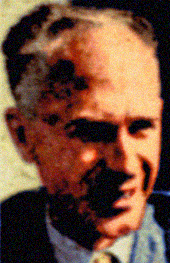
Rambling Reporter
By Ernie Pyle
ALBUQUERQUE, N.M. – My friends in San Francisco assured me that they now had themselves in hand and could spare my guidance and counsel for a few days.
So we’ll drop back to Albuquerque for a little while, to sit and reminisce hungrily over that now-departed three months of idleness in which I recently indulged.
All through the fall, you know, I disappeared into the great void and wallowed in the luxurious experience of not making a living.
That three months was my longest stretch of “non-work” in nearly 19 years. It was a nice experiment. For all my life I had heard it said that an active man couldn’t sit around and do nothing. That he would go nuts pretty soon, and have to get busy.
But I am a living, walking refutation of that ridiculous theory, I reveled in laziness. And the longer I was lazy, the lazier I got. Another month and I would have been static.
So I am now an experienced craftsman in the art of loafing. I know whereof I speak. And I can assure you that loafing is wonderful. and that working is a very poor way to spend a day.
Of course the sudden excitement of America at war sent me back to work eagerly and in a hurry, but that doesn’t spoil mv new philosophy. In normal times, I shall stand upon a creed of “give me idleness or give me death.”
As soon as the war is over, I’m going to sigh a deep good-for-nothing sigh, write “phooey” at the end of my last column, and never do another lick of honest work as long as I live.
Pyle the croquet wizard
In those three idle months I didn’t do a single constructive thing, unless you call playing croquet constructive. I did become a shark at croquet. And, incidentally, I turned my croquet wizardry to a nice profit.
For it happens that one of our friends out here is a contractor named Earl Mount, and he suffers from a hallucination that he can play croquet. This hallucination is so stubborn that he is willing to bet money on it, and he just keeps on betting (praise Allah).
So throughout the fall I managed to make, not exactly a lavish living, but a very comfortable one, just taking a quarter away from Mr. Mount five or six times every afternoon.
I never expected to find such a gold mine when we stopped in this part of the country. I don’t need a burro and a pan to do my gold prospecting. I can do it just five blocks up the street, on a nice green lawn, with somebody handing me sandwiches between masterful strokes of the mallet.
But what you want to know most, I expect, is about “That Girl.”
Well, she is beginning to perk again. Her escape from death was much slimmer than most of you ever suspected. She spent seven weeks in the hospital, and will be under a nurse’s care all winter. Her complete recovery is still a long time off.
She is home now, but sees only intimate friends. She is up most of the day. and once in a while even takes a ride. Her diet is strict, and she has to drink so much milk we are thinking of buying a herd of milk cows. She hates milk, too.
Thoughtfulness is appreciated
There is considerable question whether my presence here is legitimate or not. One school of thought holds that there was some justice in my dropping the columns until she was out of the woods. The other school avows that I really am lazy, and merely used her illness as an excuse for a long rest. Personally I know the answer, but I ain’t telling.
That Girl and I both were deeply touched by the cards, letters and flowers that came from unknown friends all over the country. If any of you haven’t been thanked, consider yourselves thanked now. For we appreciated everything.
It was hard for both of us when I set out again on my travels. But I had to go, and she wanted me to go. She will lack for nothing while I am away. She has friends and interests here, and the best of care.
To some of you, I expect, it must seem that out here on the desert a person isn’t in the best professional hands when he falls desperately ill. Get that out of your head. There are doctors here as fine as anywhere in America. When I finally begin to rattle and fall to pieces (it won’t be long, either), I hope it can be right here.
And, oh yes… While we’re at it, I want to seize this opportunity to say that I am disgruntled and disgusted with all of you.
It had been my impression that the American reading public would simply fold up and wither away if denied the daily hypodermic of this column.
But now, after a three-month famine, I see you’re all as healthy and frisky as steers.
I’ve never been so insulted in my life.
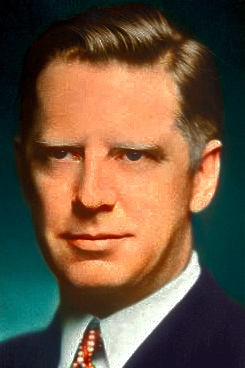
Fair Enough
By Westbrook Pegler
NEW YORK – The CIO and the Auto Manufacturers’ Association are wasting time, breath, ink and good white paper arguing a proposition that is no more soluble than how-high-is-up and equally bootless.
What the hell difference does it make now whether maladministration in Washington, industrial inefficiency, economic caution or honest fear of a socialistic coup in the motor industry or what combination of all these factors caused the enormous and irretrievable waste of materials and loss of time in the conversion of the motor factories to war production?
The grim fact is that the stuff and time did slip through our fingers and the lowdown, dirty truth is that we were caught just as Hitler figured we would be caught, divided on the issue of war and hardly even half willing to make a war effort until Japan made war official.
During much of that time, we were almost wholly occupied with one of the weird quadrennial political frenzies which enliven the life of this interesting republic and were scrapping over such questions as “is Willkie a phony hoosier?” and “how did Harold Ickes strike it rich?”
Industrialists called war-mongers
Naturally, the motor companies were slow to abandon their regular trade and go into the war business, because war is a business without a future and they were thinking of a time when the war would be over, perhaps without our ever having entered the fight, and they would be left with a lot of expensive plant which would be useless for any other trade.
Moreover, it can’t be forgotten, surely, that as recently as the first year of the New Deal, the industrialists who had turned out the tools and soldier suits and canned goods for the last war were being denounced as bloody-handed monsters who had practically kicked up the whole ghastly business in cold premeditation so that they could get rich on the war orders.
And we have to remember that within the very same CIO, which is now making politics of this tragic bundle, and high in its councils, too, there were a number of men of Moscow who fought, by subtle means and open, to snarl our war program, then called the defense program, because Hitler and Stalin were partners and the war was then an imperialistic war, and no proper business of ours.
No question about it, we were just caught in a jam, mostly of our own making, and Hitler, who always was the No. 1 enemy, had studied our habits and our condition and calculated the advantage which this gave him.
I was in Washington when the CIO presented the “practical, simple plan for utilizing and adapting the available machinery in the auto industry for plane production” which is mentioned in the current political advertisement of this suddenly patriotic organization. Possibly the magnates made a mistake in rejecting it as a socialistic scheme intended to wrest the industry out of the hands of the owners who, incidentally, are legion, and of the builders and executives, and deliver it to the unioneers forever.
Pathetic that might isn’t fighting
The industry is sure to be socialized now and God only knows who will get it when the war is over, but the odds are that it will never be turned back to the stockholders as private property, so maybe they might better have just relaxed then, and saved a year’s time. But, as capitalists and believers in private property, their reaction was the only one that could have been expected of them.
They had no reason to trust the men who had fought them so short a time before or to accept the CIO’s profession of patriotic motives, and, anyway, we weren’t at war, millions of Americans thought we could escape war and the big operators quietly scanned the plan and brushed it off for reasons which they will defend as long as they live.
The situation now is that this enormous wad of American industrial muscle must be put to fighting purposes and, granted good will and good faith on both sides, will be. It is simply pathetic that such might, which Hitler and the Japs admire, envy and fear, isn’t fighting today, but that great loss of effort and what-it-takes can’t be retrieved and the CIO contributes nothing to unity and the great effort by wrangling now.
The most practical and courageous stroke in the whole sad mess was the sudden, brutal abolition of the passenger car trade and the sale of tires. That hurt, but in our geographical position, so far from the suffering and noise of war, the lash will be needed again and again before we quit making politics and wasting time in who-dunnit debates and realizes that this is a fight for life.

Clapper: Capital riddle
By Raymond Clapper
WASHINGTON – One glaring, almost unforgivable fact tells the whole story of our trouble with war production.
That unfortunate fact is that we have no opposite number who can do business with Lord Beaverbrook, the British minster of supply.
Beaverbrook came here with Churchill to sit down and try to dovetail British production with ours. But nobody in the American Government can talk with Beaverbrook on a footing of equal authority except President Roosevelt.
Mr. Roosevelt is trying to be our Churchill and Beaverbrook combined. We have no boss of war production corresponding to Beaverbrook except the heavily-burdened President of the United States. Mr. Roosevelt should not have to take time out to settle production details that Churchill delegates to one of his cabinet ministers. Yet that is the situation in Washington.
No official has authority to act
When Beaverbrook tries to deal with anybody except Mr. Roosevelt, he has to clutch in a fog for shadowy figures. When he gets hold of one of them, they can’t reach a decision because no American official, whoever he may be, has the authority to act.
Donald Nelson, executive director of SPAB, is regarded by many as the top man in war production. That is not correct. In fact, Nelson was in Cuba, taking a few days’ rest when the auto industry assembled here to discuss with OPM the gigantic task of converting this enormous industry over to war work. I was under the impression that Nelson would have something to do with that. But I understand not. That is OPM’s baby – Knudsen and Hillman.
You go dizzy trying to understand this complicated setup, and when you follow it through you seem to have nothing left to get hold of.
SPAB is an advisory board. Four of its seven members are also members of OPM. Nelson is executive officer of SPAB but is not on the board. But Nelson is also a subordinate of Knudsen, being priorities officer under OPM. Leon Henderson is a member of SPAB. But he is also under OPM. If you are becoming confused don’t mind. Everyone else is.
Recently Nelson thought copper production should be increased. He persuaded SPAB, of which Knudsen is a member, to adopt a resolution directing him to expand copper production. Nelson started out to get a copper expediter. But Knudsen stepped in and said he was supposed to expedite copper, and technically he was within his authority. The more you look, the less you see.
There probably isn’t a responsible official in the Government who isn’t alarmed at the confusion. Mr. Roosevelt is wrestling with it. What will be done, or when, I don’t know. Everyone here is hoping it will be soon and that it will be something more than a makeshift like SPAB.
Tire rationing was clean-cut job
Under Secretary of War Patterson is acting on his own to improve production under the Army’s control. He is appointing ordnance expediters, to be located around the country as trouble-shooters. These are mostly civilian business men who know their local industry and who can move in and untangle production jams and get orders moving. The Navy hasn’t responded as yet to the need of similar action.
Knudsen doesn’t have authority, although he is being held responsible for production. He can’t let a single contract. The Army, Navy and Maritime Commission do their own contracting. That is why, when OPM prepared today to put the auto industry to work on war orders, the Army and Navy had to clear the way by announcing they stood ready to grant the auto industry five billion dollars’ worth of new contracts.
There is the same confusion in the Office of Civilian Defense. The only clean-cut job that I can cite offhand is the quick organization of the tire-rationing machinery. Leon Henderson gave the job to Frank Bane, of the Council of State Governments. Bane moved to decentralize it by laying responsibility on each state governor plus the mayors of New York and Chicago. That is not the pattern for war production, except that in the tire-rationing job everybody’s authority was clearly defined and was complete within the prescribed limits.

Maj. Williams: War and weather
By Maj. Al Williams
“Japan must be bombed to defeat.”
Let’s just play for a few minutes with the idea of American submersible aircraft carriers. The job of building a submersible aircraft carrier can be done. And when it is done, our naval commanders will have a bag of tricks unequalled anywhere else in the world.
The machinery of sea warfare in this struggle must either hit and run, or if it is unable to hit, it must run. And “run” in the modern sense does not mean that a surface vessel can be built or should try to “outspeed” the bomber overhead. The word “run” when used pertaining to surface war vessels, does mean “running virtically” – diving, submerging, and thus hiding under the surface of the sea. The old stand-and-slug idea is obsolete.
Why have almost all the gigantic animals disappeared from this earth? I believe that the dinosaur and his gargantuan brothers lost out because they were so designed that they had to stand-and-slug – fight it out toe to toe, lacking maneuverability, just like the modern battleship with its tons and tons of steel hide, heavy hitting power, but mighty little maneuverability. It succumbs to attacks by fast-moving, death-dealing, faster enemies which can’t be nailed to a spot long enough.
Slowness brings death
Take the hypothetical death struggle of the ancient saber-toothed tiger, or the long-toothed, fast-moving progenitor of modern tigers, against a giant dinosaur. One swoosh, one blow from the giant would have squashed a dozen of his smaller, but faster stepping, enemies. But they kept moving and by the time a giant paw was lifted, the fast-stepping enemy had skipped around and had bitten the big, heavy fellow’s spinal cord or whatever kept them going. The result was the slow but sure death of the big animal tribe, struck down by smaller but far faster and more maneuverable animals.
Isn’t there a definite parallel between this hypothetical picture of combat and what’s been happening during the past 20 odd years in the struggle between battleships and the sub and bombing plane? The sub can’t run, so it submerges – hides beneath the surface – to pounce unexpectedly. One shell from a battleship’s smallest gun can sink any sub. But the battleship can’t seem to “land” its pay on the subsea enemy. The battleship destroys a few of the subs. The dinosaur killed a few of his enemies, too. But the percentage in neither case is high enough. We have seen definitely that the slab-sided warship – steel hide, 14-18 inches thick – present angles to all kinds of sub and air projectiles. We know now to our sorrow that this just won’t do.
Carriers are big targets
The only thing that will win this war will be two-fisted leaders of our armed forces. If we must build more battleships, let’s build one so it will run upside down. At least, in that position air bombs will bounce off its hide and not stick and blister and bust everything.
Now just think what could be done with a giant, submersible aircraft carrier. (England has lost at least four of her original eight aircraft carriers, so apparently the orthodox carrier can’t be kept afloat anymore successfully than the battleship). Comparatively safe lurking in the ocean depths, the giant sub roost for aircraft comes to the surface in the wee small hours of the morning before sunrise, launches her ten or twenty flying boat bombers (even from nearby unsuspected and protected water) with enough darkness for her planes to reach and bomb an objective, returning to either the point of original take-off or some distant rendezvous just when there is enough daylight to permit safe landing.
What a fearful and effective weapon of surprise and power such a submersible aircraft carrier could be!
Stowe: Here’s how U.S. ‘tourists’ got into Chinese air force
High-paid volunteers from U.S. forces went to the Far East as ‘acrobats, artists,’ Stowe reveals
By Leland Stowe
RANGOON, Burma – Flying and fighting alongside their comrades of the Royal Air Force here, pilots of the American volunteer group in the Chinese air force played a very considerable, perhaps historically important, role on Christmas Day in dealing the Japanese air force its first great defeat, knocking out at least one of every four Nipponese planes.
Since this is an established fact and since they still are holding the first joint Anglo-American aerial front formed in World War No. 2, the folks at home may wonder just how the flying Yanks happened to be here and in China at the moment the Jap blitz was launched.
Burma was the one place where British and American aviation together first met Jap aerial attacks. The American pilots who shared this accomplishment virtually were smuggled across the Pacific and into the Chinese air force months ago.
Came as mercenaries
The word “volunteer” is a misnomer in a sense since the Americans came to the Far East as mercenary pilots assured of incomes of approximately $600 a month and promised a bonus of $500 for every Jap plane they shot down. This arrangement still holds despite the United States’ involvement in the war because they are under contract to the Chinese government.
These volunteers had resigned their commissions as pilots or enlistments as mechanics and other ground personnel in the U.S. Army, Navy and Marine Corps late last spring when offered privately an opportunity to earn big money by joining the Chinese air force.
The original idea of the volunteers was hatched by two Americans who had long co-operated in supplying the Chinese with fighting planes. They were William Pawley, of Miami, Fla., president of the Central Aircraft Manufacturing Co., and its Chinese subsidiary, the Intercontinental Corp., and his associate, Cmdr. B. G. Leighton.
Has plant in China
Intercontinental already had an airplane plant in China so Pawley, in answer to Chinese requests, worked out a plan to obtain experienced American pilots from our defense forces and bring them to China.
This probably never could have been worked out had not the American government committed itself to the greatest possible aid to China.
Accordingly, Mr. Pawley’s Central Aircraft Manufacturing Co. assumed private responsibility for recruiting aviators and transporting them to China.
For its professional military direction, Col. C. L. Chennault, retired U.S. Army Air Force officer, already was available since he had trained and directed the Chinese air force for the past four years. Officers who have long served with Col. Chennault – now a Chinese general – call him the “Old Fox” because Chinese pilots following his directions often have punished the Japanese surprisingly against heavy odds.
Traveled as ‘tourists’
How long these fliers may continue to serve as a unit of the Chinese air force is not yet clear, but it may be taken for granted – despite the fact that these fliers are now grossly overpaid compared with any other airmen involved in the war against the Axis – that the Chinese government will do its utmost to hold onto them as long as possible.
These volunteers traveled as “tourists” en route to the Far East. When they reached Singapore one registered at a hotel as a retired acrobat, another as an artist. Noticing the bold signature “MacGarrow–artist,” a British correspondent accosted one of the Yankees and asked for MacGarrow saying he wanted him to do some sketches of Singapore. The youngster acted very surprised and said, “Sorry, brother, afraid he can’t do it.”
“Why?” asked the British correspondent. The smuggled American “tourist” leaned forward and replied, “Confidentially, he can’t draw a line.”
Pearl Harbor probers ask civilian testimony
HONOLULU (UP) – Supreme Court Justice Owen J. Roberts and his committee investigating responsibility for the Pearl Harbor attack held sessions today in a heavily-guarded room of the swank Royal Hawaiian Hotel.
All citizens with “personal knowledge of the facts” were ordered to appear tomorrow.
The commission already has conferred with high Army and Navy officials, and now is seeking testimony from civilians on possible dereliction of duty or errors of judgment.
War cost will total $427 per person
WASHINGTON (UP) – War cost estimates by President Roosevelt for the fiscal year 1943 will amount to $427.48 for every man, woman and child in the United States.
Mr. Roosevelt projected expenditures of $56 billion for the fiscal year which starts this July 1, as against U.S. gold reserves of $22,700,000,000.
The per capital cost of the program is based on 1940 population figures of 131,000,000.
U.S. State Department (January 6, 1942)