Police guard Jap embassy against hara-kiri tries
Preparations made for repatriating nationals of 2 countries
By John A. Reichmann, United Press staff writer
WASHINGTON (UP) – Special American guards at the Japanese embassy today are guarding against possible attempts at hara-kiri by Ambassador Kichisaburo Nomura or members of his staff.
Local police have been stationed inside the embassy, it was learned, and gave special instructions to frustrate, if possible, any suicide attempts.
Hara-kiri, in which the victim disembowels himself, is a 500-year-old Japanese custom that originated with the feeling that suicide is preferable to disgrace, or “losing face.”
May need Emperor’s okay
Well-informed sources said there had been fear that Nomura, extremely disheartened by failure of his efforts to avoid a Japanese-American war, might seek the Japanese gentleman’s way out.
However, some authorities on hara-kiri hold that a Japanese must return to Japanese soil to commit hara-kiri and that that form of self-destruction cannot be employed by high officials without special permission of the Emperor. The embassy might be considered Japanese territory, but communication with the Emperor would be difficult from this distance.
Hara-kiri is no longer fashionable in Japan, but the army and higher-caste Japanese are said to cling to it. They do not call it hara-kiri; they say “seppuku.”
Arranging transfers
Meanwhile, arrangements are being made to transfer American and Japanese nationals back to their respective homelands.
The first move will be to arrange for a neutral power to represent the United States in Tokyo. Argentina has been mentioned as a possibility.
There are 142 representatives of the U.S. State Department in Japan or in parts of occupied China. There are some 200 Caucasian-American civilians in Japan and several thousand in China.
Japs take over in Shanghai
The State Department said there have been no reports of mistreatment by the Japanese thus far. Consul Edwin F. Stanton in Shanghai reported that all members of the staff were well and safe, but that the consulate had been closed and sealed with the Japanese apparently taking over the International Settlement.
The members of the Japanese embassy staff here were virtual prisoners at their spacious establishment on Massachusetts Avenue. They were having trouble with their food because of grocers’ demands for cash and the freezing of their bank funds.
If the embassy officials are short of cash, some method of getting food to them will be worked out because the State Department is anxious to observe all the conventions of international law. The United States will insist on reciprocal good treatment of American diplomats in Tokyo.
Gloomy at banquet
A few hours after news of the first Japanese attack reached here, the embassy played host at a large banquet for 40 persons. But a waitress later told one of the guards that an attitude of gloom prevailed during the entire evening.
A shipment of 45 large maps of Japan reached the embassy from the New York Japan Institute today. FBI agents halted them at the embassy entrance, conferred with the State Department for 45 minutes, and announced they could not be delivered.
British await news of Siam surrender
LONDON (UP) – Great Britain is awaiting further information on “the exact circumstances of Thailand,” a Foreign Office statement said today.
The statement was made in denial of Japanese allegations that Japan attacked Thailand only after British troops had entered that territory.
“At no place had any British troops crossed the frontier when the Japanese invaded Thailand,” it said.
It quoted reports that Thailand had agreed to the passage of Japanese troops and then made the disclosure that Britain was considering its course.
Guam, reported attacked, called ‘paradise’ by officer
Recent letters give little hint of imminent attack
By Henry Ward
Guam, an island described as “paradise” by S. Arthur Newman in letters to Pittsburgh friends, has been turned into anything but paradise by Japanese bombers, according to reports coming out of the Pacific.
Mr. Newman, formerly an official of the Gulf Oil Corporation here and a prominent sportsman pilot, has been stationed in Guam since September as manager of the island’s Navy Yard. Lt. Cmdr. Newman, a member of the Naval Reserve, was ordered into service last March.
The fate of the former Pittsburgher is unknown today, but, according to reports, he is in the “thick of things.”
Describes life on island
In two recent letters, he describes life on the island, but gives no hint of imminent war.
He wrote his friend, Dr. David Hemphill of Dormont, in October:
“While I am over here, I am far away from the German-English situation, but don’t let them start a war with Japan. If they do, just strike my name off your list of active friends because I’ll be either fed to the fish or be eating rice and fish heads (without the fish) in Japan.
“It is rumored that there are 30,000 little brown brothers in the next island north of here and in plain sight ready to take the responsibility of ruling this island paradise off our hands. The Marines are good, but I do not think that it is an even match to ask the above figure of Marines with two zeros removed from the starboard side to defend us. Do you know what I mean? I’m having a hard time expressing myself when I know a censor is going over this with a knife.”
‘It’s nip and tuck’*
His only reference to any imminent danger of attack was included in a letter written on Thanksgiving Day and received by Dr. Hemphill a few days ago.
The letter states, “Out here it is nip and tuck whether we will be ready in time to defense ourselves when the blow-off comes, and we urgently need material for our work.”
Guam today, according to some war dispatches, is a far cry from the peaceful “paradise” that Lt. Cmdr. Newman described recently.
“My itinerary for last Saturday afternoon was as follow,” he wrote. “Played nine holes of golf on one of the prettiest golf courses you can imagine. It is on a bluff overlooking Agana with a beautiful view of the ocean and a coconut palm-fringed beach. Then rode horseback.”
“Got back in time to play two innings with the officers’ team. Played a set of tennis and took a dip in the bay. Fished a few minutes while waiting for supper. Went to the Governor’s house for formal dinner and then on to dance at the Officers’ Club. Took another moonlight dip after the dance and called it a day.”
The governor of Guam is Lt. Cmdr. George McMillen of Youngstown, Ohio.
A native of Texas, Lt. Cmdr. Newman has lived in Pittsburgh 10 years, working for the Westinghouse Electric & Manufacturing Company before joining Gulf. Until being ordered to duty in March, he lived at 61 Woodhaven Dr., Mt. Lebanon.
Radio Tokyo: Hawaii ‘helpless’
SAN FRANCISCO (UP) – A Japanese broadcast heard by a United Press listening post here today said the “suddenness and large scale” of the Japanese attack on Hawaii Sunday left its American defenders “helpless.”
“The United States Army was now surprised,” Radio Tokyo said. “According to information from Havana, the United States is very weak in fighting planes, despite its claims.”
The Japanese announcer said that although several small Latin American countries had “succumbed to pressure” and joined the United States against Japan, it was significant that the larger countries were “impressed by Japanese victories and will preserve their independence.”
Fair Enough
By Westbrook Pegler
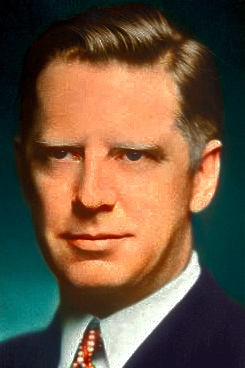
NEW YORK – No American has more angrily detested and suspected most of the internal operations of the New Deal, but no American more admires now the tenacious bravery of President Roosevelt in his war policy than this author of many criticisms of the Roosevelt administration.
Long before the war began with the sneak-punch invasion of Catholic Poland, the president had made his own decision that Adolf Hitler was determined to set the German nation loose, armed beyond the poor, dumb power of Britain’s military men or the best of ours to imagine, in a campaign to enslave Europe and conquer the United States. Having made up his mind on the basis of plain evidence, Mr. Roosevelt determined that this country must fight for its life against Hitler and Japan and set about creating a war psychology in the American people so that we would not be caught entirely unprepared spiritually or entirely unarmed.
In the earlier phases of his preparations, he fought almost alone and it may be remembered that his dramatic Chicago speech about a quarantine for aggressors was savagely denounced as a deliberate attempt to divert attention from the pressing embarrassment of a domestic error and even to put us into war for some purpose of his own. Because Hitler had identified Jewishness with Communism and had devised a program of hideous persecution of this tiny minority of the German people, many Americans accused the president of scheming to sacrifice American boys and our whole American way of life to rescue and avenge the European Jews.
Berlin raised cry of warmonger
As the war developed, Mr. Roosevelt was accused of surrendering his own country to the British for Britain’s own sake and the cry of warmonger, raised from Berlin, where this war was made, was taken up by many of the president’s own people at home. More lately, this unfortunate suggestion that religious freedom was enjoyed in Russia, intended undoubtedly to allay old hatreds of the Communists in our own midst and suspicion of Joseph Stalin for practical military results, was pounced upon and torn to tatters.
But all the way from the hour when he first realized that war with Hitler was inevitable down to the moment when Hitler’s ally in the Pacific suddenly bombed a sleeping American city, Mr. Roosevelt stood by his conviction, often under conditions which would have made a weaker man give ground and look for excuses.
The American people didn’t want to believe that Hitler was their enemy and many prominent men with a talent for ridicule and propaganda played up the proposition that we could stay out of it and trust Hitler and the Japanese. A hundred reminders that the choice could not be ours but must be Hitler’s, that if war came, the German nation again would be the cause of all American suffering and sacrifice, were instantly scoffed down with sneers at the British and dark insinuations about the international Jew.
The one man who is responsible for the vast improvement of the military fitness of the United States, achieved from a standing start after the invasion of the Low Countries, never for an instant faltered in his determination to get the American nation in shape to meet the inevitable.
Right and doggedly brave all along
One newspaper of enormous circulation and, presumably, of great influence, which had gone along with him in every socialistic or totalitarian proposal on the home front, suddenly turned on him on the issue of war. But Wheeler and Ham Fish fought him down to the very hour of the attack on Honolulu, although Wheeler had been content to ignore the rise of the unioneers and the depredations of the Brownshirts on the domestic scene.
All his opponents, including the tragic Charles Lindbergh and, of course, the evil Nazis of the anti-American Bund, who themselves employed every wicked scheme which they attributed to the Jew, insisted that with 3,000 miles of water to the east and a wider ocean to the west, no enemy could reach American soil, even granting as they wouldn’t, that any enemy would be rash enough to try.
Through it all, Mr. Roosevelt fought on toward a vindication which came in the dawn of a Sunday in the Pacific and it must be said that he was embarrassed as much by some of his supporters as he was obstructed and reviled by his opponents, for he had among the noisiest of his following some of the most disgusting professional clamorists that ever used the flag for purposes of apparel.
But he was right all along and doggedly brave in times when he fought almost alone to make the people recognize their enemy and prepare to fight and the final proof of his wise courage was given by the enemy himself Sunday morning.
‘Peaceful aliens’ aided
WASHINGTON – Attorney General Francis Biddle appealed to all state governors today “to prevent molestation of all peaceful and law-abiding aliens” since the Justice Department is taking into custody all Axis nationals who have been listed as “dangerous to the peace and security” of the United States.
Gridiron Club banquet called off by Jap war
WASHINGTON (UP) – Harold Brayman, president of the Gridiron Club, announced today that the semi-annual banquet at which President Roosevelt and Wendell L. Willkie were to have been off-the-record speakers, has been cancelled because of the U.S.-Japanese war.
The dinner was scheduled for Saturday.
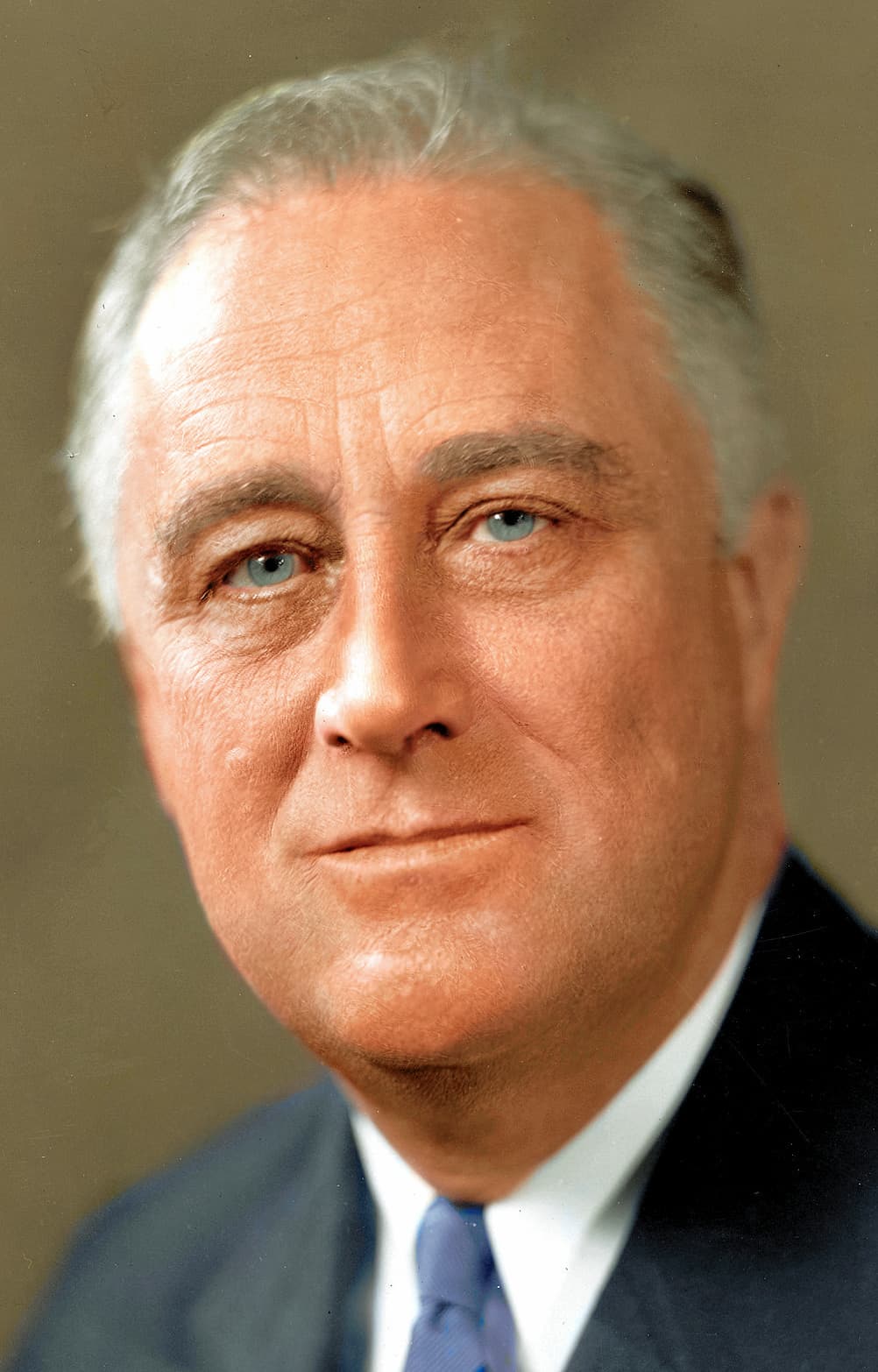
Fireside Chat by the President on War with Japan
December 9, 1941, 10 p.m. EST
Broadcast:
My fellow Americans:
The sudden criminal attacks perpetrated by the Japanese in the Pacific provide the climax of a decade of international immorality.
Powerful and resourceful gangsters have banded together to make war upon the whole human race. Their challenge has now been flung at the United States of America. The Japanese have treacherously violated the long-standing peace between us. Many American soldiers and sailors have been killed by enemy action. American ships have been sunk, American airplanes have been destroyed.
The Congress and the people of the United States have accepted that challenge.
Together with other free peoples, we are now fighting to maintain our right to live among our world neighbors in freedom, in common decency, without fear of assault.
I have prepared the full record of our past relations with Japan, and it will be submitted to the Congress. It begins with the visit of Commodore Perry to Japan eighty-eight years ago. It ends with the visit of two Japanese emissaries to the secretary of state last Sunday, an hour after Japanese forces had loosed their bombs and machine guns against our flag, our forces, and our citizens.
I can say with utmost confidence that no Americans, today or a thousand years hence, need feel anything but pride in our patience and our efforts through all the years toward achieving a peace in the Pacific which would be fair and honorable to every nation, large or small. And no honest person, today or a thousand years hence, will be able to suppress a sense of indignation and horror at the treachery committed by the military dictators of Japan, under the very shadow of the flag of peace borne by their special envoys in our midst.
The course that Japan has followed for the past ten years in Asia has paralleled the course of Hitler and Mussolini in Europe and Africa. Today, it has become far more than a parallel. It is collaboration – actual collaboration so well calculated that all the continents of the world, and all the oceans, are now considered by the Axis strategists as one gigantic battlefield.
In 1931, Japan invaded Manchukuo – without warning.
In 1935, Italy invaded Ethiopia – without warning.
In 1938, Hitler occupied Austria – without warning.
In 1939, Hitler invaded Czechoslovakia – without warning.
Later in ‘39, Hitler invaded Poland – without warning.
In 1940, Hitler invaded Norway, Denmark, the Netherlands, Belgium, and Luxembourg – without warning.
In 1940, Italy attacked France and later Greece – without warning.
And this year, in 1941, the Axis powers attacked Yugoslavia and Greece and they dominated the Balkans – without warning.
In 1941, also, Hitler invaded Russia – without warning.
And now Japan has attacked Malaya and Thailand – and the United States – without warning.
It is all of one pattern.
We are now in this war. We are all in it – all the way. Every single man, woman, and child is a partner in the most tremendous undertaking of our American history. We must share together the bad news and the good news, the defeats and the victories – the changing fortunes of war.
So far, the news has all been bad. We have suffered a serious setback in Hawaii. Our forces in the Philippines, which include the brave people of that commonwealth, are taking punishment, but are defending themselves vigorously. The reports from Guam and Wake and Midway Islands are still confused, but we must be prepared for the announcement that all these three outposts have been seized.
The casualty lists of these first few days will undoubtedly be large. I deeply feel the anxiety of all families of the men in our armed forces and the relatives of people in cities which have been bombed. I can only give them my solemn promise that they will get news just as quickly as possible.
This government will put its trust in the stamina of the American people, and will give the facts to the public just as soon as two conditions have been fulfilled: First, that the information has been definitely and officially confirmed; and, second, that the release of the information at the time it is received will not prove valuable to the enemy directly or indirectly.
Most earnestly I urge my countrymen to reject all rumors. These ugly little hints of complete disaster fly thick and fast in wartime. They have to be examined and appraised.
As an example, I can tell you frankly that until further surveys are made, I have not sufficient information to state the exact damage which has been done to our naval vessels at Pearl Harbor. Admittedly the damage is serious. But no one can say how serious, until we know how much of this damage can be repaired and how quickly the necessary repairs can be made.
I cite as another example a statement made on Sunday night that a Japanese carrier had been located and sunk off the Canal Zone. And when you hear statements that are attributed to what they call “an authoritative source,” you can be reasonably sure from now on that under these war circumstances, the “authoritative source” is not any person in authority.
Many rumors and reports which we now hear originate, of course, with enemy sources. For instance, today the Japanese are claiming that as a result of their one action against Hawaii, they have gained naval supremacy in the Pacific. This is an old trick of propaganda which has been used innumerable times by the Nazis. The purposes of such fantastic claims are, of course, to spread fear and confusion among us, and to goad us into revealing military information which our enemies are desperately anxious to obtain.
Our government will not be caught in this obvious trap and neither will the people of the United States.
It must be remembered by each and every one of us that our free and rapid communication these days must be greatly restricted in wartime. It is not possible to receive full and speedy and accurate reports from distant areas of combat. This is particularly true where naval operations are concerned. For in these days of the marvels of radio, it is often impossible for the commanders of various units to report their activities by radio at all, for the very simple reason that this information would become available to the enemy and would disclose their position and their plan of defense or attack.
Of necessity there will be delays in officially confirming or denying reports of operations, but we will not hide facts from the country if we know the facts and if the enemy will not be aided by their disclosure.
To all newspapers and radio stations – all those who reach the eyes and ears of the American people – I say this, you have a most grave responsibility to the nation now and for the duration of this war.
If you feel that your government is not disclosing enough of the truth, you have every right to say so. But in the absence of all the facts, as revealed by official sources, you have no right in the ethics of patriotism to deal out unconfirmed reports in such a way as to make people believe they are gospel truth.
Every citizen, in every walk of life, shares this same responsibility. The lives of our soldiers and sailors – the whole future of this nation – depend upon the manner in which each and every one of us fulfils his obligation to our country.
Now, a word about the recent past and the future. A year and a half has elapsed since the fall of France, when the whole world first realized the mechanized might which the Axis nations had been building for so many years. America has used that year and a half to great advantage. Knowing that the attack might reach us in all too short a time, we immediately began greatly to increase our industrial strength and our capacity to meet the demands of modern warfare.
Precious months were gained by sending vast quantities of our war material to the nations of the world still able to resist Axis aggression. Our policy rested on the fundamental truth that the defense of any country resisting Hitler or Japan was in the long run the defense of our own country. That policy has been justified. It has given us time, invaluable time, to build our American assembly lines of production.
Assembly lines are now in operation. Others are being rushed to completion. A steady stream of tanks and planes, of guns and ships and shells and equipment – that is what these eighteen months have given us.
But it is all only a beginning of what still has to be done. We must be set to face a long war against crafty and powerful bandits. The attack at Pearl Harbor can be repeated at any one of many points – points in both oceans and along both our coastlines and against all the rest of the hemisphere.
It will not only be a long war; it will be a hard war. That is the basis on which we now lay all our plans. That is the yardstick by which we measure what we shall need and demand: money, materials, doubled and quadrupled production – ever-increasing. The production must be not only for our own Army and Navy and Air Forces. It must reinforce the other armies and navies and air forces fighting the Nazis and the warlords of Japan throughout the Americas and throughout the world.
I have been working today on the subject of production. Your government has decided on two broad policies.
The first is to speed up all existing production by working on a seven-day-week basis in every war industry, including the production of essential raw materials.
The second policy, now being put into form, is to rush additions to the capacity of production by building more new plants, by adding to old plants, and by using the many smaller plants for war needs.
Over the hard road of the past months, we have at times met obstacles and difficulties, divisions and disputes, indifference and callousness. That is now all past and, I am sure, forgotten.
The fact is that the country now has an organization in Washington built around men and women who are recognized experts in their own fields. I think the country knows that the people who are actually responsible in each and every one of these many fields are pulling together with a teamwork that has never before been excelled.
On the road ahead, there lies hard work – grueling work – day and night, every hour and every minute.
I was about to add that ahead there lies sacrifice for all of us.
But it is not correct to use that word. The United States does not consider it a sacrifice to do all one can, to give one’s best to our nation, when the nation is fighting for its existence and its future life.
It is not a sacrifice for any man, old or young, to be in the Army or the Navy of the United States. Rather is it a privilege.
It is not a sacrifice for the industrialist or the wage-earner, the farmer or the shopkeeper, the trainman or the doctor, to pay more taxes, to buy more bonds, to forego extra profits, to work longer or harder at the task for which he is best fitted. Rather is it a privilege.
It is not a sacrifice to do without many things to which we are accustomed if the national defense calls for doing without it.
A review this morning leads me to the conclusion that at present we shall not have to curtail the normal use of articles of food. There is enough food today for all of us and enough left over to send to those who are fighting on the same side with us.
But there will be a clear and definite shortage of metals for many kinds of civilian use, for the very good reason that in our increased program, we shall need for war purposes more than half of that portion of the principal metals which during the past year have gone into articles for civilian use. Yes, we shall have to give up many things entirely.
And I am sure that the people in every part of the nation are prepared in their individual living to win this war. I am sure they will cheerfully help to pay a large part of its financial cost while it goes on. I am sure they will cheerfully give up those material things they are asked to give up.
And I am sure that they will retain all those great spiritual things without which we cannot win through.
I repeat that the United States can accept no result save victory, final, complete. Not only must the shame of Japanese treachery be wiped out, but the sources of international brutality, wherever they exist, must be absolutely and finally broken.
In my message to the Congress yesterday, I said that we will make very certain that this form of treachery shall never endanger us again.
In order to achieve that certainty, we must begin the great task that is before us by abandoning once and for all the illusion that we can ever again isolate ourselves from the rest of humanity.
In these past few years – and, most violently, in the past few days – we have learned a terrible lesson.
It is our obligation to our dead – it is our sacred obligation to their children and to our children – that we must never forget what we have learned.
And what we have learned is this:
There is no such thing as security for any nation – or any individual – in a world ruled by the principles of gangsterism.
There is no such thing as impregnable defense against powerful aggressors who sneak up in the dark and strike without warning.
We have learned that our ocean-girt hemisphere is not immune from severe attack – that we cannot measure our safety in terms of miles on any map anymore.
We may acknowledge that our enemies have performed a brilliant feat of deception, perfectly timed and executed with great skill. It was a thoroughly dishonorable deed, but we must face the fact that modern warfare as conducted in the Nazi manner is a dirty business. We don’t like it – we didn’t want to get in it – but we are in it, and we’re going to fight it with everything we’ve got.
I do not think any American has any doubt of our ability to administer proper punishment to the perpetrators of these crimes.
Your government knows that for weeks Germany has been telling Japan that if Japan did not attack the United States, Japan would not share in dividing the spoils with Germany when peace came. She was promised by Germany that if she came in, she would receive the complete and perpetual control of the whole of the Pacific area – and that means not only the Far East, but also all of the islands in the Pacific, and also a stranglehold on the west coast of North and Central and South America.
We know also that Germany and Japan are conducting their military and naval operations in accordance with a joint plan. That plan considers all peoples and nations which are not helping the Axis powers as common enemies of each and every one of the Axis powers.
That is their simple and obvious grand strategy. And that is why the American people must realize that it can be matched only with similar grand strategy. We must realize for example that Japanese successes against the United States in the Pacific are helpful to German operations in Libya. That any German success against the Caucasus is inevitably an assistance to Japan in her operations against the Dutch East Indies. That a German attack against Algiers or Morocco opens the way to a German attack against South America and the canal.
On the other side of the picture, we must learn also to know that guerrilla warfare against the Germans in, let us say, Serbia or Norway, helps us. That a successful Russian offensive against the Germans helps us, and that British successes on land or sea in any part of the world strengthen our hands.
Remember always that Germany and Italy, regardless of any formal declaration of war, consider themselves at war with the United States at this moment just as much as they consider themselves at war with Britain and Russia. And Germany puts all the other republics of the Americas into the same category of enemies. The people of our sister republics of this hemisphere can be honored by that fact.
The true goal we seek is far above and beyond the ugly field of battle. When we resort to force, as now we must, we are determined that this force shall be directed toward ultimate good as well as against immediate evil. We Americans are not destroyers – we are builders.
We are now in the midst of a war, not for conquest, not for vengeance, but for a world in which this nation, and all that this nation represents, will be safe for our children. We expect to eliminate the danger from Japan, but it would serve us ill if we accomplished that and found that the rest of the world was dominated by Hitler and Mussolini.
So we are going to win the war and we are going to win the peace that follows.
And in the difficult hours of this day – through dark days that may be yet to come – we will know that the vast majority of the members of the human race are on our side. Many of them are fighting with us. All of them are praying for us. But, in representing our cause, we represent theirs as well. Our hope and their hope for liberty under God.