The Pittsburgh Press (December 31, 1941)

Rambling Reporter
By Ernie Pyle
SAN FRANCISCO – The White House is one of San Francisco’s biggest stores. It was named after the famous Maison Blanche in Paris. It has been here 87 years, and is as much a San Francisco institution as Twin Peaks or Fisherman’s Wharf. It has 800 people working for it, and they call themselves co-workers, not employees.
There are a lot of fine stores in America, so I’m not writing about the White House for that reason. I’m writing about it because, so far as I can learn it has done the best commercial job in San Francisco in its preparations for war.
For months the White House has been organized as though it were an army, for the possibility of air raids. It has raid equipment, its employees have drilled, everybody is ready.
And furthermore, the executives of the White House don’t share the complacent feeling of some of us that the Japs won’t bomb San Francisco for a year, or maybe never. They think the Japs will bomb San Francisco practically any moment now.
The White House began its preparations for the present war last May, which is thinking a lot further ahead than most of us did. That far back it began organizing the store floor by floor and getting its co-workers thoroughly trained in first-aid and bomb conduct.
Today it is organized in a two-fold way. (1) It is one of the strongest units of the Red Cross for general city-wide assistance in case of bombing. (2) It is thoroughly organized within its own walls for sudden disaster from the air.
Let’s take the Red Cross part first. Twenty-six of the store’s workers have trained so thoroughly in Red Cross work that in case of trouble they immediately become part of the general staff of the Red Cross. They will be executives, helping direct the thousands of volunteer Red Cross workers all over the city. Further, the White House’s fleet of delivery trucks forms San Francisco’s biggest bunch of potential ambulances.
The White House has 25 fast trucks. Fifteen of its drivers passed Red Cross first-aid requirements. The others are under training.
The trucks are equipped with stretchers and blankets. At any time of the day or night they can shift almost instantly from the workaday task of delivering bundles to the dramatic business of carrying wounded to the hospitals.
And now to the store’s own inner organization for protection of itself and its customers.
Each floor is organized
Each floor is organized. Take the fifth floor, for instance. It has one captain, who is in complete command of everything on that floor in case of emergency. Under him are four emergency squads, all composed of employees. They are:
Traffic squad of nine people, who are to see that all shoppers and employees on that floor are quietly taken to the first floor or basement, either by elevator or stairway. As soon as the last person has cleared the floor, the traffic squad itself goes down.
Blackout squad. This has seven people. It is their duty to turn off all lights, pull the shades and make a final check to see that all electric appliances are turned off.
First-aid squad. Two people in this. They remain on the floor until the “all clear” sounds. They are equipped with first aid kits and stretchers. At three places in the store there are emergency hospitals. The White House the other day bought the last available stretchers in San Francisco, and has ordered more from out of town.
Fire squad. Five people on this. They, too. stay on the floor throughout the raid. They have sand for incendiaries, and buckets, rakes, shovels, extinguishers and hose. If a fire gets bad, one of the squad turns in an alarm and meets the fire department when it comes.
Elevator starter gives alarm
That organization exists on every floor, and also in the warehouse and garage. In addition, there are such general preparations as these:
As soon as the sirens sound, the elevator starter rings the general store bell three times. Elevators will keep running and right now every elevator has a card of instructions hung on its wall. A phone operator will stay at her switchboard throughout the raid.
The store has 75 new megaphones through which squad captains will give orders. As soon as the sirens sound, phonograph music will be piped all over the store to soothe people’s nerves. Members of all emergency squads will slip on arm bands, so the public will know who they are and obey them.
Cashiers all over the store will take their money from the cash drawers and give it to the first-floor cashier. Twenty-five workers (with tin hats) are assigned to roof spotting duty and to putting out incendiaries. A telephone has been installed on the roof.
The basement and first floor have been equipped for complete blackout, so that workers and shoppers herded there will not have to stand in the dark. By the time this is in print all street windows will be crisscrossed with tape, to prevent glass from flying.
All this is planned and it is not just theory. Nearly a fifth of the store’s 800 employees make up the vast emergency battalion to take over in case of trouble, and each one knows his place and his duty as well as any soldier. They have drilled and practiced for weeks and will continue to do so throughout the war, raids or no raids.
So thorough has been the White House’s preparations that other big stores here are ready to use its plan as a model. It’s all so wonderful and reassuring that I’m going to see if the White House won’t rent me a cot in the corner of the perfume department and let me live there till the war is over.
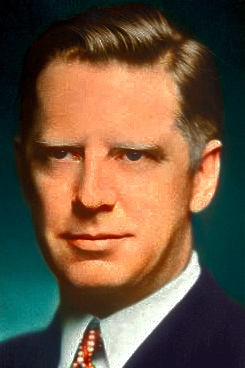
Fair Enough
By Westbrook Pegler
NEW YORK – Eventually in this war it will become necessary to lock up in prison camps all persons, whether native or naturalized Americans or unnaturalized nationals of enemy countries, who were members of the anti-American Bund and similar societies or of Italian Fascist organizations. These individuals were active traitors in recent years and are all potentially dangerous now. They sneered at the United States and exalted Nazi Germany and Fascist Italy in open and reckless demonstrations of loyalty to countries which are now enemies.
They were not mere isolationists but adherents of nations which have made war on this one and they continued their show of loyalty to those enemies long after the line was plainly drawn by Hitler and Mussolini. Some of them may have been harmless blowhards who would now subside and even try to be Americans, but the interest of the whole people justified the belief that they would seize any opportunity to destroy factories and public utilities, spread rumors and panic and transmit information to the enemy.
Camps were cells of Hitlerism
The German government’s attitude toward the anti-American Bund was such and so well known that any person who joined it automatically indicated his allegiance to Adolph Hitler and his hostility to the United States. This organization was created as an island of Nazi Germanism in a foolishly patient and tolerant republic. It was a semi-military body with uniformed Storm Troopers who used the Nazi salute and hailed Hitler. The camps were cells of Hitlerism in which the women and children held target practice on rifle ranges.
The Italian Fascist organizations may have been less sincere in their hostile alienism, but that is no reason why the peoples of this country at war should take a chance on their disillusionment and their conversion to the Stars and Stripes. Any man who three years ago made voyages to Italy to pledge himself and his associates in an alien society to Benito Mussolini and Fascism must be distrusted now and deprived of any chance to strike a blow in the back.
This, of course, is a delicate subject and such sentiments will draw blood from every pore of those who are obsessed with affection for the “foreign born,” but that will be just too bad. The native born have rights, too, and their interests certainly come before those of any man or woman who, in cold deliberation, elected to become a member of any organization which gave allegiance to Hitler or Mussolini.
We have suffered badly already from the treachery of the Japanese fifth column in Hawaii and in the Philippines, but the members of the bund and the anti-American organizations fostered by Mussolini are equally capable of sabotage and military espionage. The rolls of these organizations must be available not only because they were very rash in their hatred of the American people but for the further reason that they were infested with spies who obtained their secrets. Necessarily, informers would be used to identify the traitors and this always is an unpleasant method in a free country but that freedom is now threatened and the sacrifice for safety is not too great.
This is a dirty war, no holds barred
There is an impression that the prison camp is an institution of the brutalitarian countries only, but that is incorrect. The civilized countries are compelled to establish them for their own safety in time of war. Britain had them in the last war and has them now and there exists already in this land the detention of the crews of enemy vessels and certain others. The difference is that the civilized countries are more trusting than their enemies and thus assume risks which constitute a handicap in war.
Norway has given the civilized nations a tragic example of the folly of trusting the Nazi German. Rumania was similarly invaded and taken by “tourists.” Concern for the rights and feelings of the foreign-born here might enable known Nazis and Fascists to commit similar treacheries and the effect on the foreign-born after that had happened would be much worse than mere detention in prison communities or camps.
This is a dirty war, with no holds barred. The German, the Italian and the Jap have always been given the costly privilege of striking the first blow treacherously because the civilized peoples have been unwilling to beat them to it. But the lesson should have been learned by now and all members of the bund and the Fascist organizations which gave loyalty to Mussolini should be rounded up and locked away immediately and their families with them, if circumstances require, until the war is over. Their inconvenience, as compared to their capacity for treachery and disaster, is not worth considering.

Clapper: Partial effort
By Raymond Clapper
WASHINGTON – As Winston Churchill said in Ottawa, the war is likely to go through three stages first is the stage of preparation. Planes, ships, tanks and guns must be built. If we had them now, what a different story we would be hearing from the Pacific!
On the vehemence of our effort in preparing, said Mr. Churchill will depend the success of the two later stages, one being the liberation of the conquered peoples and the other being the final smashing of the Axis.
We don’t have to know how many planes and tanks are being built to know that we are far short of our full effort.
Here are some figures that can be used. In the United States are about 180,000 industrial plants, including all of the little ones. We are using only a fraction of them. Ninety-five percent of the war work is concentrated in 3,022 plants. Seventy-five percent of it is confined to about 100 manufacturers.
Not keeping up with program
How can we hope to produce what the coming war program will call for on that basis? It will call for using half our national income instead of 20 percent as now. We are not even keeping up with the existing program. The Tolan committee of the House of Representatives says in its report that a “dangerous discrepancy” exists between the scale of the program which Congress is providing and the actual execution of the work.
Our whole industrial economy must be treated as one gigantic industrial plant. Until there is enough imagination, central planning and directing brains at work to begin treating the whole country as one war plant, we will be fighting a total war with partial effort.
Typical of the sluggish attitude is the small fact that although OPM has called upon industry and labor to work through the New Year holiday, OPM itself closed down for the day. If keeping industry going on New Year’s Day means 50 more planes, it ought to mean something more than that to the total defense effort to have OPM working that day. The attitude reflected in this is that there is plenty of time.
That has been much of the trouble here. There was always plenty of time. There was time for Jesse Jones to haggle over prices and delay accumulation of stock piles, installation of new mining equipment, and erection of new plants. There was time to have a boom year in automobiles, radios and refrigerators. The Reuther plan to put the automobile plants to work on war contracts was brushed aside as a CIO crackpot idea just a year ago. Today OPM is driven by force of circumstances to put the Reuther plan into effect.
Economy must be treated as unit
There is no more time to build nice new plants. Existing plants must be put to work. Machinery may have to be taken from one plant to another. In England some civilian industries have been pooled so that one company produces the whole supply of kitchen brooms, for instance, apportioning the various trademarks to its goods to protect the competitors whose plants have been taken for war work. We may be compelled to shift machinery from one plant to another. The whole economy must be treated as one unit.
Perhaps a ministry of supply will have to be set up. The idea has strong backing in Washington. It would operate as a central agency having full responsibility for procurement and planning of production. Strong opposition exists to taking procurement from the Army and Navy. Possibly a compromise can be reached so that although leaving procurement services in the Army and Navy, the supply ministry will undertake to build them up, as Donald Nelson earlier rebuilt the Army Quartermaster Corps to take advantage of modern merchandise purchasing methods which he learned as the chief buyer for Sears, Roebuck.
Mr. Roosevelt has power under the new legislation to revamp the shambles of the defense agencies into an effective supply agency or ministry. The dissatisfaction with the present situation is so widespread that he may be compelled to act. He was on the point of setting up a one-man agency last summer. He had his plan and he had his man. But somehow it was scuttled and SPAB appeared as a compromise.

Maj. Williams: Lesson in war
By Maj. Al Williams
“Japan must be bombed to defeat.”
Heartening evidence is already appearing that some really valuable advances have been made toward getting all our forces sold on the absolute necessity for planning our part in this war on a land, sea and air basis.
Some of the old timers in the parent land and sea forces are still trying to accept airpower as cavalrymen some years ago accepted mechanized equipment. But the old timers are being talked down by facts and the younger, more enterprising groups are taking hold. And when some of our air advocates in the Air Corps and in the Army proper ran into difficulty convincing the land Army tacticians, home demonstrations of starting reality were staged. Sometime ago, it was decided that the old timers needed a good, strong looksee.
All the old trucks and autos in a certain sector were gathered and arranged in the order of an orthodox army column in transit. They were all strung out in a line spaced at regulation distances. All the regular officials available were invited to view an airpower attack on this guinea-pig batch of worn-out autos and trucks. With the stage set, the Air Corps’ heavy bombers came over the target at an attitude beyond the range of the naked eye. The first salvo of bombers smashed smackdab right on the target, and the air was filled with clouds of dust and hastily disrupted parts and segments of what had been one-time respectable family cars and grocery trucks and moving vans. The next salvo of bombs from the altitude-hidden warbirds added to the cataclysmic upheaval and general destruction of the target highway. Before the smoke and dust and spare parts had cleared, down came the Army dive bombers to machinegun and pepper the targets with their contribution.
The timing in the employment of the two units of airpower – altitude bombers and low-flying dive bombers – to say nothing of the accuracy of the bombing, taught that galaxy of Army officers something that no written or spoken word or photograph could have betrayed. Not only were they sold on the business of enjoying the support of such an air armada and the service it could render them by disrupting the enemy back areas, but they became quite concerned about seeing to it that their own fighter and pursuit contingents were well equipped and available to protect them from a similar dose of thunder and bursting steel from enemy warbirds.
As foreseen, one of the most trying problems in this hit-and-run war, especially where aircraft are involved, is “identification.” It is not always the fault of the anti-aircraft gunners who shoot at their own aircraft. All too often it is the too busy pilot who fails to register his code identification signal. The same is true at sea, where merchantmen are slow to respond to radio challenges from patrolling aircraft.
The time of the airman overhead is short and measured not in hours and minutes, but in gallons of gas. Therefore, it is quite reasonable that his patience is rather short, and his action abrupt. The worst problem in this regard is the anti-aircraft crews of the carriers. Theirs is a most vulnerable seacraft, and they have only split seconds to decide whether to press the triggers or – well – or else.
U.S. State Department (December 31, 1941)
Roosevelt-Hull telephone conversation, 4 p.m.
340.1115A/2370a: Telegram
The Secretary of State to the Minister in Switzerland
Washington, December 31, 1941 — 6 p.m.
439
Department is receiving numerous requests for relief on behalf of American citizens in enemy territories. After the exchange of official personnel is completed it is hoped that similar arrangements may be negotiated for repatriation of non-official American civilians, thus reducing to a minimum number of Americans remaining abroad who may require relief. It probably will not, however, be possible to postpone until then necessary relief payments.
It is the Department’s hope that the Legation at Bern as in the last war will be able to act as a clearing house for requests filed by applicants with Swiss representatives in enemy territories. The Department would therefore appreciate receiving as soon as possible your recommendations to assist it in drawing up necessary procedure for handling such payments by your office through the Swiss Government.
Please bear in mind that relief if authorized will be accorded only to American citizens who can qualify for loans in accordance with the provisions of circular instruction of March 21, 1939, as amended by circular of August 12, 1941, Diplomatic Serial 3382, and that amount to be advanced for relief should not be in excess of minimum necessary for ordinary subsistence, or for other essential extraordinary needs, such as urgent medical attention.
It is suggested that a separate relief section might well be set up in the Legation and that a qualified ranking officer be charged with this responsibility. Your recommendations will, of course, receive the Department’s sympathetic consideration.
HULL