They remember Pearl Harbor!
Dying skipper fights on
Gun crew shields ammunition with own bodies as ship moves past blazing battleship Arizona
By William F. Tyree, United Press staff writer
PEARL HARBOR, Hawaii, Dec. 20 (UP, Delayed) – The Arizona, the American battleship destroyed in the Japanese sneak attack on December 7, was struck by a torpedo before a bomb dropped into her stack, survivors of the raid said today.
The survivors’ accounts, approved by authorities, reflected naval courage and moral. They told of subordinates carrying on the battle when their captain was killed on the bridge of his ship; of gun crews protecting their ammunition with their own bodies; of a Marine remaining at his gun after a comrade had extracted a piece of shrapnel from his back.
It was disclosed that two Japanese submarines which entered Pearl Harbor were blasted to the bottom before they were able to do damage. One was fired upon by an aircraft tender and then rammed by a destroyer. It came to the surface bottom side up and then sank. The other sank as soon as it was hit.
Names omitted
These personal stories omitted the names of the narrators.
Here is the story of a commander who stood on the hot decks of his battleship and directed the fighting:
“I had just finished breakfast when I heard the alarm over the loudspeaker – ‘Japs attacking us, go to your battle stations.’
“I went up the passage way with the captain just ahead and we went to the bridge together. During this time the ship suffered the heaviest explosions. It vibrated and shook and started taking a list.
“Communications were disrupted to all stations, so we established messenger communication. The captain, who was on the port side of the bridge, groaned and said, ‘I’ve been hit.’ He was hit in the stomach and I saw he had been mortally wounded, but sent for the pharmacist’s mate.
Fires already had spread throughout the ship. I was concerned for the safety of the magazines and had men flood them, then began evacuating the wounded – I believe we managed to get all the wounded off.
“I was anxious to get the captain off the bridge but he emphatically refused. The ship was still subjected to dive-bombing, a high horizontal attack and machine-gun strafing. Two officers with the captain stayed through the entire engagement until the captain died. His body was placed in the chart house.
“These officers discovered they were cut off from the lower part of the ship by raging fires. However, they got a line to the bridge of the next ship, went hand over hand for 20 feet and made it just as the line was scorched by the fire.
“A Negro mess attendant who never before had fired a gun manned a machine gun on the bridge until his ammunition was exhausted. I stayed throughout the day with fires raging until relieved that afternoon. The attack lasted from 7:55 a.m. until 9:15 a m., and probably 70 planes attacked us.
Make ‘determined assault’
“There was no evidence of suicide attacks, but they made a very determined assault – dive bombers pulled out of their dives at about 300 feet and torpedo planes leveled off 40 or 50 feet above the water.
“I saw a few enemy craft burst into flames, but I was kept pretty busy and was unable to notice all.”
A senior medical officer on duty during the action said that “all the Japs I saw were dead – 17 bodies.”
“I saw two planes catch fire and fall right into the Navy Yard during the first wave,” he said.
Many men burned
“Over 60 percent of the casualties were from burns although I saw a good many drownings due to the oily water. That day nearly 1,000 wounded were treated, we know – many more couldn’t be kept count of. We handled them right on the beach and in the yard. We handled at least 90 percent before nightfall, then worked with flashlights.”
A 37-year-old senior officer aboard another ship was on the hospital ship Solace ready to go to mass when the attack occurred.
“I saw a flight of planes flying toward the battleship row dropping torpedoes,” he said. “I even saw one headed for my ship but it (the plane) burst into flames and a loud cheer went up.
“I was stunned by the horribleness of the thing, but squared away and went to my ship. The air was literally filled with planes. I couldn’t understand why many raiders didn’t come down in that blaze of fire from our ships but the scoundrels stayed right on their course.
Crew shields ammunition
“I went through a strafing attack as I approached the ship, but got under cover of the starboard gangway, then went up to seek my battle station. All guns were going and all defenses were manned. There were no bomb hits as yet.
“I ducked under the lee side of the signal bridge, and finally into the conning tower. Then I saw a torpedo hit the battleship Arizona, which was nearby – it was a dead sound, like a big swish of wind going through foliage. Another bomb went down the Arizona’s stack.
“I believed the flames would reach the bow of our ship, and suggested that we get under way. The engine room said it would take half an hour, but I said we had better get under way right now.
“We cast off the lines, backed the engines and the bow started moving out. We cleared the Arizona and a repair ship which was also alongside about 40 feet. Our gun crew shielded the ammunition with their own bodies as we moved past the blazing Arizona.
Bombs hit ship
“As we squared off down the channel, the Japs began dive-bombing. The ship was hit several times and shivered and shook while our batteries took the Japs under fire. Then we got the signal not to proceed out of the harbor, so we backed engines and halted at the side of the channel.
“I saw acts of heroism that I’ll never forget. I saw a Marine second lieutenant pull a piece of shrapnel out of another Marine’s back, and this Marine continued to work his machine-gun throughout the attack.”
The Navy also revealed for the first time that the two Japanese submarines which got into Pearl Harbor were put out of action before they could fire a shot. The first was fired on by an aircraft tender, then rammed by a destroyer. It came to the surface, capsized, then sank. The other “went down immediately” when hit.
Broadcasters urge restraint
Stations warned against sensationalism
NEW YORK – The National Association of Broadcasters, embracing most of the country’s radio stations, warned its members today against sensationalism, carelessness, commercialization and use of rumors in presentation of war news.
A war guide, prepared after “careful consultation with the military branches of the government,” outlawed unjustified interruptions of scheduled programs to stimulate listener interest. This practice, it said, tends to increase tension.
Unconfirmed reports were banned. Stations were advised not to use enemy communiques unless accompanied by an official U.S. statement on the same subject.
Weather reports, casualties and movements of troops and naval vessels already have been removed from the air at government request.
Audience participation programs in which the public “ad libs” were frowned upon.
The guide recommended the use of news only from recognized press services and advised that any information not provided by these sources be “thoroughly checked and verified before broadcasting.”
Mowrer: Hongkong’s plight laid to ‘too late, too little’ help
‘It couldn’t happen there’ for British believed their defenses were adequate at China’s smuggling center
By Edgar Ansel Mowrer
WASHINGTON – Six weeks ago I reached Hongkong from Chungking. The China National Aviation Co. plane, with its American pilot, dropped through the cloud ceiling at dusk, circled over the harbor, and landed in the northern end of Kowloon, just south of the hills that were the colony’s chief defense. Coming from warring China, there was something infinitely calm and peaceful about Hongkong.
Here was a prosperous Chinese population, busy about civilized pursuits despite its many refugees. The ivory carriers, the jade dealers from Canton, the Indian silk merchants, the British venders of good sound woolens, perhaps the last in the empire, the old colonials sitting about in the Hongkong Club and drinking gimlets. These all seemed engrossed in better business.
Hongkong was thriving on “smuggle” – better called blockade-running into and out of China. Never had so much merchandise gone through Hongkong. The smugglers, under the leadership of a former river pirate, had their headquarters within a few miles of a Japanese naval station. These were being assisted by a Britisher.
War just around corner
It was hard to believe that war was just around the corner, and visitors from Shanghai still insisted that the Japanese never would so far forget themselves as to challenge British or Americans.
Women – white women – had become few and far between. Most wives and daughters had left for Australia, or the United States or England.
The main line of defenses was considered very strong. There were a few small war vessels in the port. Aircraft were obviously scarce, but more, I was told, would be rushed there at the first alarm.
The defenses of Victoria Island, Hongkong proper, were pointed out to me.
The big guns at the entrance of the harbor were declared to be formidable and as you drove around the island, the impression of some strength and great self-confidence was irresistible. Whatever happened, Hongkong would not be abandoned without a siege that might last for months. Drinking water and food would not run short.
Couldn’t happen here!
I lodged in a beautiful house high on the peak with my friend, J. K. Bousfield, representative of the Asiatic Petroleum Co. From the bedroom window, I looked down the hill and across the docks to the harbor, across Kowloon and its big hotel and swarming Chinese quarters and airfield, to the lily fountain just beyond the golf course.
To the left was the waterway to Canton and Occupied China; to the right the warship anchorage, the shipyards and the China Sea. A hundred years of occidental civilization grafted onto Southern China. It could not happen here – but it did.
The rapid capture of most of the city and its all but certain fall soon is unquestionably a terrible disappointment. The British expected it to hold out a month, in any case, and made its plans accordingly. The Chinese were sure that the town could stand a considerable siege and that most of the prominent Chinese, who by opposing Japan, had laid themselves over to torture if captured, would have plenty of time to get away.
Rumors insists that there was Fifth-Column work, perfect espionage and even armed insurrection by Japanese in Kowloon, behind the British defenders. Rumor persists that the Canadians who reinforced the garrison at the last minute arrived without their equipment. But, as yet, there is no real explanation.
‘Too little, too late’
The stirring resistance of the all but beaten garrison proves that here, as at Dunkirk and Tobruk, Pearl Harbor and the Philippines, the British and American courage is second to none. It does not show that we have as yet adjusted to the speed of modern war. Hongkong seems yet another example of “too little and too late.”
Once the Japanese acquired naval and air superiority in the Western Pacific, the importance of Hongkong as an advanced base for the democracies disappeared. But they have cleared one flank of their communications southward to Borneo and Malaya and have sealed up, perhaps for the duration of the war, one of the two doors through which patient China has been receiving vital supplies.
Vital to winning
Even when the British and we re-establish command of the China Sea, Japan’s possession of Hongkong will make any reopening of the Chinese ports extremely difficult and it may have to be retaken from the mainland by the reinforced Chinese themselves.
Keeping China in the war is, together with the holding of Singapore, vital to winning. An isolated China will find it difficult to keep going.
China today is connected with the cuter world only by the ancient caravan camel route to Russian Turkestan and by the Burma Road. In 15 or 18 months, there will be a Burma railroad connecting with the British Burmese railroads south of Mandalay: a new road to Chengtu, west through the foothills of Himalaya and down into Indian Assam, far out of reach of Japanese snatches or even bombers.
While it is being built, the Burma Road must be kept open. American pursuit pilots flying for China have shown that Kunming can be defended. But so must Rangoon.
The taking of Hongkong makes the taking of Rangoon a little easier for Japan. But, if Rangoon and Singapore can be held for a few months, they may be held forever.
Rambling Reporter
By Ernie Pyle
SAN FRANCISCO – The war and that first Japanese plane scare caught San Francisco with its pants down.
But now that the first jitters are over San Francisco is pulling its pants on fast.
At first there was a terrible confusion of mind all over town. Some people were scared stiff; some refused to believe there was any danger at all; the majority didn’t even know what they thought.
But since then, the public mind has settled down, the people in charge have fired up their boilers, and the business of creating a system whereby San Francisco will care for itself if the bombers come is well under way.
This city began studying its civil defense last spring. By August it had formulated an all-inclusive plan, and had it printed in booklet form. People tell me it is one of the best plans in the country.
But it was just a paper plan, and nothing more. No new fire equipment was bought, no uniforms or tools for air raid wardens were ordered, no shelter sites were picked. It was just like a guy, with a sure-fire scheme for making a million dollars, who sits around a hash-house talking about it instead of going out and making it.
They put out a call for volunteers for civil defense in November, but only 3000 registered, when actually 100,000 will be needed. There was apathy everywhere. San Franciscans just weren’t interested.
42,000 sign up in first week
All that has changed. There is action everywhere. Within a week after the war started, 40,000 people had signed up for civil defense.
Training has already begun, and wardens are at their posts during blackouts. Eventually there will be 10,000 air raid wardens. The fire department will add 3000 auxiliary firemen. The police department will be expanded. Of course it will take weeks or months to train all these people, but at least training is finally under way.
Even if the raiders should come before this new defense organization is all hung together and running smoothly, it wouldn’t be such a debacle as it might have been.
For the Red Cross has not been asleep. It has its whole organization trained and equipped and spotted all over the city. They say that, if the bombers had come that first night, the Red Cross and medical set-ups could have handled 10,000 casualties.
Hospitals already have equipped themselves to operate during blackouts. Several hospitals are being evacuated – with the less seriously ill patients discharged and other moved to hospitals inland. They say, however, this is not so much in preparation for possible raids as it is to receive the wounded from Hawaii.
The slow start in civil defense here just seems to be an old English-speaking trait. England was and is magnificent in her civil defense, but she was just about as slow as San Francisco to get started.
For example, London had been bombed constantly for four months before the great “fire night” of last December 29. Yet, despite those months of experience and warning, the British weren’t ready for an all-out fire raid, and if the weather hadn’t turned bad that night the Germans might have burned London down.
It was not until after that creepingly narrow escape that the British turned to and organized a definite fire-watching system, or put sacks of sand on the street, or set about teaching the whole population how to handle fire bombs.
But you learn fast under direct peril, and before the winter was over old British grandmas and tiny British children were putting out incendiaries as casually and unheroically as though they were blowing out matches.
They think bombs will come
The first two nights of blackout here, most people were convinced that Japanese planes actually were over the city. But by the time the third blackout came along, six days after the war began, people began figuring this way – well, if there were Japanese planes, why hasn’t the Navy found the carrier and sunk it by this time?
So now many people believe there are no Japanese planes around, and that there never were any. The public agrees that the Army did a wise thing in making the scare real at first, and in taking no chances.
Most San Franciscans are thoroughly convinced, however, that the Japanese bombers will come sooner or later, and so they’re going about their civil defense preparations with the greatest seriousness.
The blackout regulations are plenty strict. They forbid any private vehicle to move after the sirens sound. They forbid the showing of any light whatever, even cigarettes or flashlights. Violators can get up to six months in jail and a $500 fine. (In England, as I told you yesterday, it’s all right to smoke cigarettes on the street and to use dim flashlights, pointed downward.)
It won’t take long for blackouts to be running smoothly here. Already I can sense how naturally and easily people are falling into the new blackout life. They’ll soon be able to live in it, just as Londoners do. And from what I’ve seen of them, I think they will take actual bombings in just the same stoic way the British have.
Fair Enough
By Westbrook Pegler
NEW YORK – Several telegrams have reached me signed “B. E. Thompson, editor, Nicholas Republican, Richwood, West Virginia.” I do not know Mr. Thompson and this is the first I have ever heard of Richwood, but the messages contain allegations which agree with similar experiences in other communities. If the charges were unique, I would withhold them pending investigation but in view of past performances I have a feeling that they hew pretty close to the truth.
Mr. Thompson says the Cherry River Boom and Lumber Co. of Richwood operates one of the largest lumber mills east of the Mississippi, employs about 1000 men, has defense orders and has received within the last week orders for direct shipment to Pearl Harbor.
He says two organizations are competing for the right to represent the workers and that the CIO, with less than 10 percent of the men, is trying to coerce the rest into joining the CIO, which certainly would not be a new approach.
According to Mr. Thompson, on the day after the country declared war on Japan, 100 shots were fired from 30-30 rifles into the offices and mill and at the log trains and the shooting has continued.
“One bullet penetrated the wall of an official’s home and two penetrated a public school, causing omission of school that day,” Mr. Thompson reports.
Company willing to bargain
Gov. M. M. Neely last Wednesday appealed to the lumber company in the interests of “national security” to meet with the state labor commission or permit him to appoint a board to “arbitrate the dispute which is preventing West Virginia from contributing her utmost to the winning of the war.”
To this the company replied, “Our plant is working 100 percent and has defense orders. Company will bargain collectively when labor board determines organization representing majority. CIO agreed to this on September 20, but broke agreement. Only trouble here is firing of high-powered rifles at our employees, offices, plant and trains.”
The company sent telegrams also to Frank Knox, secretary of the Navy, saying the company and more than 90 percent of the workers were anxious to do their American duty and asked whether the government could “restrain these saboteurs.”
There was another telegram to Mr. Knox, Secretary of War Stimson and J. Edgar Hoover, signed “W. H. Wilson,” saying: “I have a son in Navy last heard from at Pearl Harbor. No word since Japanese attacks. Son and myself employed in Richwood being fired upon from ambush with rifles. Demand protection as American citizens engaged in production, national defense.”
CIO dominant in West Virginia
Another telegram, signed “Richwood Loggers’ and Lumbermen’s Union” addressed to Messrs. Knox, Stimson, Hoover and Sen. Tom Connally of Texas, said: “Representing more than 90 percent of employees Cherry River Boom and Lumber Co., we are engaged in producing national defense material and are being fired on from ambush with high-powered rifles, threatened and coerced by CIO organizers and adherents. Demand protection in our efforts to cooperate 100 percent in national defense.”
Mr. Thompson reports that Mr. Hoover replied that the matter had been referred to the attorney general and that Capt. Adkins, USN, telephoned from Washington, requesting details. He adds that in addition to the Richwood boy, unaccounted for at Pearl Harbor, another Richwood boy has been reported killed in the attack there.
Mr. Thompson, himself, has a son in the service. He says the state government agencies have passed the buck, caused delays and shown sympathy for the CIO and that, only after the shooting began did the governor appeal for conciliation or arbitration.
The CIO is now the dominant political faction of West Virginia and has made great progress in coercing the state’s own employees into its ranks with the connivance of the state government, under Gov. Neely.
Recently, John H. Bosworth was dismissed from the position of chief of the state police force of 250 men. Mr. Bosworth said Gov. Neely “told me I can’t get along with labor, which he said, is antagonistic to me.”
His dismissal had been demanded by officials of the United Mine Workers, along with that of certain troopers who searched and confiscated firearms from pickets at Gary, West Virginia, during the captive coal mine strike. Mr. Bosworth said he only did his duty of enforcing the law and maintaining peace on John L. Lewis’ picket lines.
Clapper: Blackouts
By Raymond Clapper
WASHINGTON – We haven’t any conception in this country of what a real blackout means, or how difficult it will be to achieve.
England was experimenting with blackouts two years before the war began. When I was there in the fall of 1937, rehearsals were being conducted in some localities. By the time I returned last summer, you could not see even a shiver of light at night.
One night I went to the top of the large hotel where I stayed. In daylight one could see all over London, for miles in every direction.
But as 1 looked out over the city that night, it was completely dark – as dark as in the middle of the Atlantic, except for the occasional flash of an electric car crossing a switch and the faint low glow which moved along in front of the creeping taxicabs but which they told me could not be seen from higher up in the air. It was a strange experience, as if one had suddenly met a ghost.
In Glasgow the darkness was so thick that although I knew I was in front of my hotel, it was necessary to walk along feeling the wall with my hands in order to find the entrance. People bump into each other.
When with friends, you must either lock arms or keep calling back and forth if there are many persons on the street. Picadilly circus was familiar enough in daylight but I did not recognize it the first time I walked into it in the blackout.
Visiting stops with blackouts
One night in a small restaurant the air-raid warden came in and said a crack of light was showing. The proprietor readjusted his curtains but 15 minutes later the air-raid warden was back again, this time not with a courteous request but with a sharp warning that the place would have to close if the crack of light was not shut off.
The proprietor personally supervised the doors when anyone left the restaurant. He first opened an inner door, and after everyone was inside the vestibule the inner door was pulled shut and then the proprietor would open the outer door. The greatest danger is stumbling and falling when stepping out of a lighted place into the blackout.
Buses stop running about blackout time and few people are on the streets after dark. Taxicabs are difficult to find, and getting about London after dark is a real trial. The result is that the town shuts down at dark.
Theaters have early performances. After that the only traffic is from hotel to hotel and from night club to night club. People are unable to visit back and forth in each other’s homes because of the difficulty of getting transportation.
Means change in habits
In hotels the guests are warned not to touch the blackout curtains. The floor maid is responsible for sealing the light in the rooms in her charge.
This has gone on for more than two years, every night and all night. It is a perpetual blackout after sundown, and the effect on everyone is depressing. By the time I got to wartime England I found everyone tired of the blackout.
People seemed to complain more about the inconvenience of the blackout than about the bombing. The bombing is dangerous and destructive of life and property. But the blackout is a perpetual nuisance and the grumbling is directed at it.
If complete all-night blackouts are insisted upon in this country, the life of cities so affected will be radically changed. The partial blackout has been found ineffective because lights show a long distance at night, as anyone who travels by plane after dark can see.
To attempt quickie blackouts after the alarm sounds is risky because everything has to be turned off and it is probably impossible to organize any community so that this can be done instantaneously by everyone. The pulling of central switches is a desperate remedy which would instantly stop all elevator service, refrigeration and numerous other necessities.
Now that we are tackling the blackout job, we can appreciate more the high degree of self-discipline which other countries at war have maintained, and what total war will require of civilians here.
Ex-Pacific Fleet commander dies
NEWPORT, Rhode Island – Adm. William Banks Caperton, U.S. Navy (ret.), commander-in-chief of the Pacific Fleet during the first World War, died at his home yesterday.
Adm. Caperton was 86. He was born in Spring Hill, Tennessee, and was a graduate of the U.S. Naval Academy and the Naval War College. He was made rear admiral in 1913 and advanced to the rank of admiral, retired, in 1919.
He was commander in chief of the Pacific Fleet in 1916.
CANDIDLY SPEAKING —
Ancient proverb gets modern garb
By Maxine Garrison
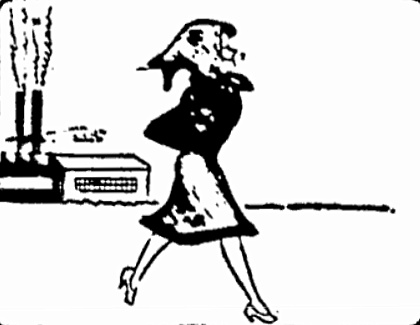
Judging from a study made by the University of Southern California’s bureau of business research, the ancient adage can be rewritten to read, “Them as has, wants more.”
The bureau, which is directed by Dr. Thurston H. Ross, surveyed 5000 California working women in all types of occupations. It was found that 88 percent were satisfied with their present incomes, and of those who said they needed more money, 92 percent were already in the higher brackets.
“The higher wage group complained a great deal more about the need for clothes than did minimum wage earners,” Dr. Ross said. “Those who spent most money for clothes seemed to be in the greatest need for them.”
The whole thing sounds fantastic enough to have been written under water and yet, after study, it shapes up as absolutely logical.
People contented with present earnings? Oh, yes, that is still possible.
Even in this day of exorbitant demands, there are still people who want merely to live decently, honorably. In the readjustment of values that is sure to come now, there will probably be many more.
Some women, working women especially, do not count the value of life by whether they own a limousine, a mink coat and original Schiaparelli dresses, although they admit that those things are very nice indeed.
Learn valuable lesson
It is not that such women have low standards. Materially, they do not demand much; and that means that they must have learned to obtain a lot of satisfaction from things not material – a valuable lesson.
But that women in the upper income brackets are more in need of money and clothes than their less well-paid sisters is easily understandable.
They are on the way to success, or have already achieved it, and they suffer the ill as well as the good effects of its intoxication.
Their jobs are not just 9-to-5 interludes which earn them a living but don’t demand a great deal in return. Their jobs are their life.
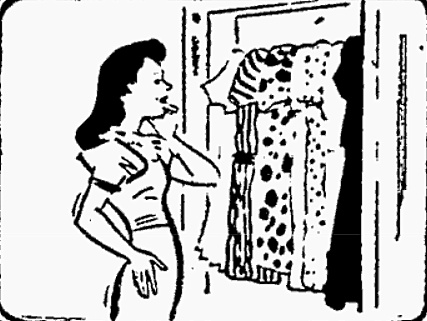
Instead of just being one of the girls, they have titles now, and positions to be lived up to. Instead of wearing out last year’s date dresses and sweaters and skirts at work, or wearing uniforms, they buy clothes primarily for work. They need “better” addresses, and they find that it takes more and more service to maintain the impeccability and polish which are expected of them.
Salaries don’t fit needs
Whether these needs are real or are partly imaginary makes no difference, since the effect is the same. And since they usually find that their new needs are several leaps ahead of their salary checks, it’s no wonder they’re dissatisfied.
Goodness only knows what the answer is, or whether there is an answer, or even whether there needs to be. It’s mostly a matter of human nature. The needy upper bracket worker is not necessarily more selfish, more unreasonable, than the contented lower bracket girl. And the lower bracket girl might do well to ask herself if discontent is as divine as it’s been reputed to be.