The Pittsburgh Press (May 13, 1945)
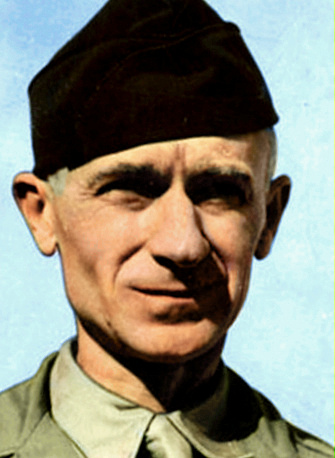
What end of war means to G.I.’s who fought it
By Ernie Pyle
This excerpt is from the final chapter in Ernie Pyle’s book, Brave Men. It tells how the late war correspondent felt about the victory he saw coming in Europe, about the unfinished war in the Pacific, and about peace.
It will seem odd when, at some given hour, the shooting stops and everything suddenly changes again. It will be odd to drive down an unknown road without that little knot of fear in your stomach; odd not to listen with animal-like alertness for the meaning of every distant sound; odd to have your spirit released from the perpetual weight that is compounded of fear and death and dirt and noise and anguish.
The end of the war will be a gigantic relief, but it cannot be a matter of hilarity for most of us. Somehow it would seem sacrilegious to sing and dance when the great day comes – there are so many who can never sing and dance again.
For some of us, the war has already gone on too long. Our feelings have been wrung and drained; they cringe from the effort of coming alive again. Even the approach of the end seems to have brought little inner elation. It has brought only a tired sense of relief.
I do not pretend that my own feeling is the spirit of our armies. If it were, we probably would not have had the power to win. Most men are stronger.
Why we won
We have won because of many things. We have won partly because the enemy was weakened from our other battles. The victory here is the result of Russia, and the Western Desert, and the bombings, and the blocking of the sea. It is the result of Tunisia and Sicily and Italy; we must never forget or belittle those campaigns.
We have won because we have had magnificent top leadership, at home and in our allies and with ourselves overseas.
We won because we were audacious. One could not help but be moved by the colossus of our invasion. It was a bold and mighty thing, one of the epics of all history.
We have won this war because our men are brave, and because of many other things – because of Russia, and England, and the passage of time, and the gift of nature’s materials.
We did not win it because destiny created us better than all other peoples. I hope that in victory we are more grateful than we are proud. I hope we can rejoice in victory – but humbly. The dead men would not want us to gloat.
Half-peace, half-war
The end of one war is a great fetter broken from around our lives. But there is still another to be broken. The Pacific war may yet be long and bloody. Nobody can foresee, but it would be disastrous to approach it with easy hopes. Our next few months at home will be torn between the new spiritual freedom of half-peace and the old grinding blur of half-war. It will be a confusing period for us.
Thousands of our men will soon be returning to you. They have been gone a long time, and they have seen and done and felt things you cannot know. They will be changed. They will have to learn how to adjust themselves to peace.
And all of us together will have to learn how to reassemble our broken world into a pattern so firm and so fair that another great war cannot be possible.