The Pittsburgh Press (August 5, 1943)
Simms: Ploești raid shows one-way Soviet-U.S. collaboration
Yank planes could have made heavier assault at less cost if based in Caucasus, Simms says
By William Philip Simms, Scripps-Howard foreign editor
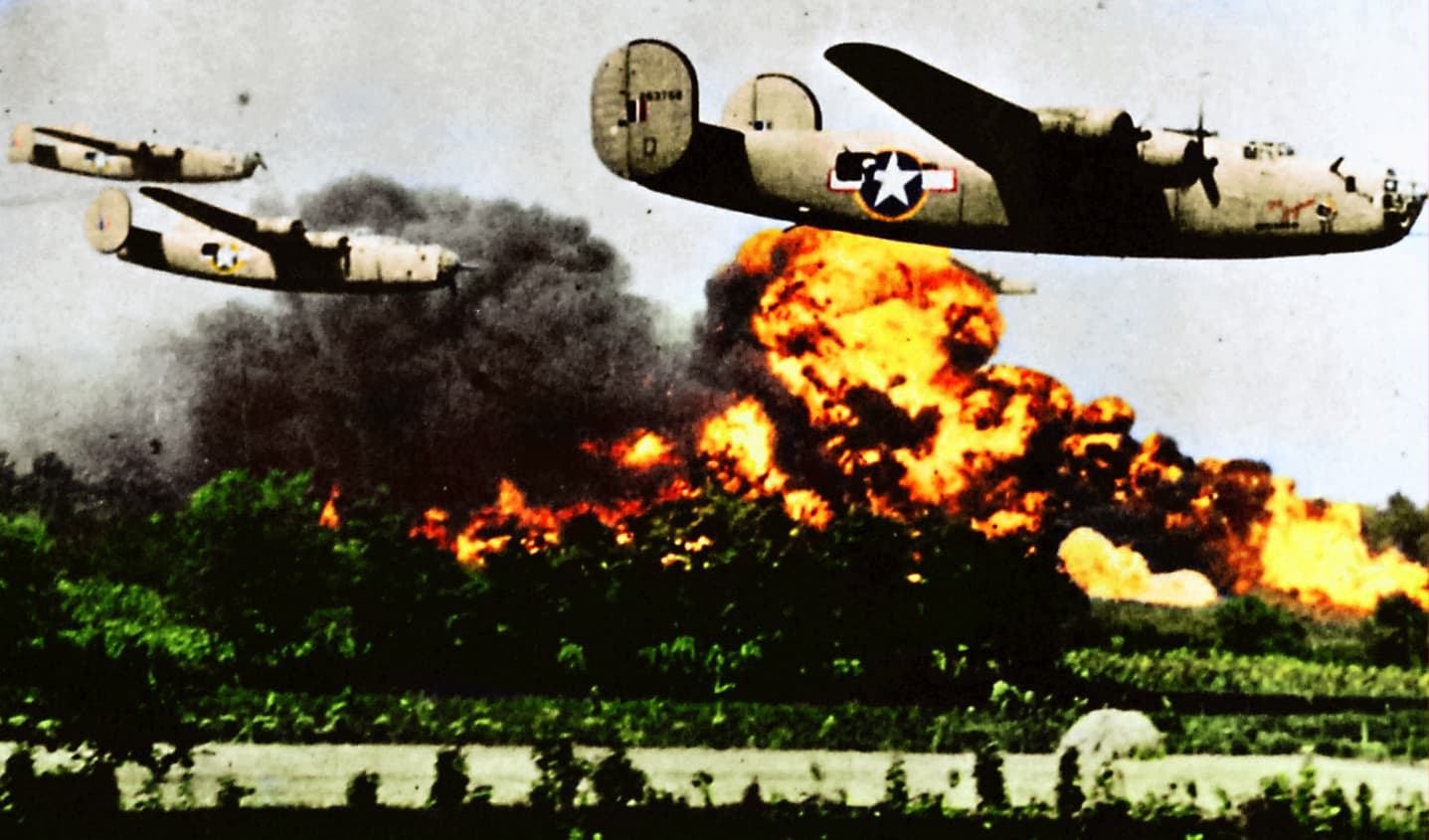
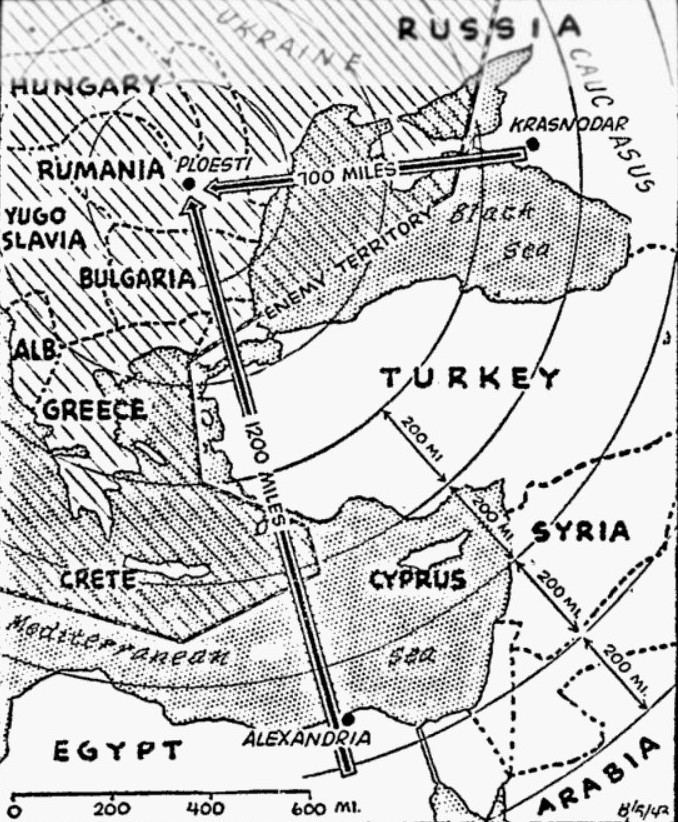
The Ploești oil raid, the first picture of which is shown at top, might have been carried out with much smaller loss to U.S. forces if Russia had permitted out bombers to use their airfields. The map shows how planes based in the Caucasus could have raided Romanian, cutting the distance traveled from Africa almost in half. The radiophoto from the U.S. 9th Air Force shows Liberator bombers flying at treetop height and fires raging in the oil fields.
Washington –
The smashing American air raid on the Ploești oil fields in Romania throws a tragic light on the one-way nature of the collaboration between the Soviet Union and the United States.
Belated reports make it plain that our Liberator bombers simply played havoc throughout the entire oil region. British as well as American sources say it was probably the most telling single bombing job of the war. It may change the whole course of the conflict.
It is equally plain, however, that the raid was costly in lives and planes.
The German news agency reported 67 U.S. bombers were lost in the Ploești raid, but Secretary of War Stimson announced in Washington today that U.S. losses amounted to “20%.” The German figures would have put the losses at 50%.
Had Russia and the United States been on a fully reciprocal basis, competent observers here point out, the raid could have been even more effective and at a fraction of the cost in men and materiel.
Taking off from Egypt, the bombers had to fly 1,200 miles just to reach the target. And the greater part of the distance was over enemy territory. The planes were spotted at least two hours before they reached Ploești. The enemy, therefore, had ample time to prepare a hot reception.
Had the Americans taken off from the Russian Kuban, say from around Krasnodar, the flying distance would have been halved. Not only that, but the flight would have been almost entirely over the Black Sea. The defenders of Ploești would have had at most some 25 minutes warning, because the oil fields are not far from the coast.
Equally important, the same bombers could have carried double the bombload. The 15 bombers said to have been forced down in turkey on the return would have reached home safely had they been based in the Caucasus region instead of near Cairo.
The Allied strategists must have had more than one look at the map of the Balkans and the Middle East. They must have computed the distances from alternative bases to Ploești again and again. If so, they could not have overlooked the advantages of bombing any Romanian objective from the eastern shore of the Black Sea.
Officials here are silent on the subject. But it is an open secret that Russia long ago drew a line across the map and, in effect, said to her Allies:
Now you stay on your side of that line.
For some reason or other, Marshal Stalin appears to be unalterably opposed to British or American troops fighting side by side with the Red Army.